

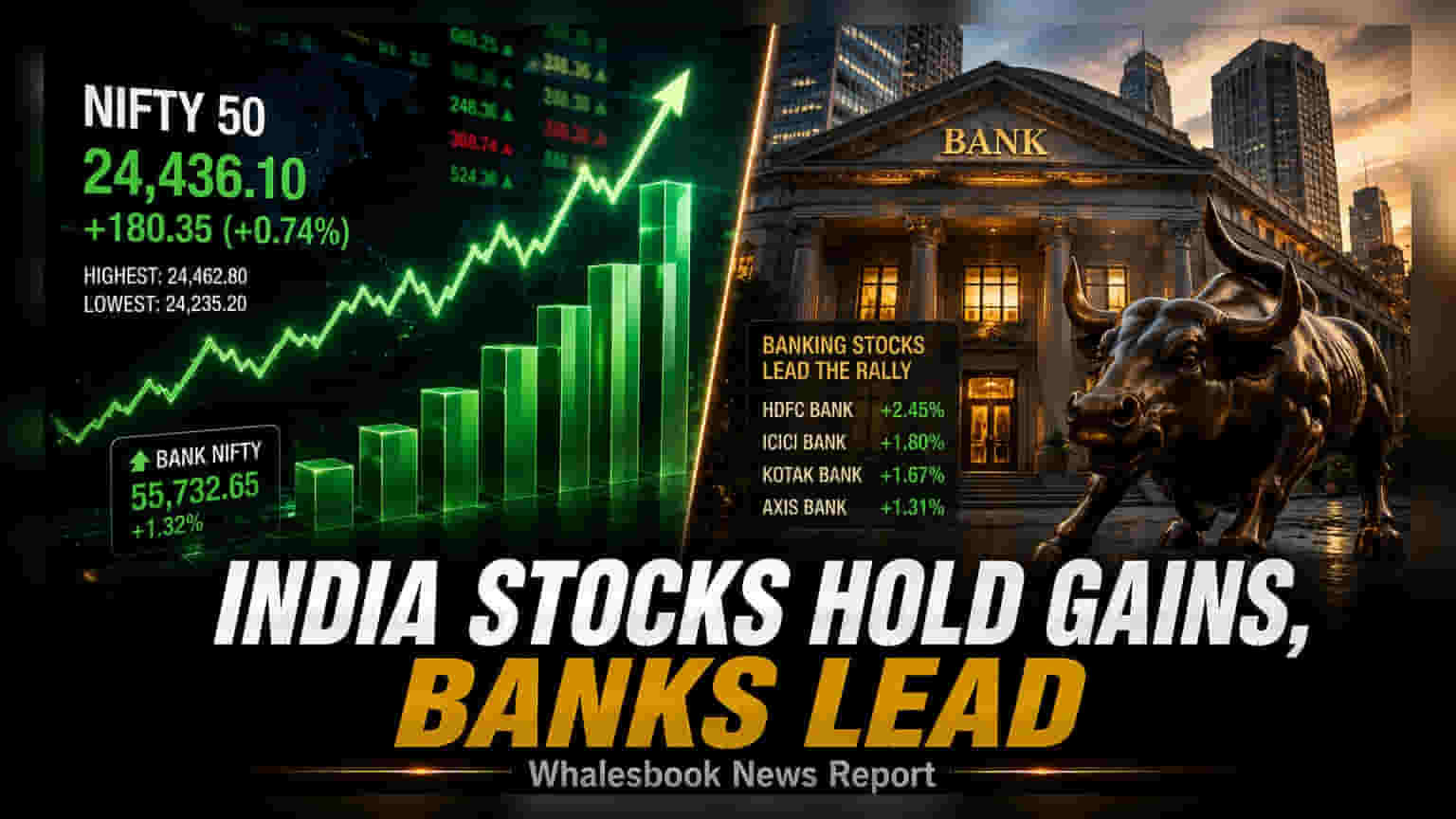
Indian stock indices rebounded on Thursday, ending a seven-session losing streak as financial stocks fueled a market recovery. The rally followed the Reserve Bank of India’s approval for LIC to raise its stake in HDFC Bank to 9.99%. Despite the positive movement, investors continue to monitor risks like rising crude oil prices and geopolitical tensions in the Middle East.
The Indian stock market showed resilience on Thursday, August 20, 2026, as both the BSE Sensex and the NSE Nifty 50 snapped a seven-session losing streak. The recovery brought much-needed relief to investors who had seen indices drift lower for over a week. The day’s gains were driven largely by a strong showing in the banking sector, which acted as the anchor for the broader market.
Banking Sector Drives Recovery
A major highlight for the market was the performance of HDFC Bank. The stock gained significant attention following an exchange filing which confirmed that the Reserve Bank of India (RBI) has approved the proposal for the Life Insurance Corporation of India (LIC) to acquire a stake of up to 9.99% in the private lender. This regulatory clearance provided a major sentiment boost, not just for HDFC Bank, but for the entire banking index, which outperformed other sectors. Other financial giants also joined the rally, helping the Nifty and Sensex maintain their early gains despite a cautious atmosphere in the wider market.
Market Caution Amid Global Risks
While the rebound is a positive sign, trading remained selective. Investors are still operating under a cautious approach, keeping a close eye on external pressures. One of the primary concerns currently impacting market sentiment is the price of crude oil, which has remained elevated at approximately $92 per barrel. High oil prices are a known pressure point for the Indian economy, as they influence inflation and the import bill.
Additionally, geopolitical instability involving the US and Iran, particularly concerns regarding security in the Strait of Hormuz, has created an environment of uncertainty. This risk factor is keeping energy and currency markets volatile. While IT and financial services saw buying interest, some sectors like metals and oil & gas faced pressure, reflecting the mixed mood on the trading floor.
What Investors Should Monitor
As the market navigates this phase, the focus will remain on whether these gains can sustain against the backdrop of global volatility. Investors are likely to look for further cues from international policy discussions and any cooling in crude oil prices. The ability of the indices to hold their current support levels—often watched closely by technical analysts—will be the next key factor to observe in the coming trading sessions.