 Whalesbook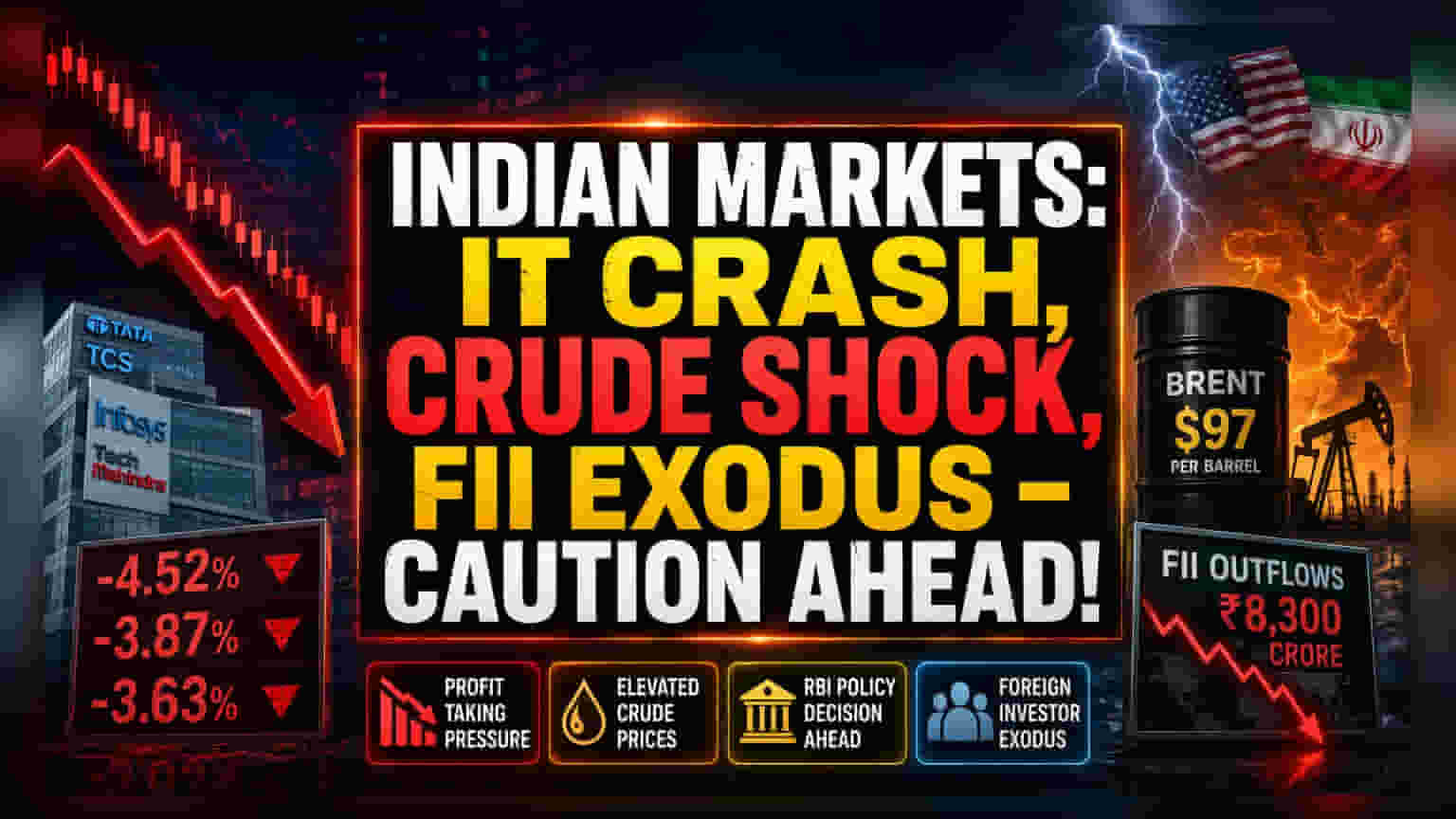


The Valuation Compression Trap
While initial reports suggested a government-led intervention to stabilize the rupee and incentivize foreign capital, the day's price action tells a more nuanced story of technical exhaustion. The Nifty IT index, which had experienced a notable three-session rally, suffered a sharp reversal, plummeting approximately 3.5% to 4.5% across various sessions. This correction was not merely a reaction to external macros; it reflected a clear case of profit-taking after valuations in AI-linked technology stocks reached uncomfortable levels. Unlike the broad market which showed moderate resilience, the IT sector saw heavyweights including Tata Consultancy Services (TCS), Tech Mahindra, and Infosys face intense selling pressure, with TCS shares sliding significantly toward their 52-week lows. This move underscores a broader shift in investor risk appetite, as capital rotates out of high-beta tech plays amid concerns that the recent surge had decoupled from immediate earnings realities.
Crude Oil and the Macro Headwind
The persistence of elevated Brent crude prices, hovering near the $97 per barrel mark, continues to act as a structural drag on the Indian market. Following targeted military exchanges in the Gulf and stalled US-Iran negotiations, the risk premium on energy remains high. For an economy that imports the vast majority of its crude requirements, this is not just an inflationary concern—it is a direct threat to corporate margins and the current account balance. Historical patterns in 2026 demonstrate that when crude crosses these threshold levels, foreign institutional investors (FIIs) have consistently moved to de-risk, compounding the downward pressure on index heavyweights.
The Forensic Bear Case
The current market environment is characterized by a confluence of systemic risks that leave little room for error. The primary risk factor remains the foreign fund exodus; persistent selling by overseas investors has stripped liquidity from the system, making domestic equities highly susceptible to volatility during external shocks. Furthermore, while the market is currently pricing in a status quo scenario for the upcoming Reserve Bank of India (RBI) policy meeting, any hawkish signal regarding inflation management could trigger a sharp repricing of interest rate-sensitive stocks. Management teams across the IT sector, while optimistic about long-term AI deal volumes, are facing a difficult short-term environment where dollar-revenue tailwinds are being neutralized by broader global risk-aversion and mounting geopolitical uncertainty.
A Cautious Horizon
Investors are now firmly in a 'wait-and-see' posture ahead of the RBI policy announcement on Friday. The central bank is widely expected to maintain the current repo rate of 5.25%, but the accompanying commentary on inflation projections will be the primary catalyst for the next move in equity indices. Until global crude prices stabilize and foreign outflows subside, the market is likely to remain tethered to tight trading ranges, with any relief rallies likely to be met with active institutional profit-taking.