 Whalesbook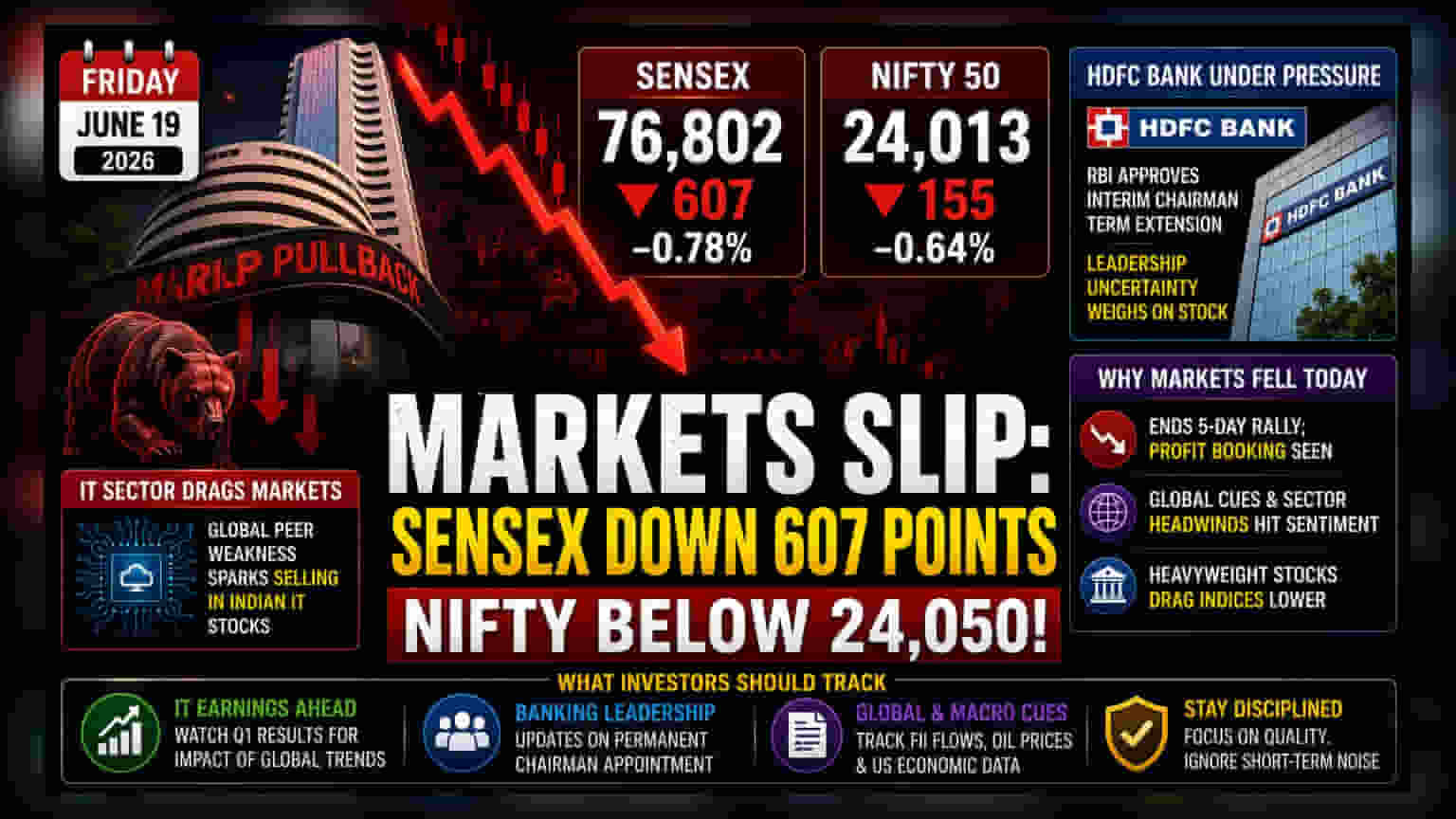
Indian stock markets ended their five-day winning streak on Friday as IT stocks faced selling pressure following global cues. HDFC Bank also weighed on the indices after the Reserve Bank of India announced an extension for its interim chairman. Here is what this means for investors.
What Happened
On Friday, June 19, 2026, the Indian stock market witnessed a sharp pullback, ending a five-day rally. The BSE Sensex fell by 607 points to close at 76,802, while the broader NSE Nifty 50 shed 155 points to end at 24,013. The decline was largely driven by selling pressure in the Information Technology sector and a dip in HDFC Bank shares.
Why IT Stocks Fell
The Information Technology (IT) sector acted as a major drag on the markets. Indian IT companies earn a significant portion of their revenue from global clients, particularly in the United States. When global industry leaders like Accenture show weakness or provide cautious updates, investors often sell shares of Indian IT firms, fearing that similar trends might impact their business growth. This sentiment led to broad-based selling in domestic IT stocks as market participants moved to book profits after a week of gains.
HDFC Bank and Leadership News
HDFC Bank also contributed to the market decline. The Reserve Bank of India (RBI) recently approved a term extension for the bank's interim chairman. While regulatory approvals are standard, the stock market often prefers complete certainty regarding top leadership in large financial institutions. The market reacted to the news with caution, which led to downward pressure on the stock price of this banking major.
How Investors May Read This
Markets rarely rise in a straight line for long periods. The index decline follows a five-day winning streak, suggesting that the drop may be partly due to normal profit-taking, where investors choose to cash in on recent gains. However, the specific weakness in IT and banking highlights how sensitive the broader indices are to global trends and leadership developments in heavyweight companies. When major sector leaders face uncertainty, the ripple effect is often felt across the entire index.
What Investors Should Track
Investors may monitor the upcoming earnings season for the IT sector to see if the concerns raised by global peers are showing up in the actual financial performance of Indian companies. For the banking sector, the key monitorable remains the transition to a permanent leadership structure. Market participants generally prefer stability, so updates regarding the appointment of a full-time chairman will be important to track for sentiment stability in the banking space.