 Whalesbook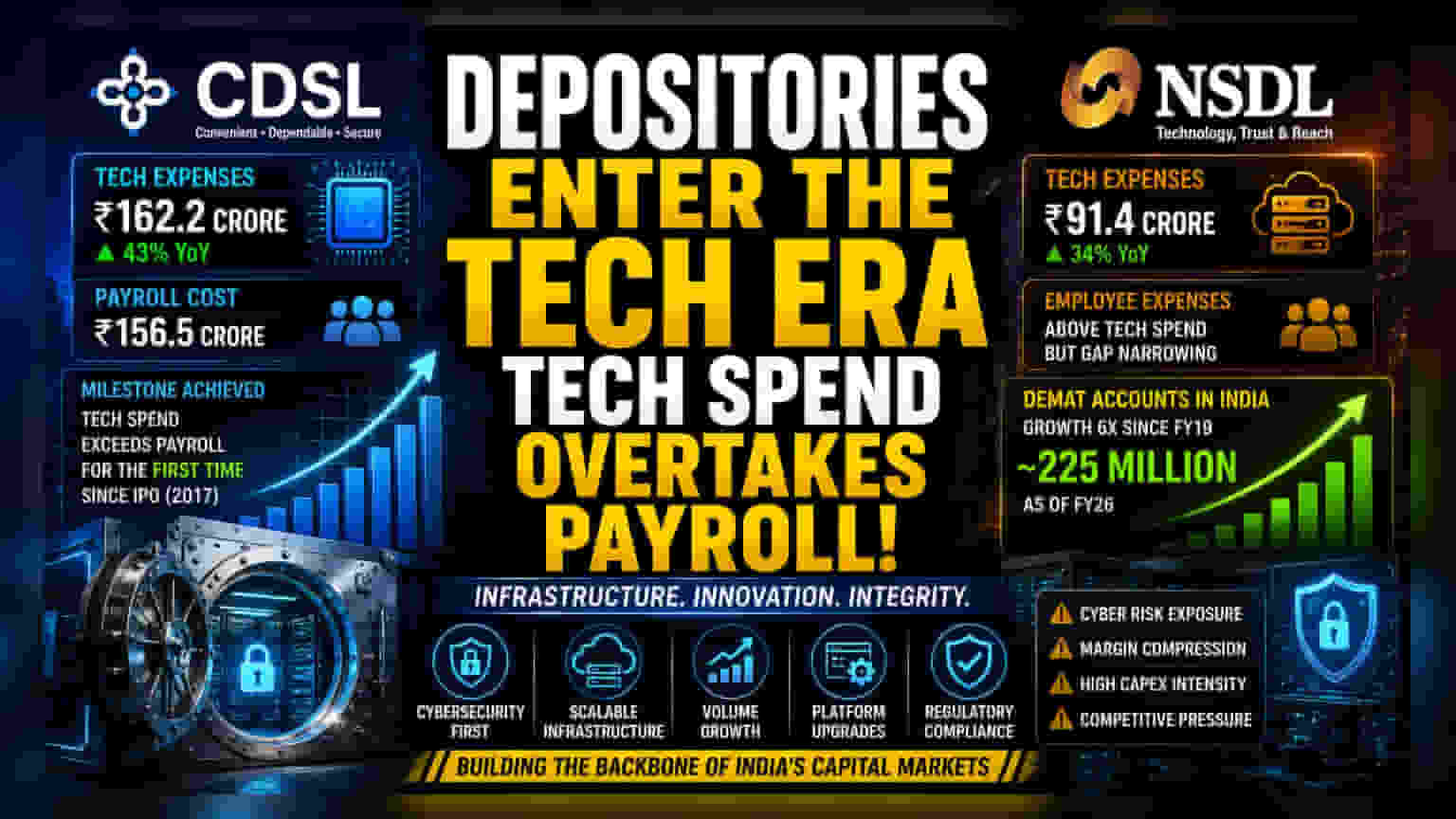


The Shift in Operational DNA
Financial depositories are no longer just secure vaults for electronic assets; they are rapidly evolving into high-tech infrastructure providers. In fiscal year 2026, Central Depository Services Limited (CDSL) crossed a symbolic threshold: technology-related expenses reached ₹162.2 crore, officially eclipsing its payroll costs of ₹156.5 crore. This inversion, the first since the company's 2017 public listing, reflects a broader industry mandate to prioritize scalable digital architecture over traditional human capital.
National Securities Depository Limited (NSDL) is tracking a similar trajectory. While its employee expenses currently remain above its technology outlay, the gap is rapidly compressing. NSDL’s tech spending rose by 34% in FY26, bringing the total to ₹91.4 crore, as it struggles to maintain parity with the blistering pace of CDSL’s 43% expenditure surge.
Scaling for the Demat Boom
The fundamental driver behind this capital rotation is the explosion in retail participation. India’s demat account base has expanded sixfold since FY19, reaching approximately 225 million accounts by the end of FY26. Managing this massive throughput requires more than just administrative staff; it demands robust infrastructure, advanced software licensing, and, perhaps most critically, sophisticated cybersecurity layers mandated by increasingly stringent regulatory frameworks. Industry experts point out that for market infrastructure institutions, continuous platform upgrades are no longer discretionary but a persistent cost of doing business to ensure market integrity.
The Forensic Bear Case
While the market generally favors automation, the aggressive shift toward technology spending introduces specific risks for investors. First, the dependency on high-frequency, complex systems elevates the stakes for cybersecurity breaches; a single systemic failure could lead to significant regulatory penalties and reputational damage that human-led processes might have mitigated.
Second, the sector faces margin compression. As these institutions compete to handle record volumes, the pressure to upgrade systems constantly—often in response to regulatory circulars—limits the ability to scale profits linearly with revenue. CDSL, while trading at a premium with a P/E of approximately 55x, is currently navigating a period where stock sentiment has cooled, trading over 30% below its 52-week highs. Investors should remain wary of whether these tech investments will truly deliver long-term efficiency gains or merely become a bottomless pit for capital expenditure as competitive pressures from newer, leaner fintech entrants increase.
Forward Guidance
Looking into the current fiscal year, the narrative remains one of high capital intensity. Management at NSDL has signaled that operational tech spending will remain elevated, focusing on essential infrastructure and resilience. For both depositories, the priority is clear: maintaining the integrity of the capital market structure at any cost. With regulatory oversight tightening and the bar for cyber-resilience rising, the era of low-cost operations for these depositories is effectively over.