

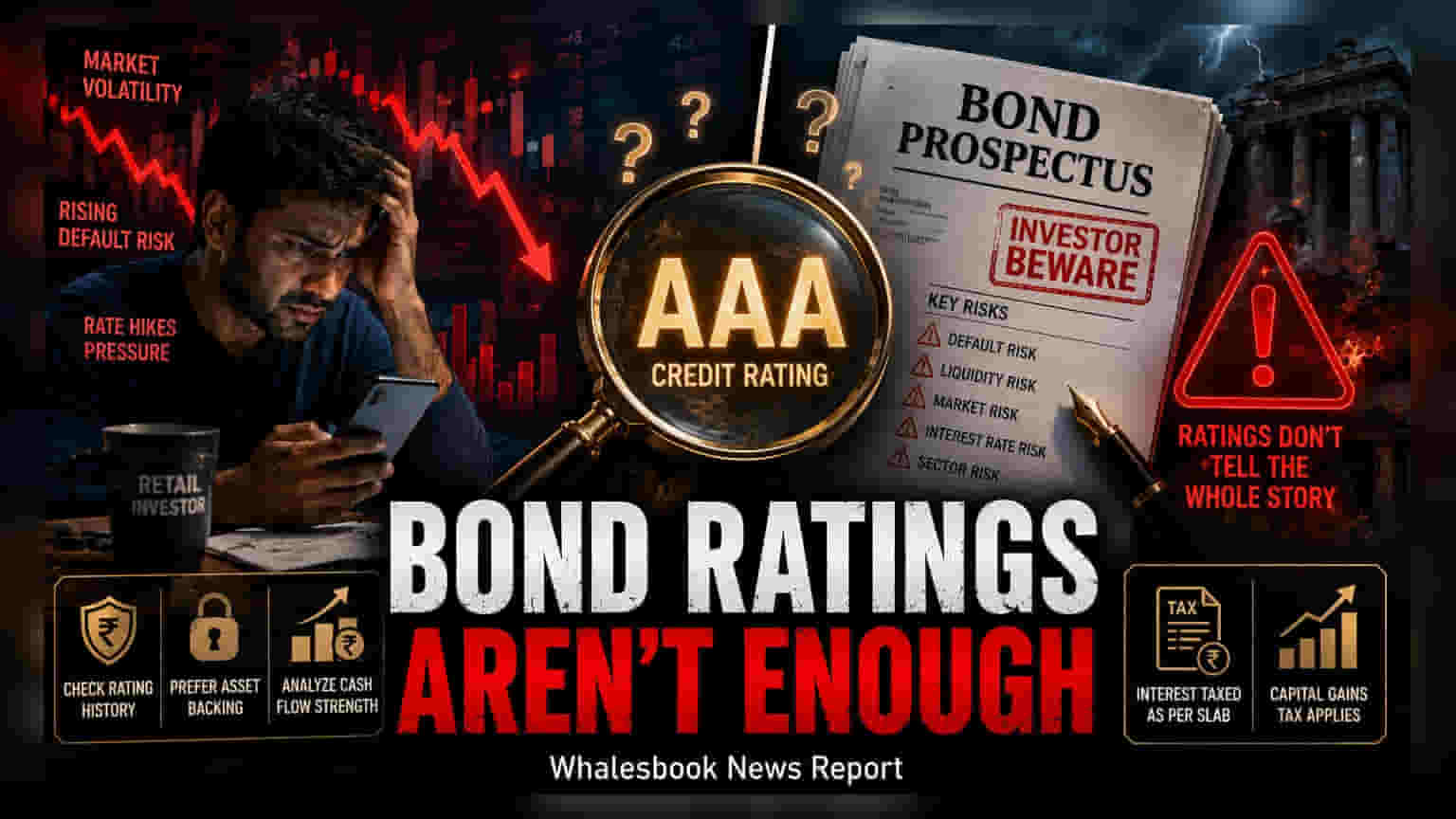
As retail interest in corporate bonds rises, experts caution against relying solely on credit ratings. Investors are advised to evaluate asset security, cash flows, and rating consistency to manage risks like default and liquidity effectively.
The Indian bond market is seeing a surge in retail participation, driven by easier access through online trading platforms and lower investment thresholds. While this shift offers investors alternatives to traditional bank fixed deposits, experts warn that relying exclusively on credit ratings can be a risky strategy. While ratings provide a snapshot of an issuer's ability to repay, they often fail to capture the full picture of default, liquidity, or market-related risks.
Why Credit Ratings Aren't Enough
Credit ratings serve as a starting point for evaluating an issuer's creditworthiness, but they are not a guarantee of safety. Market observers note that rating agencies often rely on periodic disclosures, which may not always reflect real-time financial distress. Historical defaults, such as the crises involving IL&FS and DHFL, serve as stark reminders that credit ratings can sometimes lag behind actual market conditions, leaving investors exposed.
Financial experts emphasize that a rating reflects an opinion on timely repayment at a specific moment. If the underlying business environment changes—such as a sudden drop in demand or a cash flow crunch—the risk profile of the bond can shift faster than the rating update. Because of this, institutional investors often look at broader macroeconomic and company-specific data that goes beyond a simple grade.
Key Metrics for Bond Investors
To make better decisions, retail investors are encouraged to conduct a deeper check of potential bond investments. A crucial first step is to examine the rating history; consistency in a rating over several years is often a sign of stability. If a bond is rated by multiple agencies, considering the lowest rating—and understanding the reasons behind it—can provide a more conservative and safer outlook.
Another vital factor is asset backing. Secured bonds, which are backed by specific company assets, generally offer better protection than unsecured ones. However, even among unsecured debt, instruments issued by public sector entities like Power Finance Corporation (PFC) or REC are often perceived as lower risk due to implicit sovereign support, which differentiates them from private corporate debt.
Ultimately, the sustainability of an issuer's cash flow remains the most important indicator. Investors should assess whether the company generates enough regular profit to service its debt, even during industry downturns. A strong sector outlook and a transparent ownership structure are also strong indicators of long-term viability.
Understanding Tax Implications
Beyond safety, investors must also account for how bond returns are taxed. In India, interest income is typically taxed according to the investor's individual income tax slab. For listed bonds, capital gains are also a factor; holdings of over 12 months attract long-term capital gains tax, currently at 12.5%, while shorter holding periods are taxed at the applicable slab rate. Understanding these tax rules is essential for calculating the true post-tax yield of any fixed-income investment. Moving forward, the most effective strategy for retail bondholders is to treat ratings as one piece of a larger puzzle rather than the final word on investment safety.