

India’s art auction market reached ₹1,548 crore in turnover in H1 2026, driven by soaring prices for modern masters despite steady sales volume. While the value of transactions jumped, investors should view art as a distinct, illiquid alternative asset class. Unlike public equity, this market lacks transparent price discovery, carries high transaction costs, and faces specific risks related to authenticity and provenance.
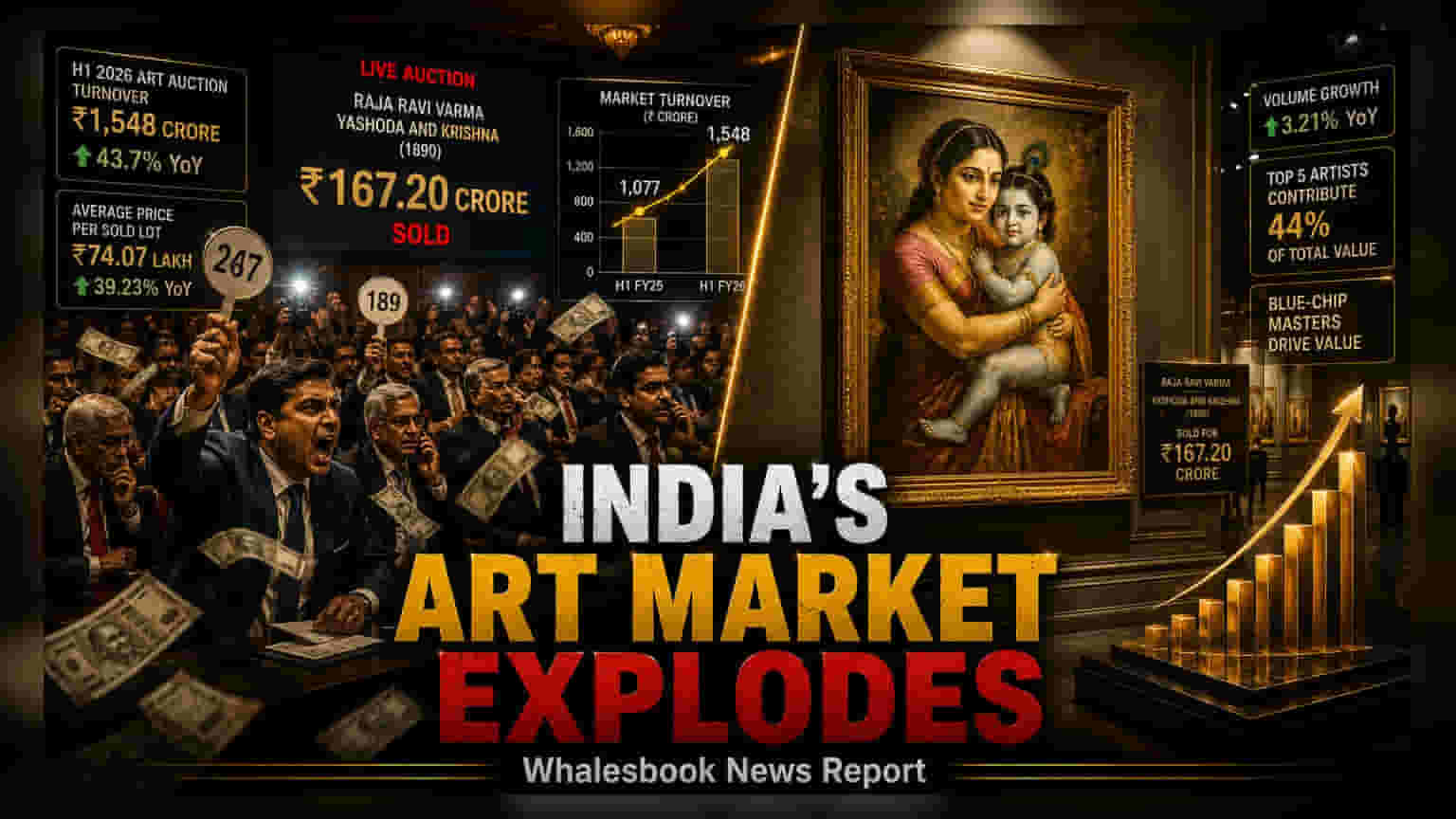
The Indian art auction market experienced a period of high-value growth during the first half of 2026. According to recent market data, the total turnover from art auctions climbed to ₹1,548 crore, representing a 43.7% increase compared to the same period in the previous year. This performance highlights a clear trend where auction value is being driven by premium pricing on select works rather than a surge in the number of items sold.
While the total monetary value grew significantly, the actual volume of transactions remained largely stable, showing only a marginal increase of about 3.21%. This shift suggests that collectors are concentrating their capital on high-value, blue-chip masterpieces. The average price per sold lot rose by 39.23% to ₹74.07 lakh, underscoring the demand for premium assets in the current market environment.
A significant portion of this growth was attributed to a small group of highly sought-after artists. Modern masters, including M.F. Husain, Ganesh Pyne, F.N. Souza, S.H. Raza, and V.S. Gaitonde, remained the focal point of collector interest. Collectively, these five artists accounted for nearly 44% of the market’s total value. Notably, Raja Ravi Varma’s 1890 painting, "Yashoda and Krishna," achieved a record-breaking sale of ₹167.2 crore during an April auction, serving as the highest-priced individual transaction for the period.
For investors observing this trend, it is essential to distinguish the art market from regulated financial markets like the NSE or BSE. Art is considered an alternative asset class, which means it functions very differently from stocks or bonds. One of the primary characteristics of this market is illiquidity. Unlike shares, which can be bought or sold instantly during market hours, an art piece may take months or years to sell, making it difficult for an investor to exit a position quickly if cash is needed.
Furthermore, art investing involves risks that are not present in traditional financial assets. Transparency is a recurring challenge; unlike the real-time, public price discovery seen in stock exchanges, the art market relies on private auction data where valuation can be highly subjective. Investors must also account for additional costs, including buyer’s premiums, goods and services tax (GST), shipping, specialized storage, insurance, and professional conservation services, all of which can significantly reduce the realized return on investment.
Provenance—the documented history of who owned a piece of art—is critical in this sector. Due to the risks of forgery or questions regarding authenticity, potential buyers must exercise significant due diligence. As the market moves into the second half of the year, collectors and investors will likely monitor whether the current high prices can be sustained, especially as auction houses look to maintain momentum with new consignments. The next major monitorable for the market will be the performance of the upcoming autumn auction season, which typically serves as a key indicator of institutional and high-net-worth individual demand.