

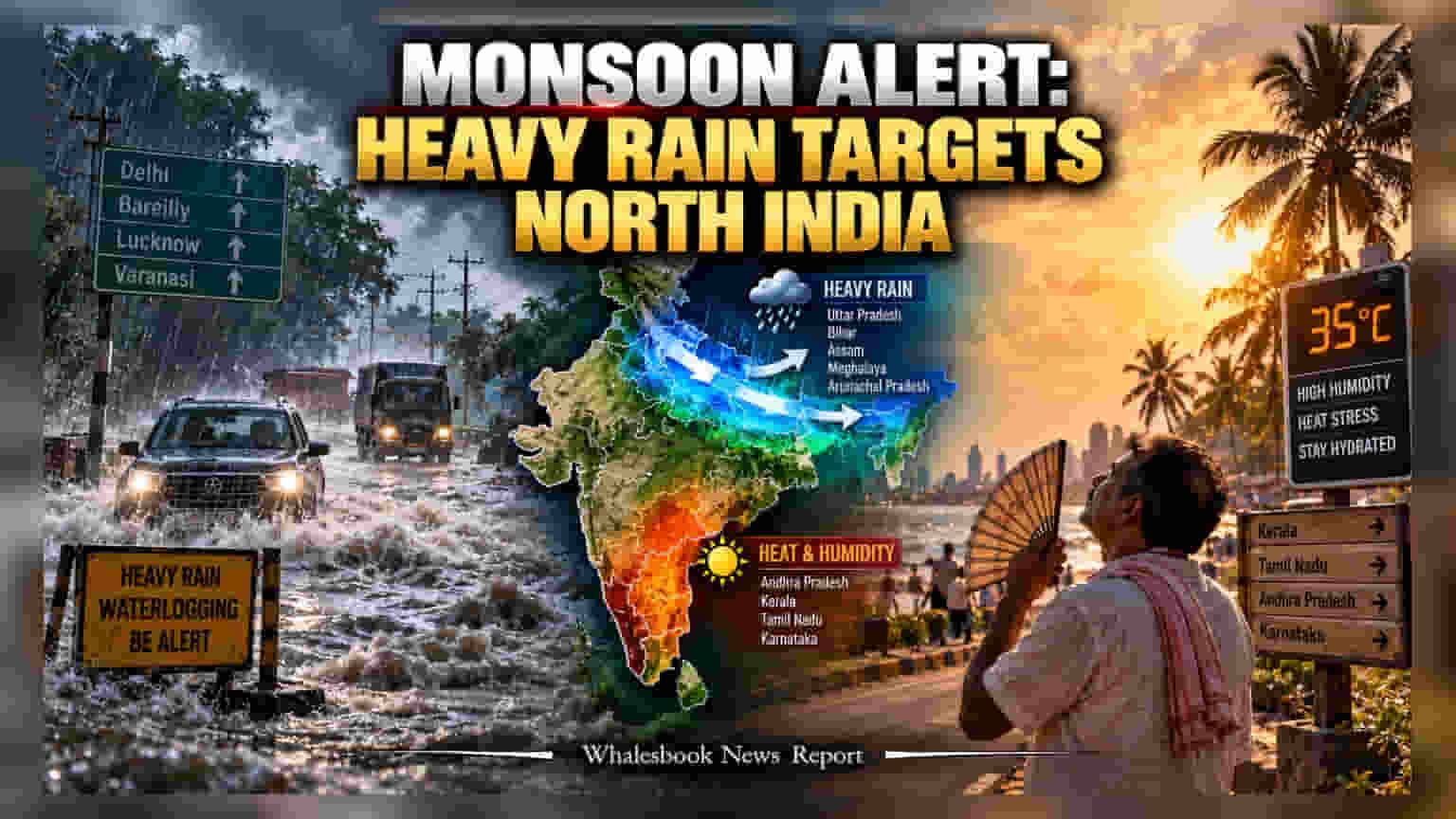
The India Meteorological Department forecasts heavy rain across North and East India, while Southern states face heat stress. This weather volatility creates challenges for the agricultural supply chain and infrastructure projects, key sectors that investors monitor for their influence on economic stability and rural demand.
The India Meteorological Department has reported a sharp divide in weather patterns across the country, with heavy precipitation affecting the North and East, while Southern states contend with intense heat and high humidity. A low-pressure system currently centered over Uttar Pradesh is driving heavy rainfall, with reports of over 300 mm of rain in areas like Bareilly within a single day. The weather agency expects this system to move east-northeast, likely impacting Arunachal Pradesh, Assam, Meghalaya, and Bihar through the coming week.
For the Indian economy, these extreme weather patterns carry implications for key sectors, particularly agriculture and infrastructure. The farming sector faces immediate operational risks from the heavy rainfall in the North. Authorities have advised against irrigation and chemical applications to prevent soil erosion and nutrient runoff, which can impact crop quality and yield. Prolonged moisture exposure and the risk of waterlogging in key growing regions often require investors to keep an eye on supply chain logistics and potential inflationary pressures on perishable food items.
The infrastructure and logistics sectors also face constraints. In mountainous regions like Uttarakhand, the saturation of soil increases the danger of landslides, which can disrupt vital arterial roads and project timelines. For construction and infrastructure companies, such conditions often lead to temporary site closures or logistical delays in moving materials. Urban centers in the affected zones may also experience waterlogging, impacting local commerce and workforce mobility.
In Southern India, including states like Andhra Pradesh and Kerala, the focus is on heat stress. While high temperatures are distinct from the northern deluge, they bring their own set of challenges, particularly for energy demand and public health, which can influence local economic activity. Investors typically track these weather trends because they influence rural consumption patterns, which remain a significant driver for the fast-moving consumer goods sector and broader economic demand.
The most important updates for investors and stakeholders to follow over the coming days include IMD’s updated rainfall forecasts, reports on Kharif crop progress, and any official announcements regarding project delays or supply chain disruptions in the affected northern and eastern states. Monitoring these weather-linked variables is essential for understanding short-term shifts in sector-specific performance and national economic indicators.