

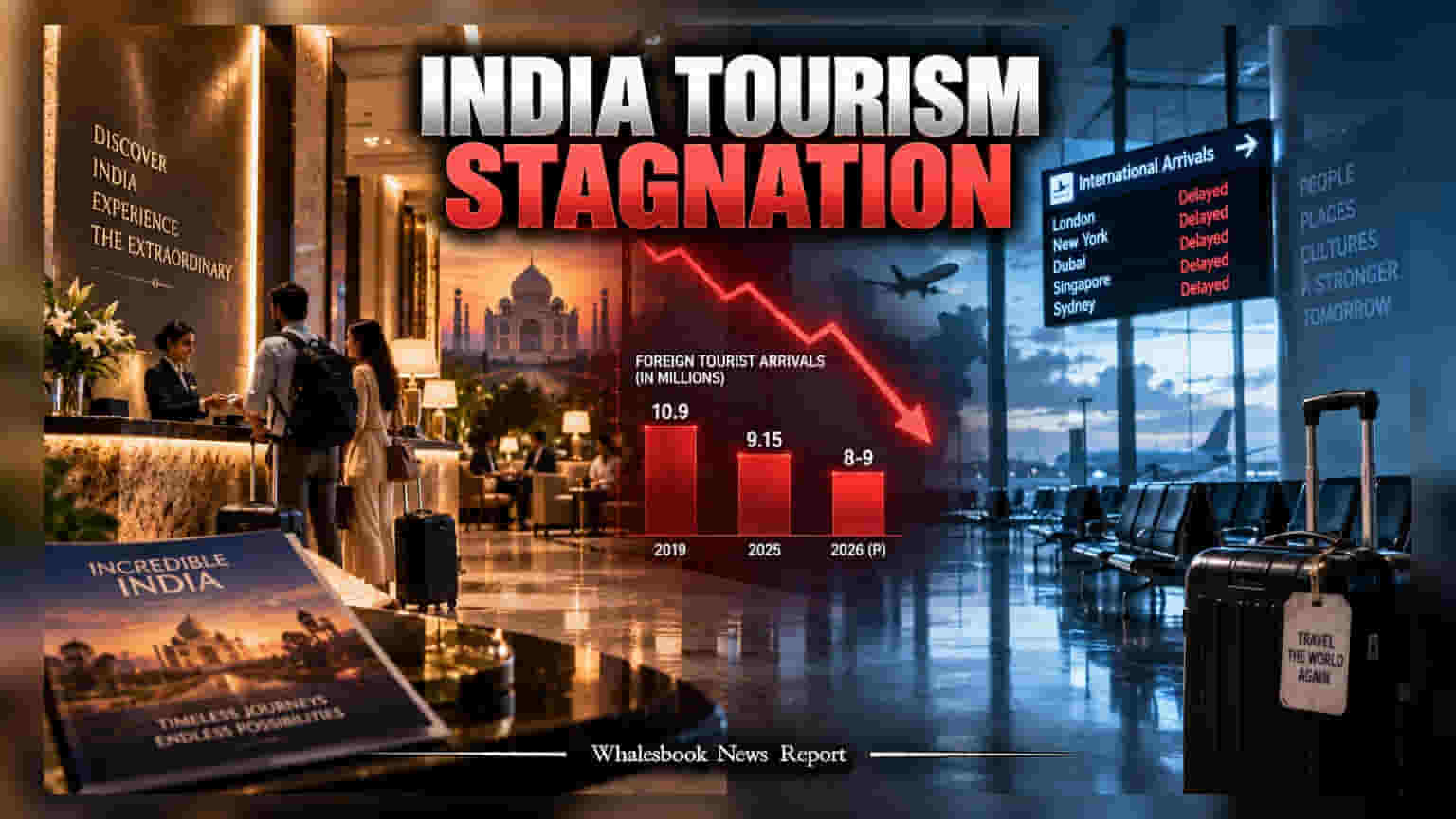
India's foreign tourist arrivals are expected to remain below 2025 levels in 2026, held back by high travel costs and geopolitical tensions. While domestic travel remains strong, the hospitality sector faces pressure to maintain high room rates without a full return of international guests.
India’s tourism sector is grappling with a slow recovery as foreign visitor numbers continue to lag behind pre-pandemic benchmarks. Projections for 2026 suggest that foreign tourist arrivals will likely settle between 8 million and 9 million. This figure is not only lower than the 9.15 million arrivals recorded in 2025 but also remains significantly behind the 10.9 million visitors seen in 2019, before the pandemic began.
Impact of Global Conflicts on Air Travel
The primary hurdle for the industry is the ripple effect of geopolitical conflicts in Ukraine and Iran. These tensions have kept global oil prices elevated, which directly increases the cost of jet fuel. As a result, international airfares have climbed, effectively pricing India out of reach for many leisure travelers who are sensitive to budget changes. When flying to a destination becomes expensive, international tourists often pivot to closer or more cost-effective alternatives, leaving India’s inbound numbers suppressed.
Challenges in the Hospitality Sector
For investors in the hospitality sector, this trend is a key monitorable. While domestic travel remains robust and continues to drive revenue, premium hotel chains rely heavily on international guests to maximize their pricing power. Companies like Indian Hotels Company have noted that while internal demand is buoyant, the inability to fully capture the international segment limits the industry’s potential to significantly increase average revenue per room.
Without a strong influx of high-spending international travelers, hotel operators may find it harder to maintain the high room rates they have enjoyed over the past two years. If foreign arrivals remain stagnant, the sector may experience pressure on profit margins, as hotels will need to rely solely on local demand which can be more cyclical.
Bottlenecks and Potential Triggers
Beyond external economic factors, industry bodies like the Federation of Associations in Indian Tourism and Hospitality have pointed to internal barriers. Complex visa processes—particularly regarding travelers from regions like China—continue to stall potential business.
Furthermore, there is a widely held view within the industry that India lacks a sustained, aggressive global marketing campaign. Without such branding, the country struggles to compete with other regional tourism hubs. Moving forward, market observers will be watching the outcomes of the upcoming BRICS summit in New Delhi this September. Any diplomatic progress from such high-level meetings could act as a catalyst for resolving visa bottlenecks and signaling a friendlier environment for international visitors. Investors will also track quarterly management commentary from major hotel chains to see if they report a recovery in international guest segments or a continued reliance on domestic volume.