

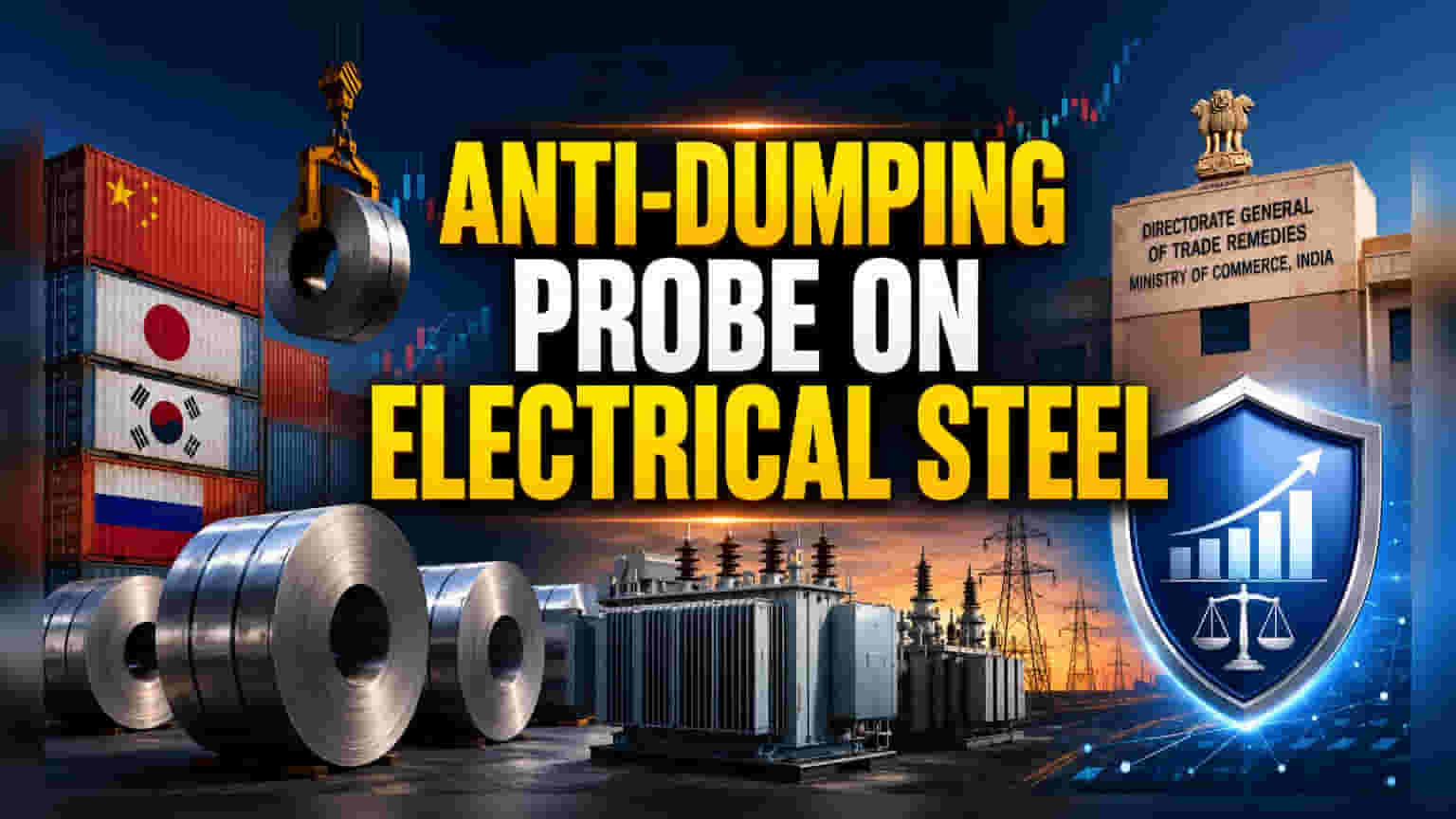
India’s trade regulator has launched an anti-dumping investigation into electrical steel imports from China, Japan, South Korea, and Russia. This move follows a complaint from domestic producers regarding cheap imports. The probe will determine if new duties are necessary, which could impact both local steel manufacturers and companies that use this material to build transformers.
What Happened
The Directorate General of Trade Remedies (DGTR), an arm of India's Ministry of Commerce, has initiated an anti-dumping investigation into imports of electrical steel. This specific material, often called Cold Rolled Grain Oriented (CRGO) electrical steel, is essential for manufacturing cores used in power and distribution transformers.
The probe was triggered by a complaint from JSW JFE Electrical Steel Nashik Pvt Ltd, a joint venture between JSW Steel and Japan’s JFE Steel. The company alleged that cheap imports from China, Japan, South Korea, and Russia are damaging the domestic steel industry. The DGTR has found sufficient evidence to launch a formal inquiry into whether these imports are being sold at unfairly low prices and causing material injury to local producers.
Why This Matters For Steel Producers
For domestic steel producers like JSW Steel and Tata Steel, electrical steel is a value-added product. When international competitors sell these goods at lower prices, it makes it difficult for Indian companies to compete and maintain their profit margins. If the investigation concludes that dumping is taking place, the Ministry of Finance may impose anti-dumping duties. Such measures are typically designed to create a level playing field, which could potentially allow domestic producers to improve their pricing power and protect their market share in the electrical steel segment.
The Impact On Transformer Manufacturers
While this probe aims to support domestic steel makers, it creates a different dynamic for downstream industries, such as transformer manufacturers. Electrical steel is a major raw material for these companies. If the government decides to levy new import duties, the cost of raw materials for transformer makers could increase. Companies that rely on imported steel to keep their own production costs low may face margin pressure unless they are able to pass these costs on to their customers, such as power utilities and renewable energy project developers.
How The Investigation Process Works
The investigation is a procedural process governed by the World Trade Organisation (WTO) framework. The DGTR will collect data, assess the extent of the alleged dumping, and evaluate whether domestic manufacturers have suffered measurable harm. This process takes several months. If the DGTR confirms the injury, it will recommend specific duty amounts to the Ministry of Finance, which has the final authority to implement these taxes.
What Investors Should Track
Investors should monitor the progress of this investigation for updates on timelines and potential duty recommendations. Key focus areas include:
- The timeline for the DGTR’s preliminary and final findings.
- Any public commentary from JSW Steel or Tata Steel regarding their electrical steel capacity and market competition.
- The reaction of transformer manufacturing companies, as they may face higher input costs if duties are approved.
- Official notifications from the Ministry of Finance regarding any interim or final trade measures.