

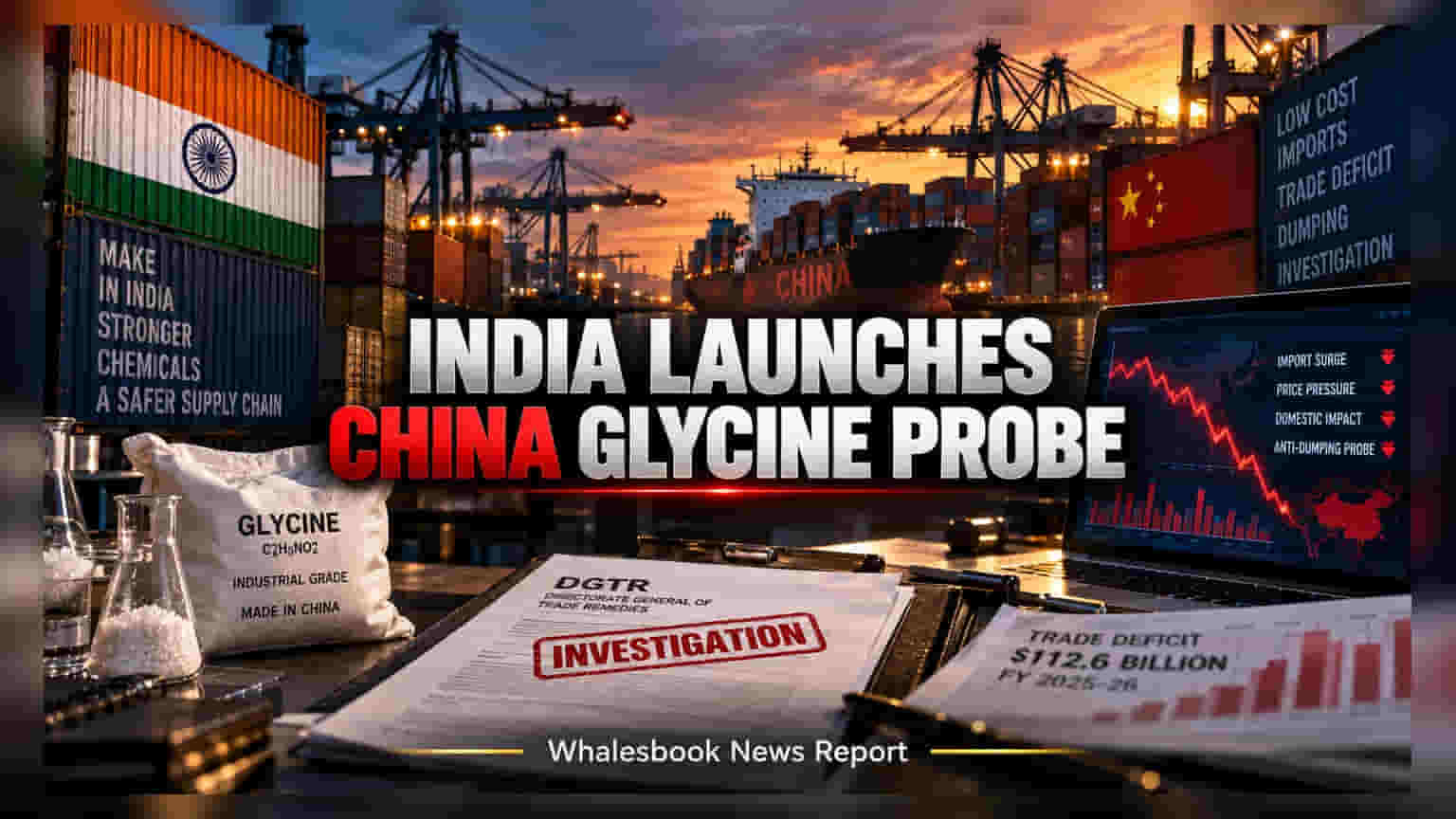
The Directorate General of Trade Remedies (DGTR) has launched two investigations into Chinese glycine imports and the alleged circumvention of anti-dumping duties on CPVC resin. Industry players like DCW, Epigral, and Lubrizol have flagged unfair trade practices impacting local manufacturers. Investors may track these probes, as potential new tariffs could influence competitive pricing and profit margins for domestic chemical companies.
India's trade regulator, the Directorate General of Trade Remedies (DGTR), has launched two separate investigations aimed at protecting domestic chemical manufacturers from unfair import competition. These probes are part of a broader effort to address the ballooning trade deficit with China, which reached $112.6 billion in the 2025-26 fiscal year.
The first investigation focuses on glycine imports from China. This follows a complaint from Avid Organics, which alleges that a surge in low-cost imports is causing financial damage to local producers. The DGTR will analyze trade data from 2022 to 2025 to determine if these shipments are being sold at unfairly low prices, known as dumping. If the investigation confirms material injury to Indian firms, the Union Finance Ministry has the final authority to impose anti-dumping duties to level the playing field.
In a separate enforcement action, the regulator is scrutinizing the alleged evasion of existing anti-dumping duties on Chlorinated Polyvinyl Chloride (CPVC) resin. A group of major domestic manufacturers, including DCW Ltd, Epigral Ltd, and Lubrizol Advanced Materials India, filed a joint application regarding this issue. The companies claim that exporters from China and South Korea are routing their resin shipments through Malaysia, Japan, and Thailand to bypass India's current trade barriers. Regulators noted an unexplained surge in imports from these intermediary countries, suggesting a deliberate attempt to avoid import taxes.
For investors in the specialty chemicals and resin sectors, these investigations carry significant weight. If the DGTR validates these claims, the resulting implementation or tightening of duties could provide domestic companies with greater pricing power against cheap imports. This often helps in protecting profit margins, which have previously come under pressure due to low-cost competition.
However, there are important business considerations to keep in mind. While trade protections can shield local businesses, they may also lead to higher raw material costs for downstream industries that rely on these imported chemicals. Furthermore, the outcome remains subject to the government’s final policy decisions after the investigation is complete. Investors should monitor the progress of these probes, as any change in duty structure could affect the long-term cost of production and market share for listed players in this space. The next key update will be the DGTR's preliminary findings and the subsequent notification from the Finance Ministry regarding any new tariff measures.