

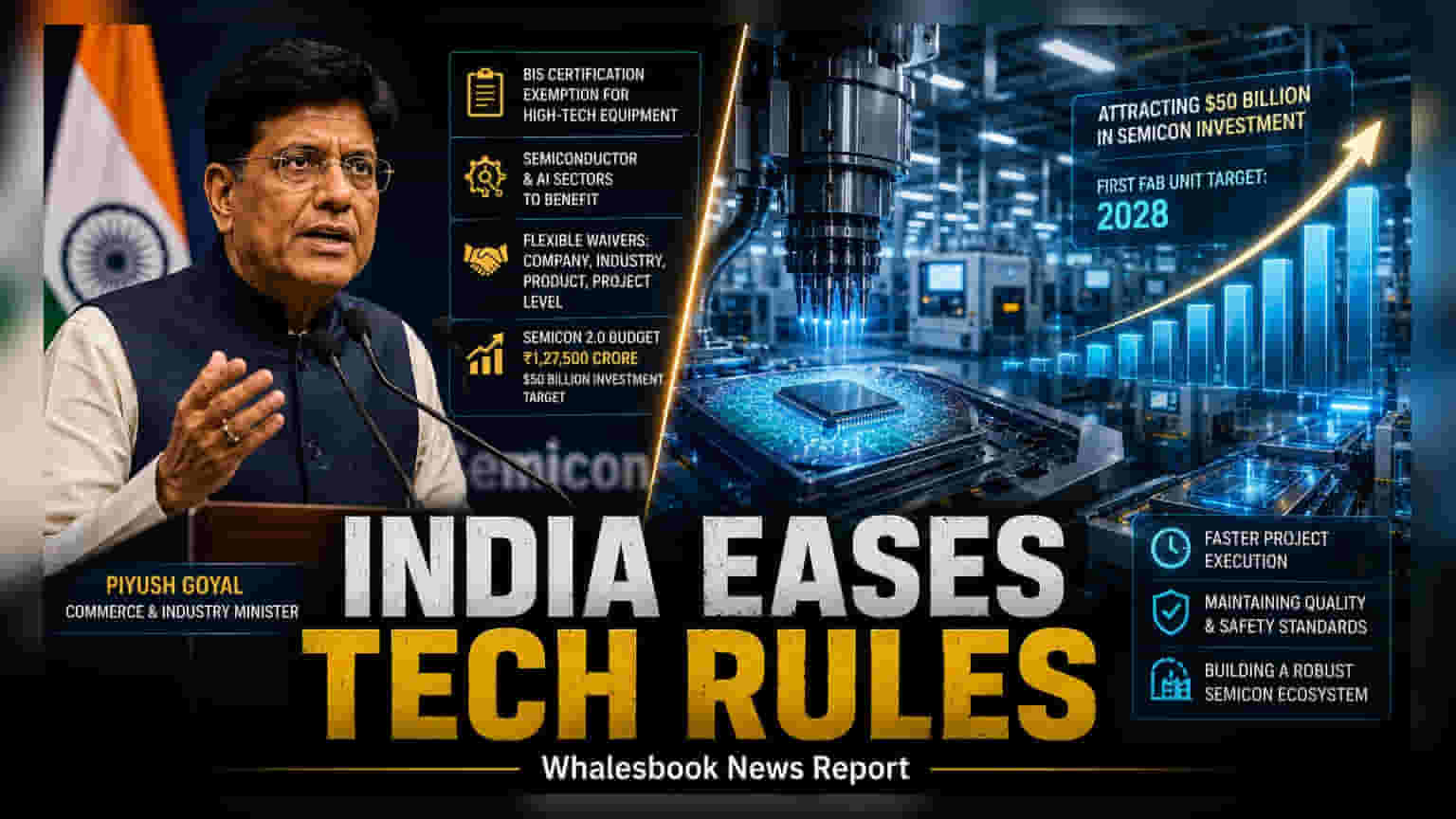
India is developing a new framework to waive mandatory Bureau of Indian Standards (BIS) certification for critical high-tech equipment, addressing delays that impacted the semiconductor and AI sectors. This policy shift is aimed at accelerating the ₹1,27,500 crore 'Semicon 2.0' initiative by reducing red tape for imported manufacturing tools.
The Indian government is preparing a new framework to exempt high-tech companies from mandatory Bureau of Indian Standards (BIS) certification for critical manufacturing equipment. Commerce and Industry Minister Piyush Goyal announced this move on Tuesday, specifically aimed at supporting the semiconductor and artificial intelligence sectors. The decision follows feedback from global manufacturers, including Japanese firms like Tokyo Electron, who reported that complex and lengthy certification processes for imported components were creating bottlenecks in setting up advanced manufacturing facilities.
Flexible Framework for Imports
Instead of a single, blanket rule, the government intends to implement a flexible exemption system. This means that waivers for BIS certification could be granted at the company, industry, product, or project level, depending on the specific requirements of the manufacturer. This targeted approach is designed to balance the government's goal of attracting high-tech investment with the logistical realities of procuring specialized machinery that may not always align with standard domestic certification timelines.
This policy shift is a core component of the broader 'Semicon 2.0' initiative. With a budget of ₹1,27,500 crore, the government aims to establish a robust ecosystem for chip design, as well as the manufacturing of machines, materials, and chemicals. The program expects to attract roughly $50 billion in investment, with the first semiconductor fabrication unit targeted for commissioning in 2028. By streamlining import norms, the government hopes to ensure that project timelines—which are sensitive to delays in equipment delivery—remain on track.
Balancing Speed and Quality Control
While the easing of norms is expected to help companies accelerate their expansion, it also introduces a regulatory challenge regarding quality and safety standards. The core risk for the government is ensuring that these exemptions do not lead to the entry of substandard or non-compliant equipment that could impact the long-term reliability of local manufacturing.
Furthermore, industry observers note that while removing certification hurdles is a positive step, it is only one part of the equation. The success of the 'Make in India' semiconductor mission also depends on broader factors such as infrastructure development—including housing, hospitals, and schools in industrial townships like Dholera and Sanad—as well as the consistent availability of skilled labor and stable power supplies. Investors will be monitoring how the government manages the transition to this new framework, with initial reports suggesting an implementation timeline of approximately two months. The ultimate success will depend on whether this policy helps companies reduce their project execution time without compromising the technical standards required for sophisticated high-tech production.