

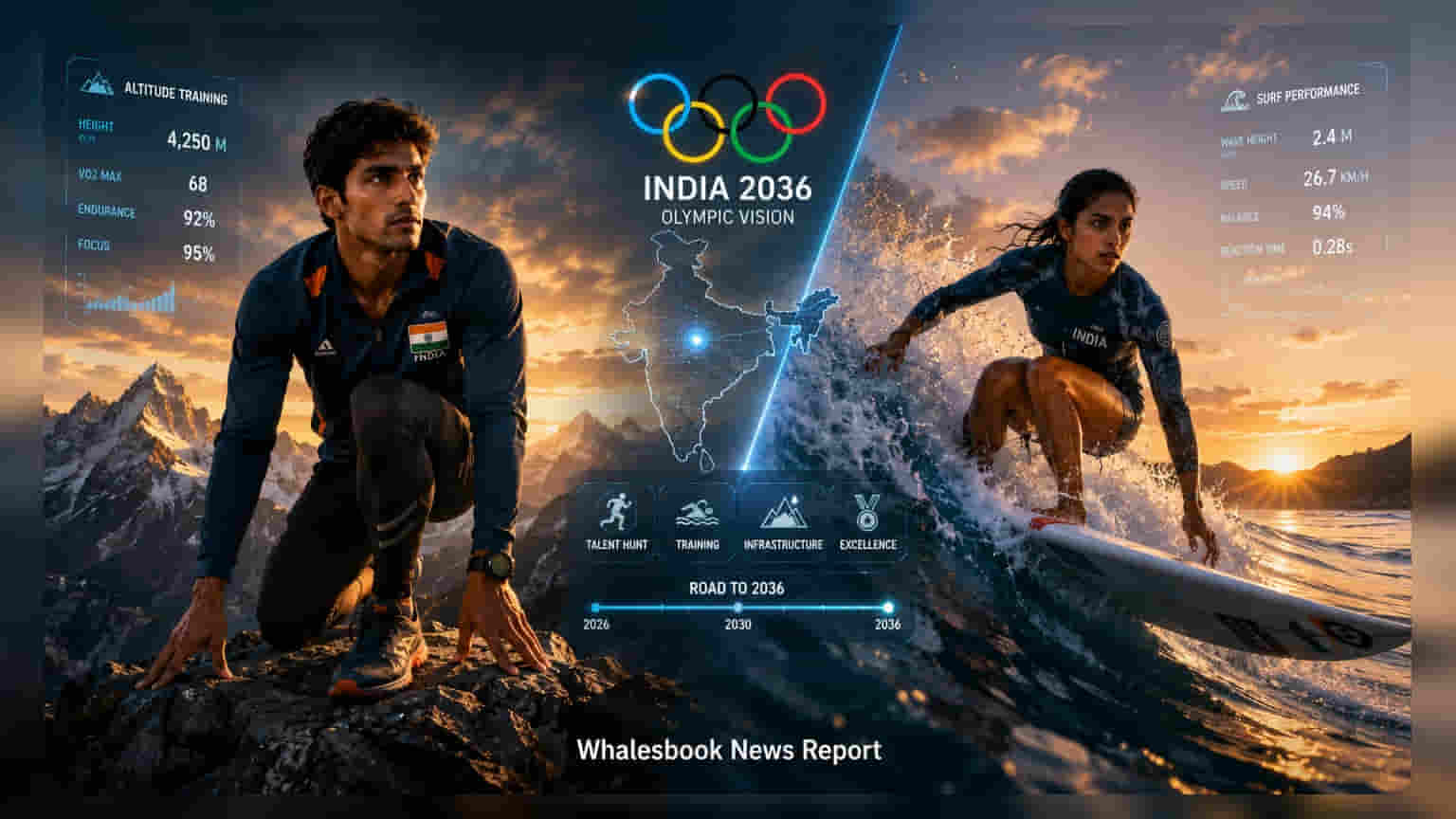
Prime Minister Narendra Modi has announced a strategic shift to develop water and winter sports to boost India's medal prospects for the 2036 Olympic Games. This policy initiative aims to utilize the country’s diverse geography, signaling potential long-term growth opportunities in sports infrastructure, equipment, and training ecosystems.
Prime Minister Narendra Modi has called for a significant change in India's sporting strategy, urging the nation to move beyond traditional sports like cricket and hockey to embrace water and winter disciplines. Speaking at the Khelo India Dialogue on August 27, 2026, the Prime Minister highlighted that India’s vast coastline and mountainous regions remain largely untapped for Olympic-level competition. This directive is part of a broader government roadmap aimed at significantly increasing India's participation in Olympic events by the 2036 Games.
The government’s new focus involves developing specialized infrastructure and training ecosystems to support sports such as surfing, sport climbing, and various winter disciplines. To build a future pipeline of athletes, the administration has reaffirmed a nationwide talent hunt for children aged five to 15. This grassroots initiative is designed to identify potential talent early, creating a structured path for these athletes to compete at international levels, including the upcoming 2030 Commonwealth Games and the 2036 Olympics.
From an economic perspective, this shift in government policy could influence the broader sports industry. As the government seeks to expand its footprint in new sporting categories, the demand for specialized sports infrastructure—such as training facilities, modern sports gear, and high-quality coaching services—is expected to rise. This policy push may create long-term business opportunities for companies involved in sports construction, athletic equipment manufacturing, sports management, and specialized healthcare.
However, the transition involves significant challenges. The sports sector currently contributes a relatively small portion to India’s total GDP, approximately 0.9%, meaning the path to becoming a sporting superpower requires substantial and consistent financial investment. Scaling up to international standards involves more than just identifying talent; it requires sustained funding, high-quality coaching, and the development of public-private partnerships. Investors and market participants should note that the sports industry in India faces structural hurdles, including the need to change the cultural focus from a cricket-centric model to a diversified multi-sport environment.
Furthermore, the success of this initiative will depend on consistent policy execution and long-term commitment from both the public and private sectors. Unlike established sports with deep-rooted infrastructure, water and winter sports will require new specialized facilities, which may face delays or cost overruns. The most important monitorables for the sector will be government budget allocations, the launch of specific infrastructure tenders, and the level of private sector investment in training and equipment manufacturing over the coming years.