 Whalesbook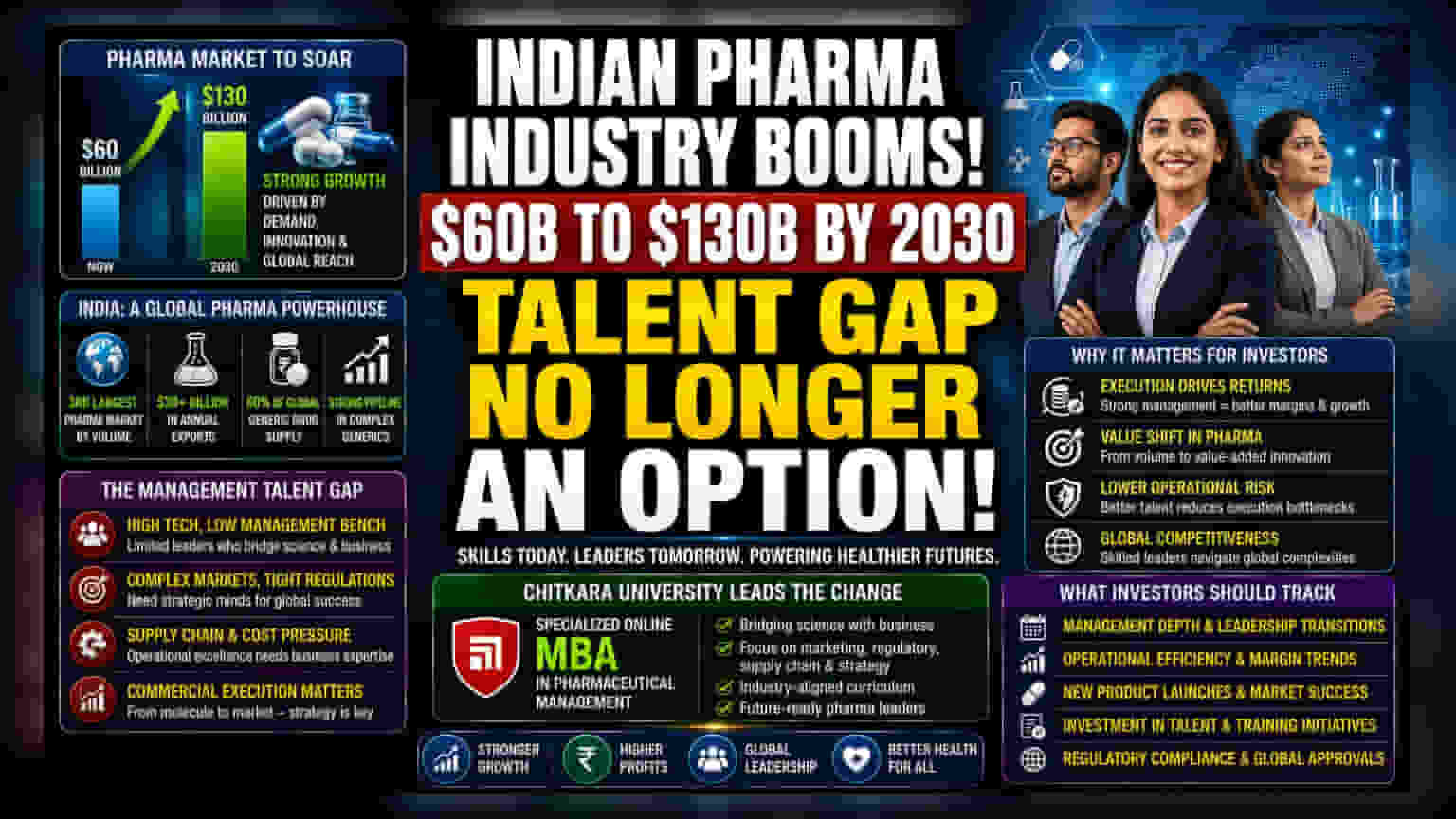


India's pharmaceutical sector is projected to double to $130 billion by 2030. However, the industry faces a critical shortage of leadership talent. While companies have strong technical and scientific expertise, they lack the business management skills needed for marketing and strategy. This talent gap poses a long-term execution risk for investors monitoring sustainable growth and operational margins.
What Happened
The Indian pharmaceutical industry is currently experiencing a significant expansion phase, with the domestic market expected to grow from $60 billion to $130 billion by 2030. While India remains a global leader in generic drug production and exports exceeding $30 billion annually, a new bottleneck has emerged: a shortage of management talent. To address this, institutions like Chitkara University have introduced specialized online MBA programs in Pharmaceutical Management. This initiative aims to bridge the divide between scientific technical knowledge and the business expertise required for complex functions like marketing, regulatory strategy, and supply chain management.
Why This Matters For Investors
For investors, the growth of the pharmaceutical sector is not just about manufacturing capacity or R&D pipelines. It is also about execution. As pharmaceutical companies scale, their ability to navigate complex global regulations, price their products effectively, and manage supply chains becomes a key differentiator. The current management skill gap represents an intangible operational risk. If firms cannot find leaders who bridge the gap between research labs and commercial markets, they may struggle to launch products effectively or maintain profit margins in a competitive, highly regulated landscape.
The Growth Story vs. Execution Risk
The pharmaceutical industry has historically prioritized technical and scientific training. However, as the sector matures, the demand for dual-skilled professionals—those who understand both the science of a molecule and the economics of the market—is rising. Companies that fail to upskill their workforce or attract specialized management talent may face slower growth or inefficient operations. The shift toward higher-value products and complex generics requires a sophisticated commercial strategy that standard technical training does not provide. The emergence of industry-focused management education reflects a broader trend of the sector moving toward more professionalized, strategic management structures.
How Investors May Read This
Investors should view the focus on management talent as a sign of the industry's maturation. The shift is moving away from purely volume-driven production toward value-added growth. When analyzing pharmaceutical companies, shareholders may want to look beyond just R&D spend and revenue growth. Management depth and the ability to execute on commercial strategies are becoming equally vital to long-term performance. A company that invests in its human capital or attracts top-tier management talent is better positioned to handle the complexities of both domestic and international expansion.
What Investors Should Track
Moving forward, investors should monitor how pharmaceutical companies manage their leadership transitions and talent retention. Key areas to track include:
- Operational Efficiency: Watch whether companies can maintain or improve their profit margins as they scale, which often depends on effective supply chain and marketing management.
- Product Launch Success: The ability to successfully launch and market new drugs in complex regulatory environments is a direct reflection of management quality.
- Talent Investment: Pay attention to management commentary regarding human resource development, training programs, and the hiring of specialized personnel in non-technical roles.
- Regulatory Compliance: The ability to manage global regulatory hurdles is a specialized management skill that is critical for export-oriented firms.
By tracking these indicators, investors can better understand whether a company is building the structural capacity to support its future growth targets.