

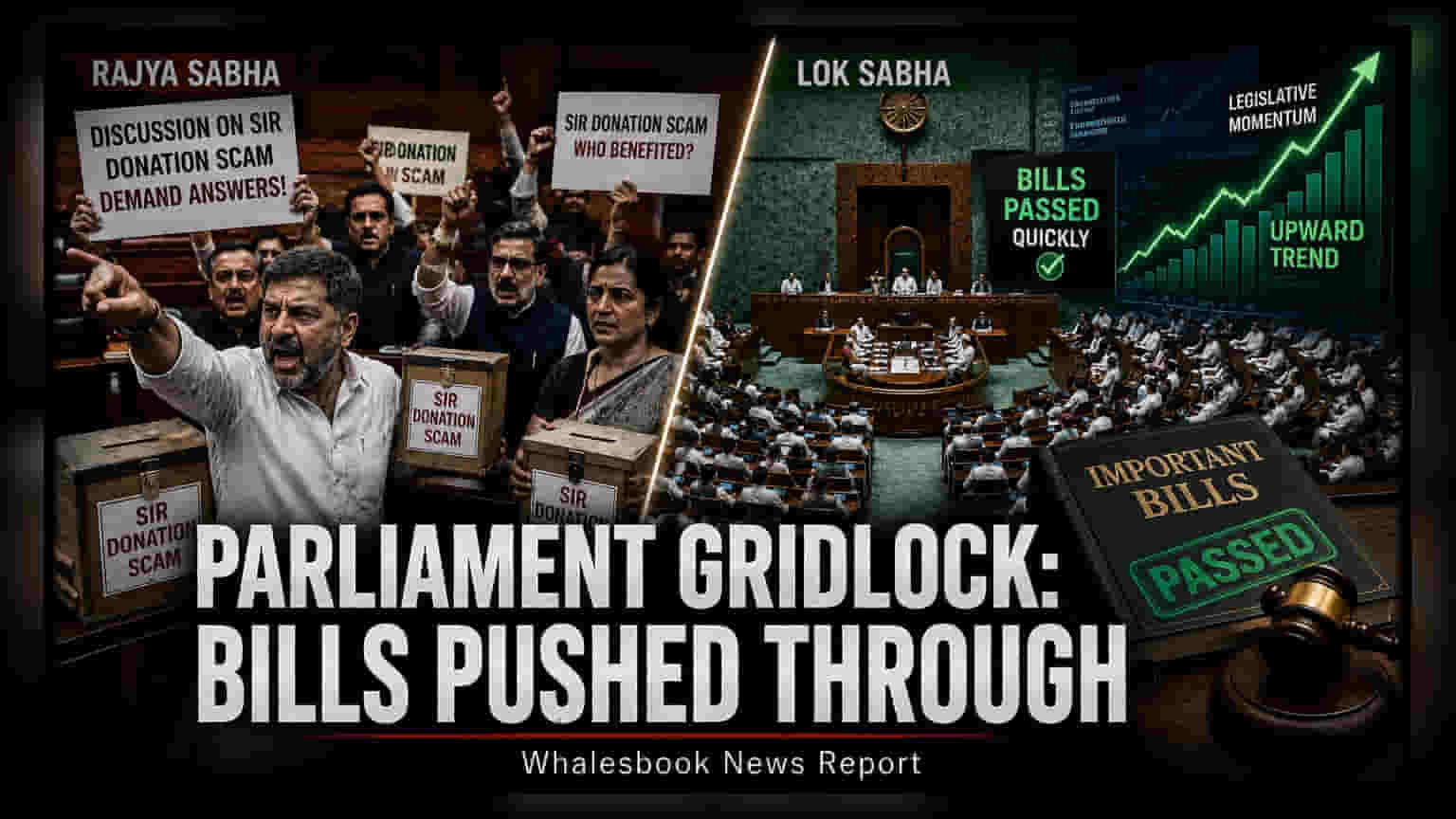
India's Monsoon Session continues to face significant interruptions on its 14th day as Opposition protests persist. Despite the deadlock, the government has moved ahead to pass crucial legislation, including the Taxation and Other Laws (Amendment) Bill and the Bankers' Books Evidence Bill, aiming to streamline regulatory processes.
The Monsoon Session of the Indian Parliament has reached its 14th consecutive day of significant disruptions, with recurring adjournments in both the Lok Sabha and Rajya Sabha. Opposition parties continue to protest over several social and political issues, including concerns regarding the management of donation funds and police actions against students. While these protests have effectively suspended the Question Hour and limited legislative scrutiny, the government has continued to push forward with its legislative agenda, often passing bills via voice vote without active debate.
Key legislation cleared during this period includes the Taxation and Other Laws (Amendment) Bill, 2026, which was passed in the Lok Sabha on August 6. Additionally, the Bankers' Books Evidence Bill, 2026, was passed on August 5. These bills are significant for the financial and corporate sectors, as they often update regulatory frameworks to reflect modern digital practices and administrative needs. Another notable piece of legislation passed is the Registration of Births and Deaths (Amendment) Bill, 2026. This bill introduces a stricter requirement for births or deaths registered more than two years after the event, now mandating verification by a judicial magistrate, a change that aims to improve documentation accuracy but may increase the procedural burden for applicants.
For investors and market observers, the swift passage of these bills without comprehensive parliamentary discussion introduces a layer of operational and regulatory uncertainty. Legislative debate is traditionally where potential loopholes, implementation challenges, and sector-specific impacts are identified and addressed. The current environment, marked by a lack of deep deliberation, means that businesses and legal experts will need to pay close attention to the specific rules and notifications that follow these acts, as these will define how the laws function in practice.
The persistent deadlock also highlights a broader governance risk. With the session scheduled to conclude on August 13, the continued suspension of formal parliamentary oversight mechanisms, like the Question Hour, limits the public accountability process on policy execution. While the government maintains that the legislative business must proceed, the Opposition remains firm in its demands for detailed statements from the government on sensitive public interest matters. As the session progresses, the primary monitorable for stakeholders will be the government's ability to navigate these political differences while ensuring that the administrative and financial reforms introduced are clear, implementable, and well-integrated into the existing economic framework.