

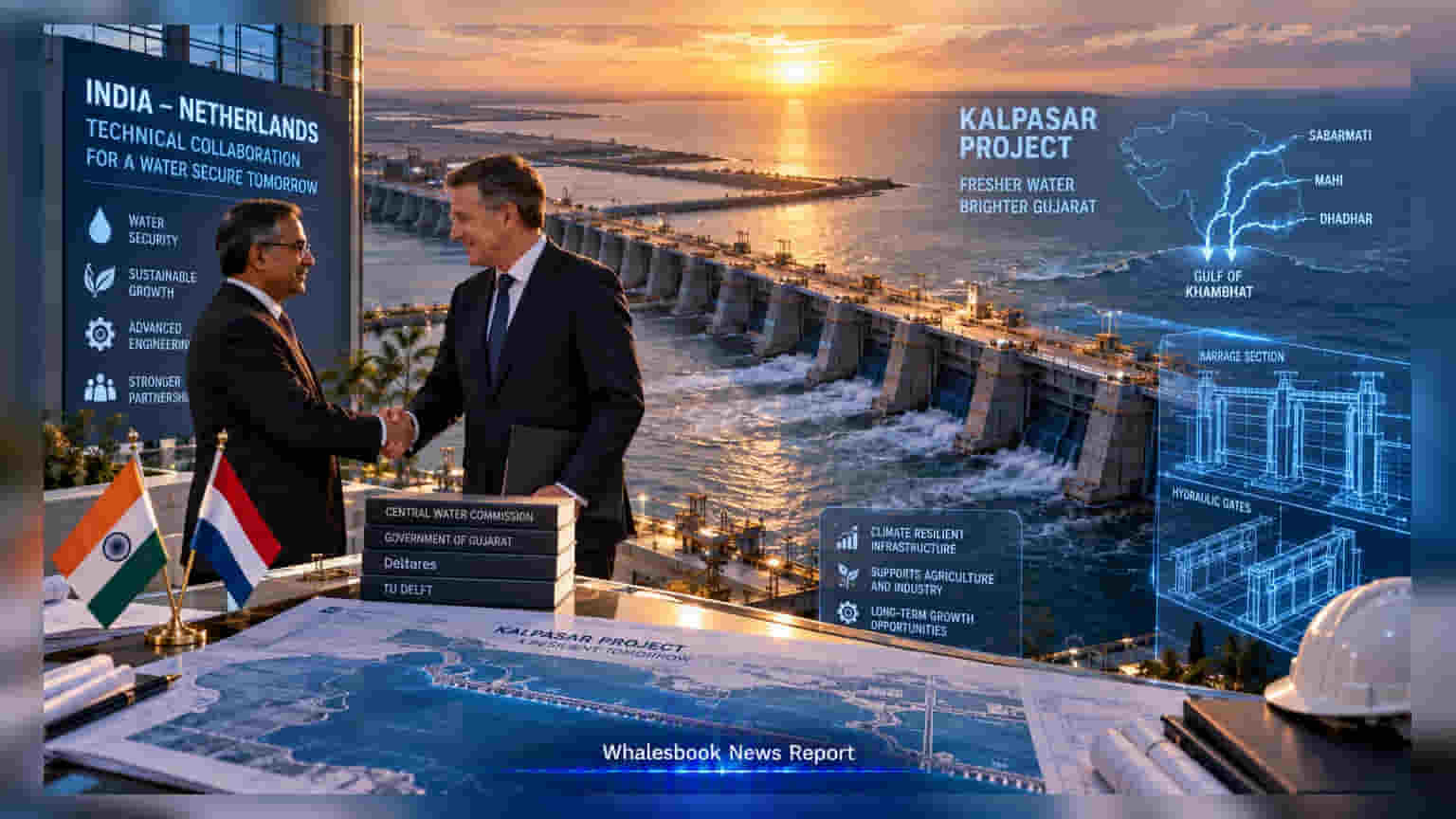
India and the Netherlands have signed a technical pact to move forward with the massive Kalpasar project in Gujarat. This partnership focuses on using Dutch expertise to turn the Gulf of Khambhat into a large freshwater reservoir. For investors, this signals a move from planning to technical implementation for a project that will require significant long-term infrastructure spending.
India and the Netherlands have formalized a technical collaboration to support the development of the Kalpasar project in Gujarat. This agreement brings together the Central Water Commission, the Gujarat government, and specialized Dutch institutions such as Deltares and TU Delft. The partnership is designed to tackle the complex engineering required to build a massive freshwater reservoir in the Gulf of Khambhat.
The Kalpasar project is one of the most ambitious infrastructure ideas in India. The plan involves building a dam across the Gulf of Khambhat to capture freshwater runoff from rivers like the Sabarmati, Mahi, and Dhadhar. By doing this, the project aims to create a giant freshwater lake, which could help manage water scarcity and support both industrial and agricultural growth in coastal Gujarat.
From an investor perspective, this project is essentially a massive, long-term engineering challenge. While the formalization of this pact suggests a commitment to moving beyond the planning stage, the project is still in the technical and preparatory phase. The involvement of Dutch experts, who have extensive experience in flood management and coastal infrastructure like the Afsluitdijk barrier, is intended to help the government create a plan that is resilient to climate and tidal changes.
However, it is important for investors to understand the risks associated with projects of this scale. Mega-infrastructure projects in India often face long gestation periods, meaning it could take many years before any tangible revenue impact or contract opportunities arise for construction companies. The engineering hurdles are also significant. The Gulf of Khambhat has very high tidal ranges and saline water, which requires specialized technology to manage. Potential investors should also be aware of the historical challenges that often plague such large projects, including the risk of cost overruns, delays in securing environmental clearances, and the complexity of project execution.
Currently, the project is focused on technical implementation and capacity building rather than immediate construction. For the market, the key monitorable will be the transition from these planning stages to the actual tendering process. Investors should track official government updates regarding initial funding allocations, environmental approvals, and project timelines, as these factors will determine the viability and the eventual participation of large engineering and construction firms.