

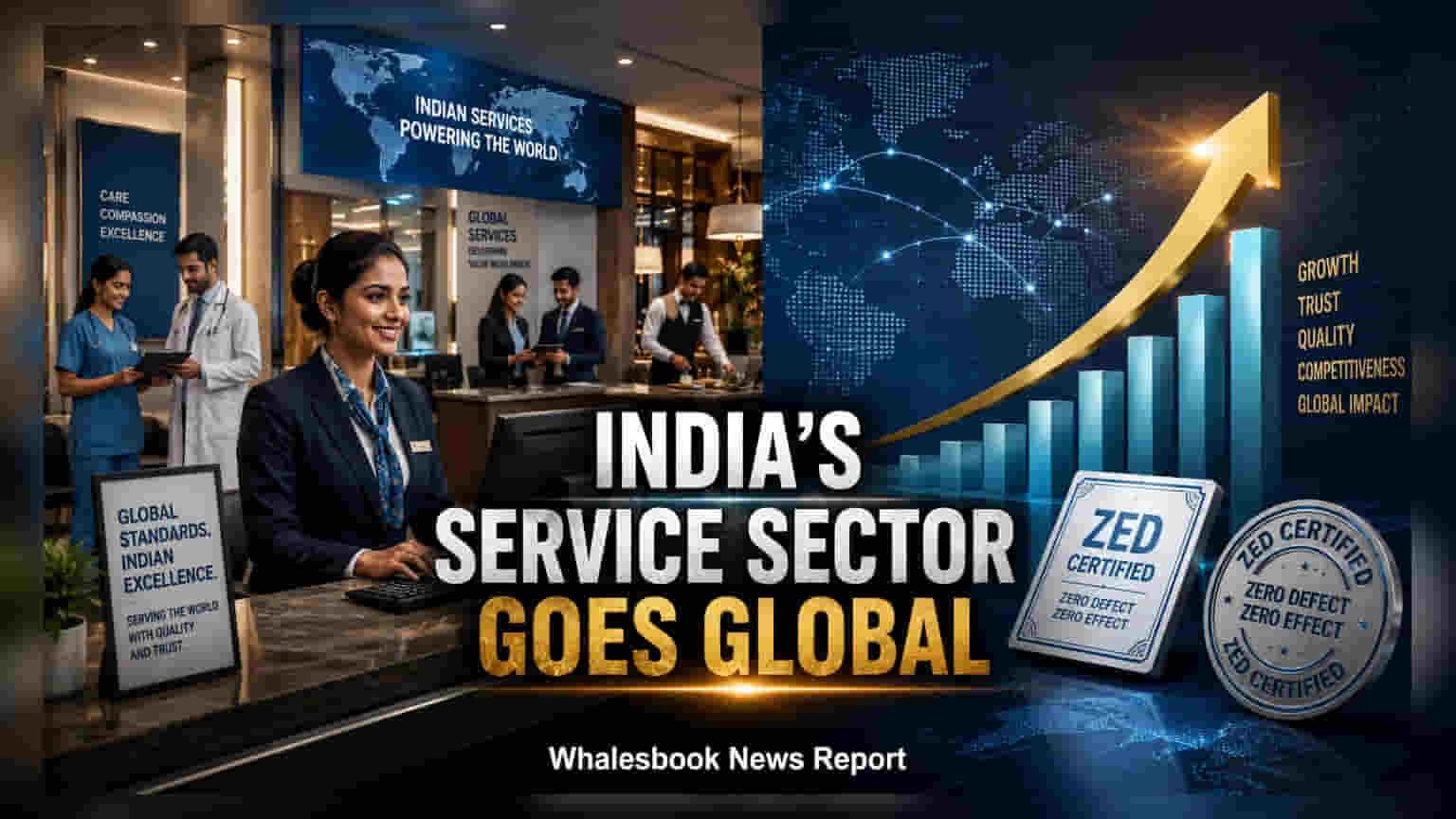
The Indian government is extending its 'Zero Defect Zero Effect' (ZED) quality certification program to service-based MSMEs to boost global competitiveness. The initiative aims to help smaller service providers improve operational efficiency, formalize their business structures, and gain better access to credit and financial incentives.
The Indian government is expanding its 'Zero Defect Zero Effect' (ZED) certification scheme to include the service sector, a strategic move to help smaller businesses meet international quality standards. Previously limited to the manufacturing industry, the ZED program aims to minimize waste, improve efficiency, and ensure higher quality output—values that are now being tailored for service-oriented businesses like healthcare and hospitality.
The Quality Council of India (QCI) and the National Productivity Council are currently developing specific quality parameters suitable for the service sector. This is a complex task, as service quality is often intangible compared to manufacturing, where product defects are easier to measure. The government's goal is to bring a significant portion of the country's 92 million small businesses, of which service firms account for approximately 38%, into the formal economy.
For business owners, the ZED scheme provides more than just a certification. It offers financial support, including subsidies that cover up to 80% of certification costs for micro-enterprises and 50% for medium-sized ones. The program is backed by the MSME Champions Scheme and the World Bank-supported Raising and Accelerating MSME Performance (RAMP) initiative. Beyond direct subsidies, certification is designed to signal to banks and investors that a company operates with standardized, reliable processes, which can improve access to credit and lower the cost of borrowing.
This policy update complements the recently passed Micro, Small, and Medium Enterprises Development (Amendment) Bill, 2026. While the ZED expansion focuses on quality and global competitiveness, the new legislation addresses the systemic issue of payment delays and streamlines dispute resolution. Together, these measures aim to create a more stable environment for MSMEs to grow and integrate into global supply chains.
Investors and stakeholders should monitor the pace at which service-sector businesses adopt these standards. A key risk remains in the execution phase; defining standardized metrics for diverse service industries is challenging, and smaller firms may find the process of formalization and assessment time-consuming. Additionally, the ultimate effectiveness of these programs relies on whether they lead to tangible improvements in operational efficiency and credit availability for these businesses. The next major update to track will be the official rollout of the standardized assessment criteria for specific service industries.