

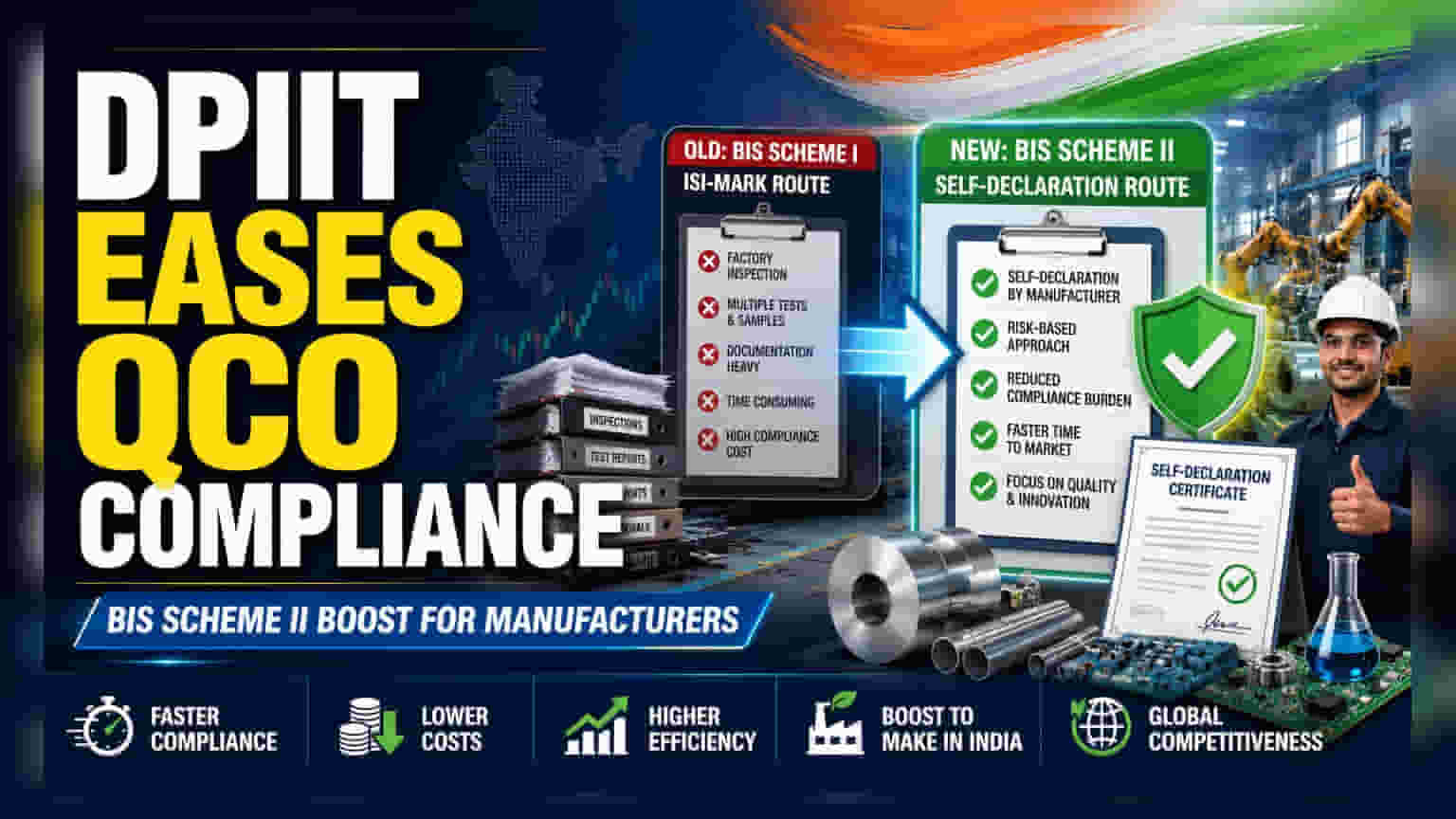
The government has introduced a risk-based system for Quality Control Orders (QCOs), allowing compliant manufacturers to switch to BIS Scheme II for self-declaration. This shift from the stricter ISI mark requirements aims to reduce compliance costs and accelerate industrial operations.
What Happened
The Department for Promotion of Industry and Internal Trade (DPIIT) has launched a new risk-based compliance mechanism for Quality Control Orders (QCOs). This move, formalized through the Transition Facilitation (Quality Control) Order, 2026, simplifies how companies comply with Indian product standards. Instead of mandating the traditional ISI Mark (BIS Scheme I), which requires rigorous factory inspections and continuous surveillance, the government will now allow qualified manufacturers to use BIS Scheme II. This system relies on a self-declaration of conformity, offering a more flexible route for companies with a proven track record of quality and compliance.
Why This Matters for Manufacturers
For manufacturing companies, compliance with BIS standards is a mandatory part of operations for many products, including chemicals, electronics, and steel. Under the older Scheme I, obtaining the ISI mark often involved lengthy wait times, complex documentation, and physical factory assessments by regulators. These bottlenecks can delay the supply chain and increase overhead costs. By allowing a transition to Scheme II, the government is essentially cutting the red tape for companies that have demonstrated they can reliably meet quality standards. This is expected to improve operational efficiency and potentially lower the cost of doing business for compliant firms.
The Eligibility Criteria
This regulatory relief is not available to every company. The DPIIT has specified that access to this simplified route depends on a manufacturer's demonstrated track record. To qualify for the self-declaration route, companies must show consistent technical capability, a commitment to research and development, and a strong history of compliance. Specifically, the order benefits manufacturers who have a clean three-year record of adhering to quality orders without any defaults. This ensures that while the compliance process is easier, the focus on product quality and consumer safety remains a priority.
How Investors May Read This
Investors often view rigid compliance frameworks as a operational headwind because they can slow down production, project timelines, and supply chain adjustments. A more flexible, risk-based approach is generally seen as a positive development for the manufacturing sector, as it allows companies to pivot faster and manage resources more effectively. While this does not change the core quality requirements for products, the reduction in administrative friction can improve margins over time by reducing compliance-related expenses and delays. However, the exact impact will vary by company, as it depends on whether a firm meets the strict eligibility criteria for the Scheme II route.
What Investors Should Track
Moving forward, the key factor for investors will be how effectively companies leverage this new flexibility. The important monitorables include management commentary on reduced compliance costs, potential improvements in lead times for raw material procurement, and whether the company's specific product portfolio qualifies for the Scheme II transition. Investors should also watch for any follow-up notifications from the DPIIT that might provide further clarity on which specific product categories or sectors will be the primary beneficiaries of this new, more flexible regime.