

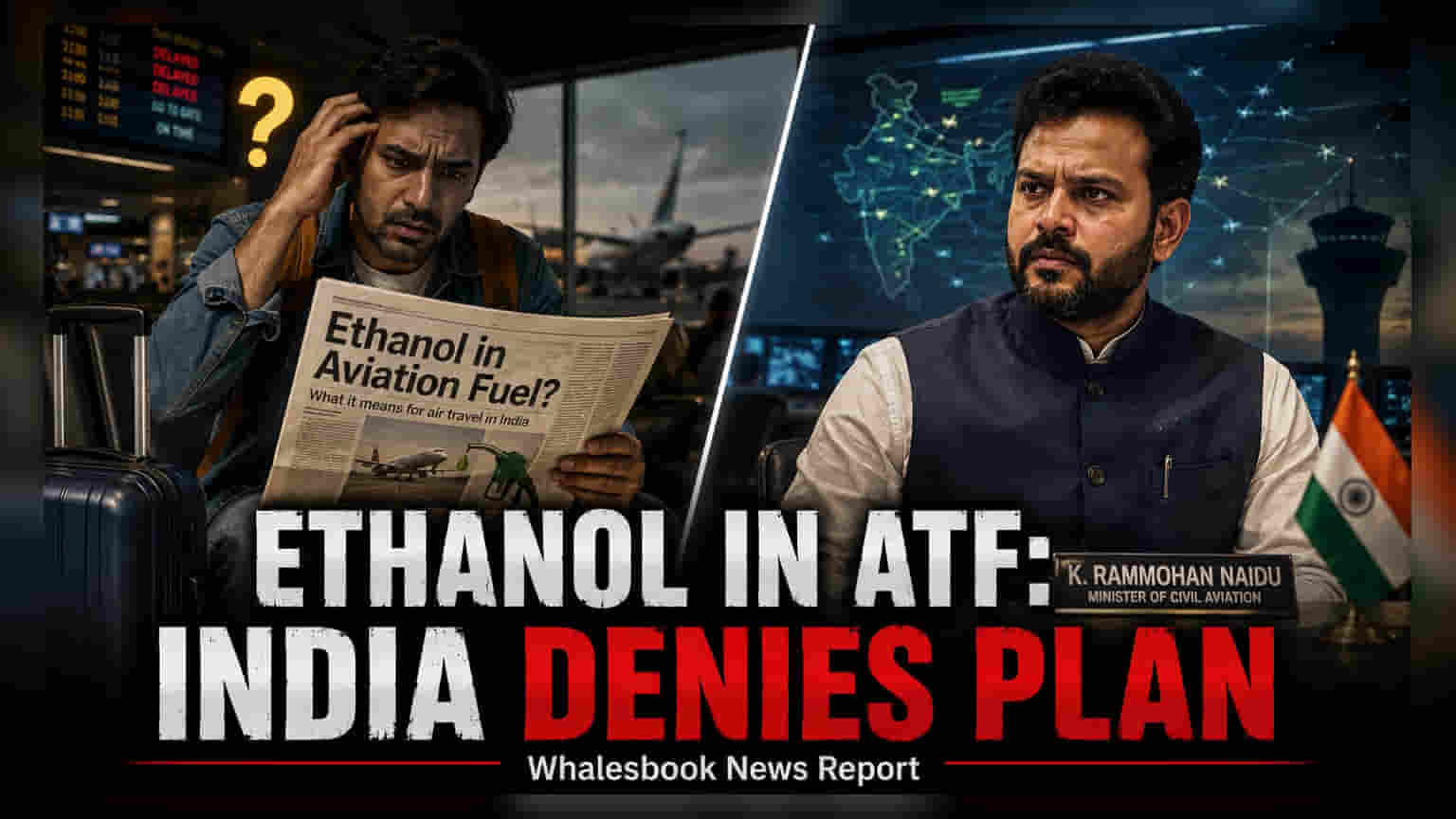
Civil Aviation Minister K. Rammohan Naidu has officially denied plans to blend ethanol into Aviation Turbine Fuel. The clarification aims to correct misinformation after claims surfaced regarding potential impacts on flight safety. Investors should note the distinction between ethanol and Sustainable Aviation Fuel (SAF), which follows a clear, internationally approved adoption roadmap.
Union Civil Aviation Minister K. Rammohan Naidu has categorically dismissed claims suggesting that the government intends to blend ethanol with Aviation Turbine Fuel (ATF). The Minister described the reports as false and warned that spreading such misinformation creates unnecessary anxiety regarding passenger safety.
The clarification comes following public comments, notably from former Delhi Chief Minister Arvind Kejriwal, which alleged that the government was considering mixing ethanol into jet fuel. Minister Naidu emphasized that passenger safety remains the highest priority for the government and that no such policy shift is under consideration.
Clearing the Confusion Between Fuel Types
Market participants and air travelers should distinguish between ethanol and Sustainable Aviation Fuel (SAF), as the two are often confused in public discourse. Ethanol is commonly used as a biofuel additive in automotive fuels. In contrast, Sustainable Aviation Fuel (SAF) is an internationally certified aviation fuel that meets rigorous global safety standards defined by the International Civil Aviation Organization (ICAO).
SAF is chemically distinct from ethanol and is designed to reduce the aviation industry's carbon footprint while maintaining engine performance and flight safety. It is not an 'ethanol blend' in the context used for road transport.
Official SAF Roadmap and Regulatory Context
India has already established a clear, long-term policy roadmap for the adoption of SAF, which is unrelated to the controversial blending practices seen in the automotive sector. In April 2026, the Ministry of Petroleum and Natural Gas amended the Aviation Turbine Fuel (Regulation of Marketing) Order to officially include 'synthesised hydrocarbons,' or SAF.
This regulatory framework aligns with global CORSIA (Carbon Offsetting and Reduction Scheme for International Aviation) standards. India’s target for SAF adoption involves a gradual integration: 1% blending for international flights by 2027, 2% by 2028, and reaching 5% by 2030.
For investors and industry stakeholders, the key takeaway is the stability of aviation fuel policy. The distinction between legitimate SAF adoption—which is necessary for global compliance—and ethanol blending is crucial. Misinformation regarding fuel composition can lead to temporary market confusion, but the government's official stance reaffirms adherence to established international safety and quality standards for all aviation fuel supplies.