

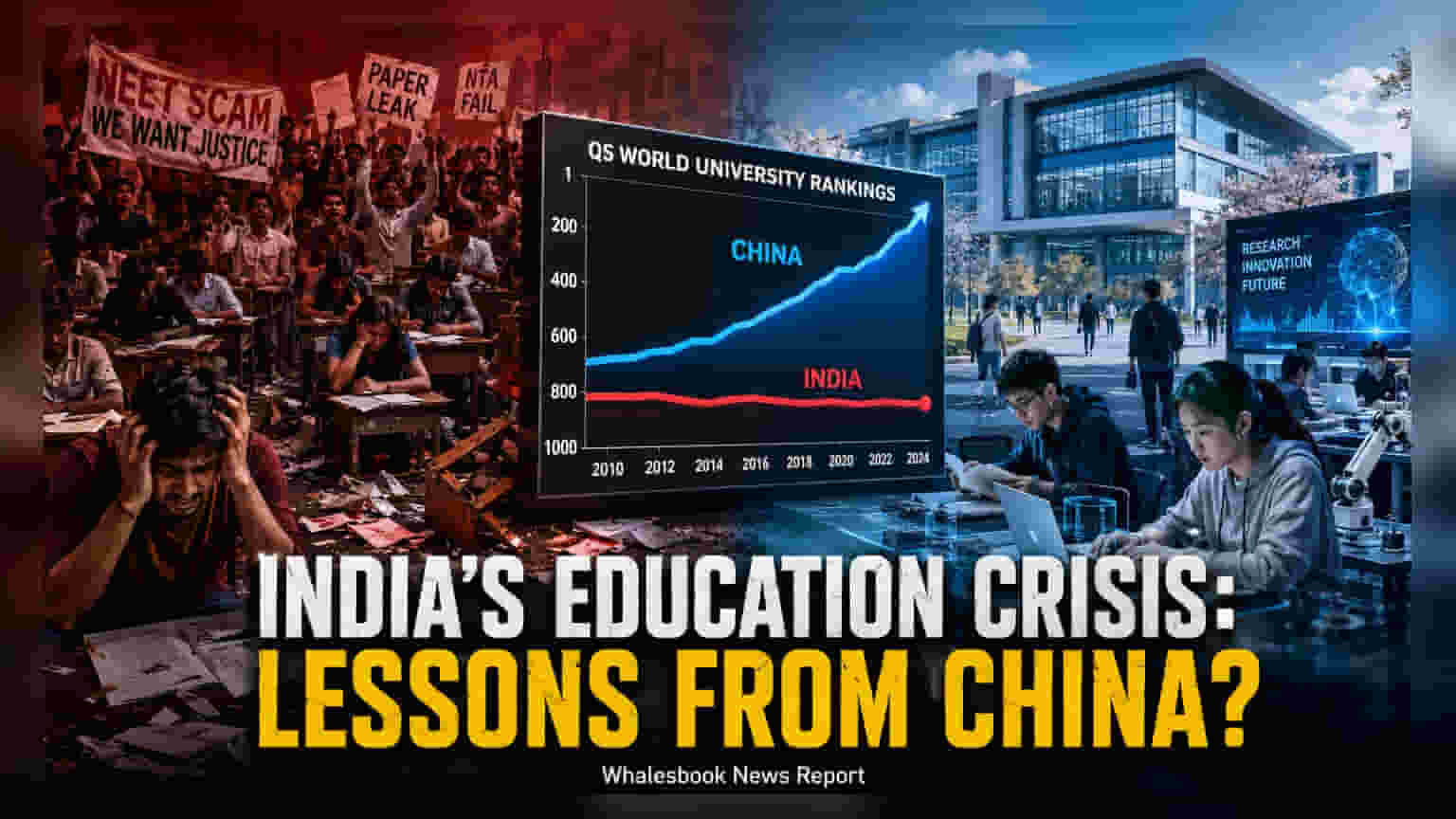
Following recent examination controversies, experts are debating structural reforms for India's higher education system modeled after China's targeted university investment strategy. The shift aims to move beyond systemic underfunding by concentrating resources on research-heavy institutions aligned with national technological goals.
Detailed Coverage
The recent NEET examination paper leak has triggered a national debate that goes beyond immediate concerns of test security. Policy analysts and educational experts are now examining whether India’s current higher education framework can effectively support the country's long-term economic and technological ambitions. As the government evaluates potential structural changes, the conversation has increasingly turned toward the strategic models used by global peers, specifically China, to elevate university rankings and research capabilities.
Strategic Resource Concentration and Funding
A central critique of India's current academic landscape is the thin distribution of funds across an expansive, often fragmented system. This approach has led to what observers describe as a lack of depth in critical research areas. By contrast, China’s transformation into a hub for elite higher education over the past three decades was driven by concentrated funding models. Initiatives such as Project 211 and Project 985 directed substantial state capital into specific universities and technical disciplines. For India, this suggests a move toward creating centers of excellence focused on emerging fields like artificial intelligence, semiconductor manufacturing, and biotechnology rather than relying solely on a broad-based, underfunded expansion.
Accountability and Performance-Linked Autonomy
Another pillar of the proposed reform involves shifting how universities are managed. In many Indian institutions, administrative and bureaucratic hurdles often delay the modernization of curricula and academic decision-making. The discussion currently highlights the need for performance-linked autonomy. Under this model, institutions would gain greater freedom from central control in exchange for strict accountability regarding research output, student employability, and academic outcomes. The focus is to ensure that autonomy does not become a pretext for inefficiency but rather a tool to improve the quality of education.
Integrating Research with National Economic Goals
To bridge the gap between academic learning and industrial needs, there is a push to better align university research with national economic priorities. In the Chinese model, elite universities are deeply integrated with industrial clusters and national technology missions. For Indian investors and policymakers, this represents a potential shift where higher education institutions could become essential partners in industrial growth. Such a change would require a more dynamic approach to course development, allowing universities to quickly update curricula to include AI and interdisciplinary studies, thereby addressing the mismatch between current degree programs and the demands of the modern, technology-driven job market. The primary monitorable for this sector will be how the government balances these ambitious reform objectives with the need to maintain affordable access for the broader student population.