

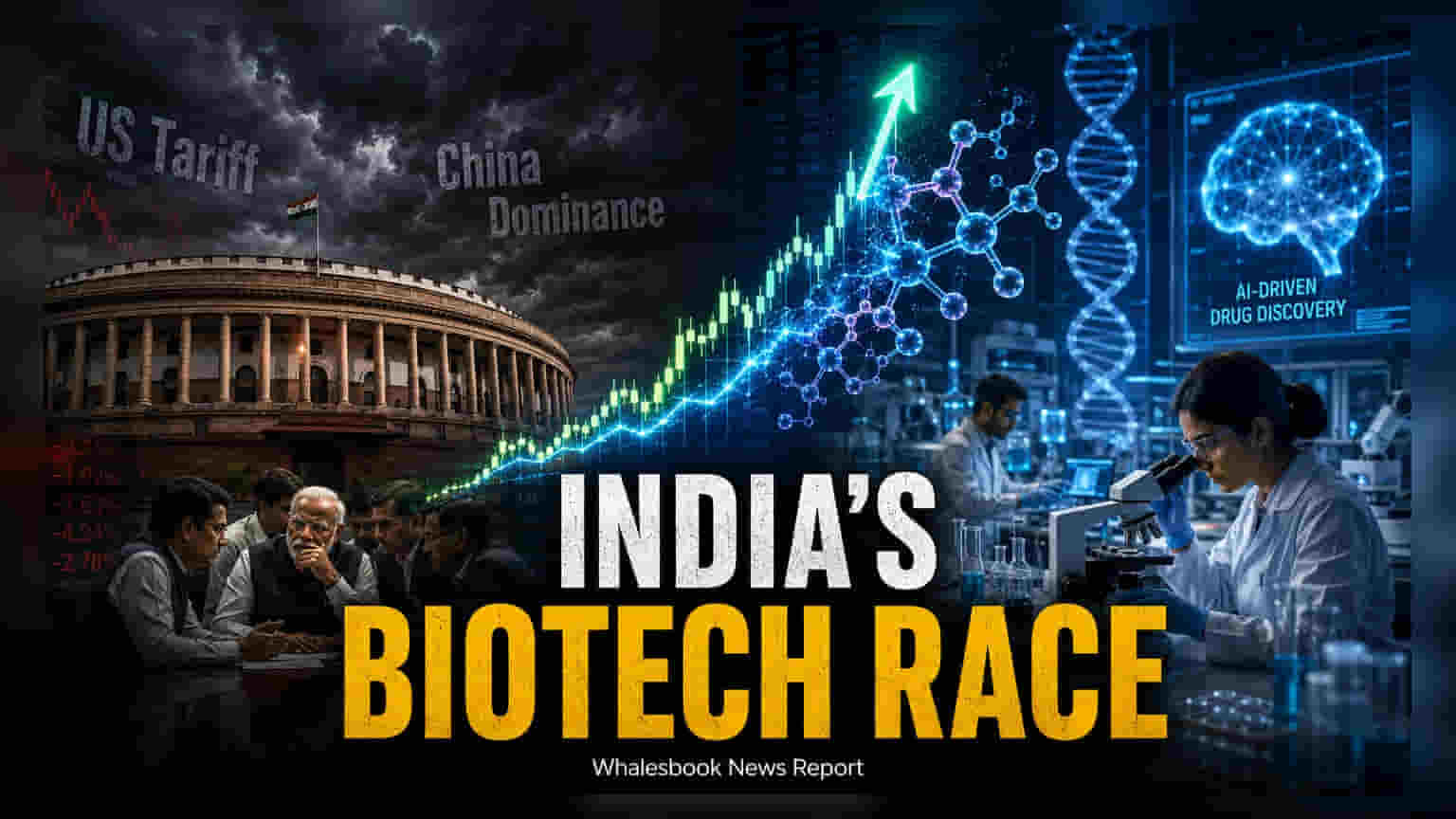
Niti Aayog has outlined a strategic roadmap to position India among the world’s top three biotech powers by 2035. To achieve this, the government is focusing on regulatory reforms and integrating AI into drug discovery to reduce reliance on foreign active pharmaceutical ingredients. Investors should track future policy updates on clinical trial approvals and fiscal incentives, which will determine the sector's long-term growth and competitiveness.
Detailed Coverage
India’s biotechnology sector is undergoing a strategic transition as it aims to capture a larger share of the global bio-economy. As geopolitical tensions reshape supply chains for pharmaceutical ingredients, Niti Aayog has set an ambitious target to establish the country as one of the top three global biotech powers by 2035. This shift is intended to move the nation beyond its traditional role as a supplier of low-cost generic drugs toward becoming a leader in high-value biotechnological innovation.
Overcoming Regulatory Hurdles and Bottlenecks
A central part of this transformation involves modernizing India’s regulatory framework. Currently, the industry faces challenges with lengthy approval timelines for early-stage clinical trials, which often lag behind international standards. These delays have historically hindered the speed at which local companies can bring new products to market. To address this, there is an increasing push to streamline administrative processes and separate the functions of industry promotion from safety and quality enforcement. Investors should monitor whether these proposed structural changes can effectively reduce the time-to-market for biotechnology startups and established pharmaceutical firms alike.
AI Integration and Economic Strategy
The integration of Artificial Intelligence with biotechnology is being prioritized as a key driver for future competitiveness. By leveraging AI in areas such as drug discovery and genomic data analysis, India hopes to address unique healthcare challenges while creating new export opportunities. This technological shift is also viewed as a defense against potential supply chain disruptions. Recent international trade policies, including US-led discussions regarding tariffs on pharmaceuticals containing ingredients from specific foreign sources, highlight the risks to companies that remain heavily dependent on external API suppliers. Moving toward domestic production of advanced biotechnology components is expected to be a major theme for the sector over the next decade.
Investor Monitorables for the Next Decade
For the Indian market, the impact of these initiatives will be felt across several segments, including pharmaceutical manufacturing, research services, and medical technology. Success will depend on the government’s ability to attract global capital into domestic ventures and provide fiscal support to protect the industry from international trade barriers. Investors will need to track several key developments, including changes to clinical trial regulations, updates to government-backed funding for biotech startups, and any new fiscal incentives aimed at domestic manufacturing. The ability of Indian firms to successfully adopt new genomic platforms and AI-driven processes will be the primary indicator of whether the sector can achieve the scale and innovation levels required for its 2035 goal.