

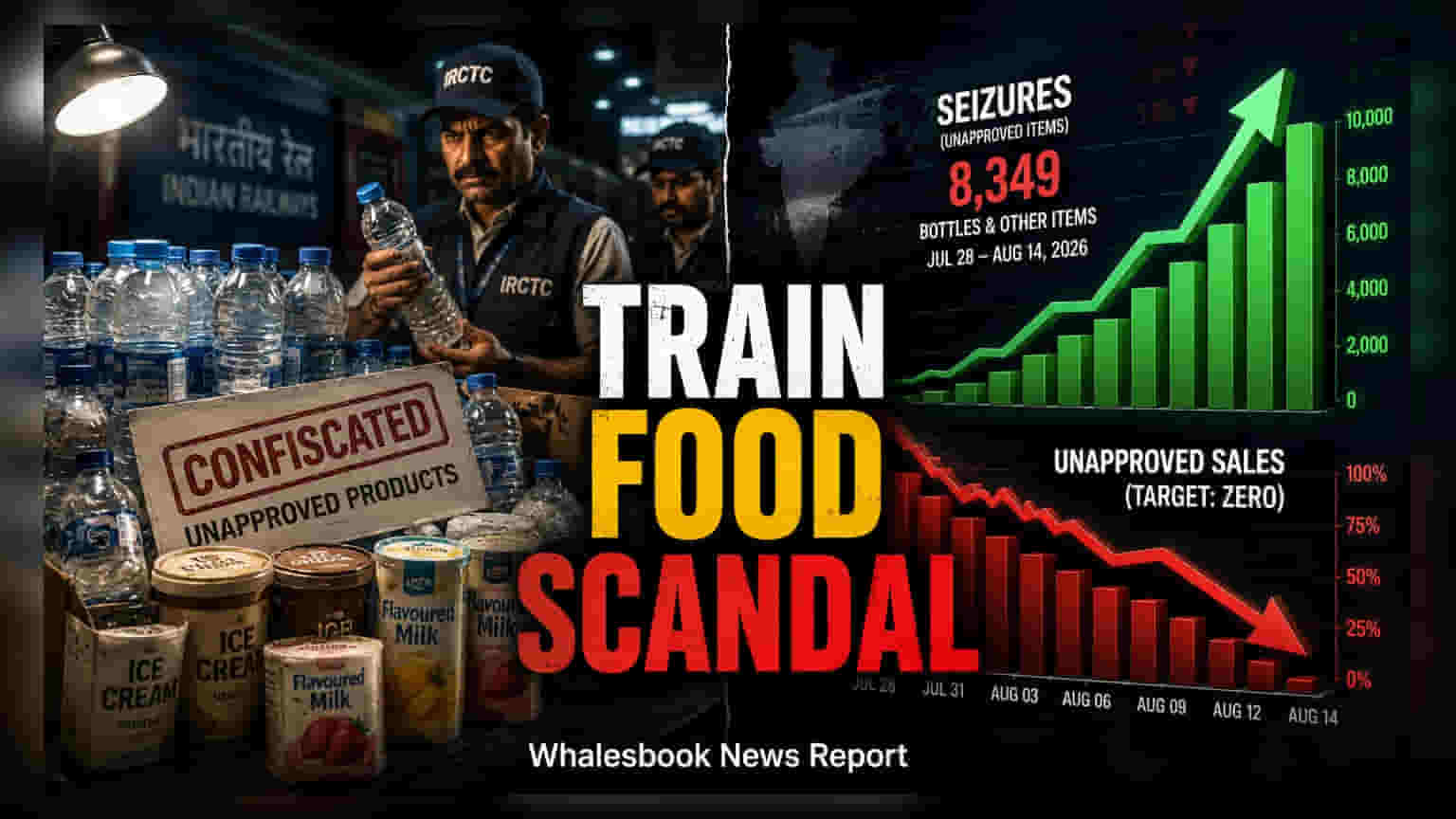
IRCTC has seized over 8,300 unapproved food and drink items in recent surprise inspections across multiple railway zones. While the move aims to uphold safety standards, investors may track how stricter vendor management affects the company's operating margins, which have already faced pressure from rising costs.
The Indian Railway Catering and Tourism Corporation (IRCTC) has significantly increased its inspection efforts to remove unauthorized food and beverage products from trains and railway stations. Between July 28 and August 14, 2026, the company’s Quick Response Teams (QRTs) seized 8,349 bottles of unapproved packaged drinking water, along with other items like ice cream and flavored milk.
Operational Focus on Quality Control
These inspections were conducted across multiple regions, including major hubs in Lucknow, Chandigarh, Ambala, Sabarmati, and Howrah. The company utilized QRTs to conduct both routine and surprise checks in coordination with railway commercial departments. This enforcement drive indicates a stricter approach to managing the quality and safety of products sold to millions of passengers daily. The company has warned catering service providers that selling unapproved products will lead to penalties, including potential action under existing license agreements.
Financial and Operational Context
For investors, these operational updates are relevant because catering services form a significant part of the company's business model. In the first quarter of the 2027 financial year, IRCTC reported revenue of INR 1,370 crores, reflecting an 18.1% year-on-year growth. However, the company has faced challenges with its profit margins. In recent quarters, EBITDA margins were impacted by rising employee costs and general inflation.
Maintaining strict quality control involves significant effort and operational coordination. As IRCTC enforces these standards across its vast network, it must manage the delicate balance between ensuring passenger safety and controlling the operational costs associated with these monitoring programs. Stricter vendor discipline is necessary for brand reputation, but it also creates an administrative burden for the catering providers who supply the trains.
Risks and Investor Monitorables
The catering segment is a key revenue driver, but it operates on tight margins. Increased regulatory oversight is standard for public-facing service companies, but it brings specific risks. If supply chain disruptions occur due to the removal of unapproved vendors, the company will need to ensure that authorized vendors can meet the demand without delay.
Investors may monitor the company’s ability to manage vendor compliance without increasing operational costs further. Future quarterly reports will be the primary source of information to see if these enforcement measures have any impact on the profitability of the catering segment. Tracking whether the company can maintain revenue growth while stabilizing margins against cost pressures remains a key area of interest.