

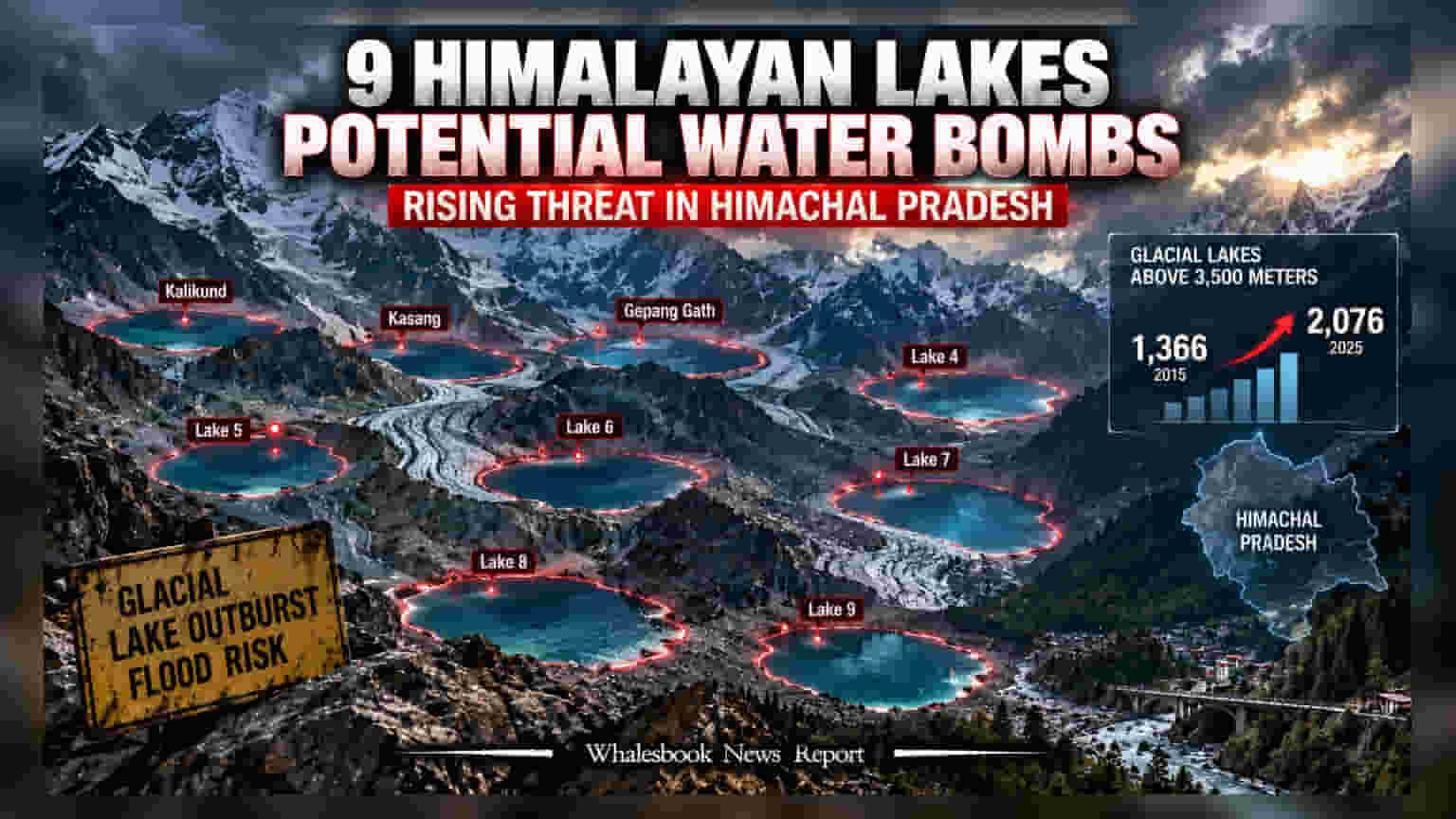
Researchers at IIT-Mandi have identified nine high-risk glacial lakes in Himachal Pradesh, citing an urgent need for early warning infrastructure. These findings highlight growing risks for regional hydropower projects and settlements as the government seeks Rs 105 crore to strengthen disaster preparedness.
Researchers at the Indian Institute of Technology (IIT) Mandi have issued a warning regarding nine glacial lakes in Himachal Pradesh, classifying them as potential 'water bombs' that pose a significant threat of flooding. The study highlights that the number of glacial lakes located above 3,500 meters in the region has reached 2,076 as of 2025, a marked rise from the 1,366 recorded a decade ago. This rapid expansion is driven by climate-linked glacial melting and permafrost degradation, creating a critical risk of Glacial Lake Outburst Floods (GLOFs).
For investors and observers tracking the Himalayan region, these findings have broader implications for local infrastructure, particularly in the energy and transport sectors. High-altitude regions in Himachal Pradesh are home to numerous operational and under-construction hydropower projects, as well as critical road and bridge networks. The instability of these lakes raises the risk profile for such projects, potentially leading to increased insurance premiums, requirements for higher safety compliance, and the need for more resilient construction standards.
Key lakes identified as high-risk, including Gepang Gath, Kasang, and Kalikund, have shown substantial expansion in surface area. The potential for these water bodies to burst poses a direct threat to downstream communities and existing infrastructure assets, such as healthcare and educational facilities located in valley areas. The research emphasizes that human activity, including tourism and pollution, is accelerating the melt rates, further destabilizing these natural barriers.
In response to these risks, the Himachal Pradesh government is actively seeking Rs 105 crore in central funding to deploy advanced early warning systems. This initiative represents a potential business opportunity for companies specializing in disaster management technology, remote sensing, and satellite-based monitoring solutions, as the state moves to integrate a robust risk-categorization framework for its 681 regional lakes.
Beyond immediate disaster response, the findings may lead to stricter environmental regulations and more rigorous impact assessments for new infrastructure projects in the mountain state. For stakeholders involved in regional development, the key monitorable will be the rollout of these early warning systems and any subsequent changes to regional land-use policies. Investors may track how government spending on these safety measures influences the feasibility and execution costs of future infrastructure projects in the Himalayan belt.