

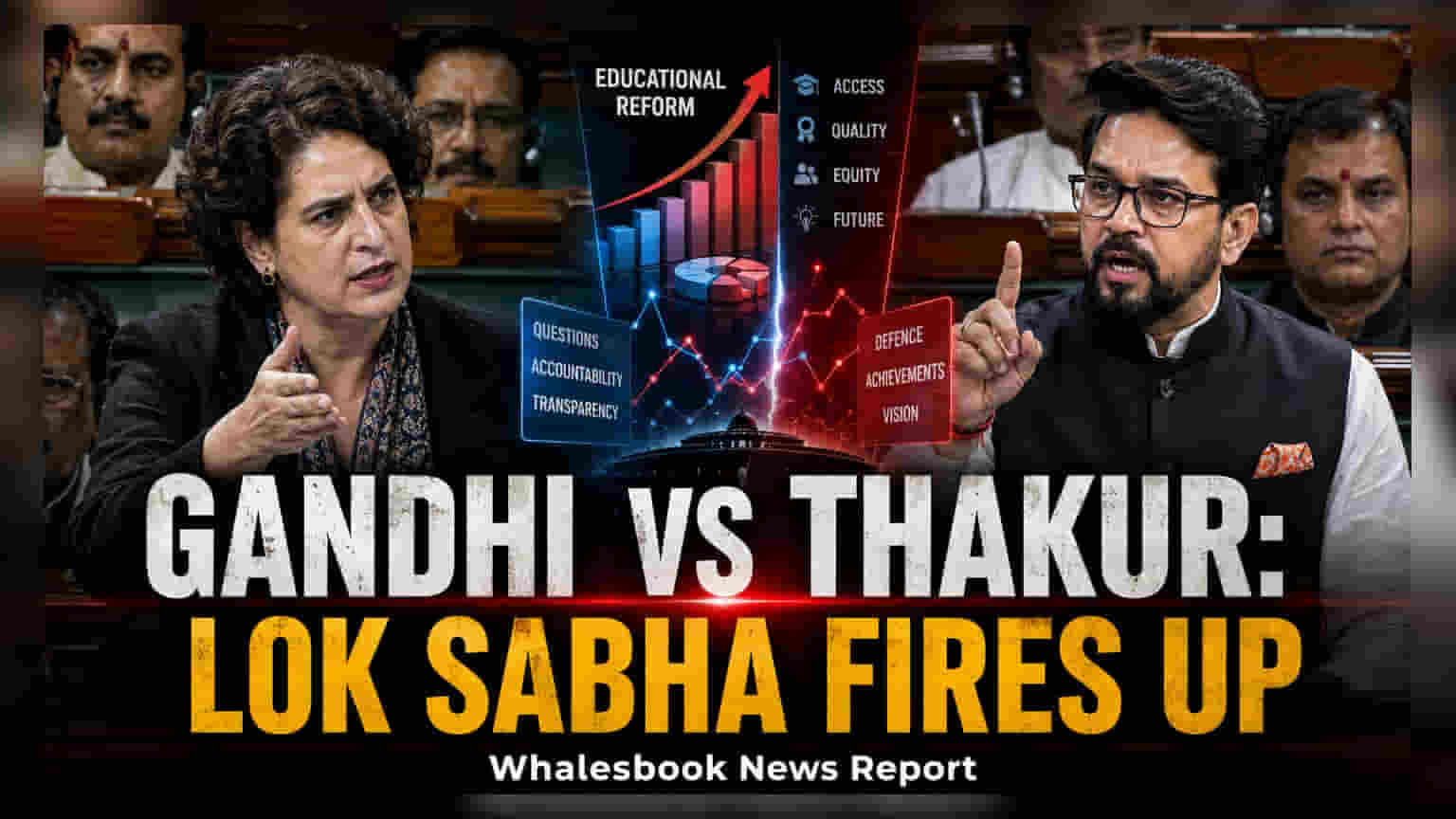
Congress MP Priyanka Gandhi Vadra and BJP MP Anurag Thakur clashed in the Lok Sabha over the appointment of IIT Madras Director Prof V Kamakoti to a reform panel. The debate focused on the Public Examinations (Prevention of Unfair Means) Amendment Bill, 2026, and questioned the criteria for selecting members for education sector committees.
Detailed Coverage
A heated parliamentary debate unfolded on Tuesday in the Lok Sabha during discussions surrounding the Public Examinations (Prevention of Unfair Means) Amendment Bill, 2026. The exchange was triggered by comments from Congress MP Priyanka Gandhi Vadra regarding the inclusion of Prof V Kamakoti, the Director of IIT Madras, on a newly formed education reform committee.
During the session, Gandhi Vadra questioned the government's approach to education policy, specifically critiquing the composition of the new reform panel. She highlighted the inclusion of individuals including an IT company owner and a former Intelligence Bureau chief, while specifically calling out Prof Kamakoti by referencing his past public comments regarding the medicinal properties of cow urine. She argued that the mere formation of such committees is insufficient to overhaul the education system, calling for more inclusive stakeholder consultations instead.
In response, BJP MP Anurag Thakur offered a strong defense of Prof Kamakoti, emphasizing his academic credentials and his leadership in the field of technology. Thakur pointed to Kamakoti’s role as the chairman of the Prime Minister’s Advisory AI Task Force to underscore his suitability for national-level policy committees. He dismissed concerns regarding Kamakoti’s background and affiliations, arguing that academic expertise and research into traditional knowledge are not mutually exclusive with professional excellence in artificial intelligence.
The exchange also touched upon wider tensions regarding government policy and youth outreach. Beyond the committee appointments, Gandhi Vadra raised concerns regarding the administration’s handling of recent student protests related to alleged exam irregularities, questioning the use of law enforcement tactics during these demonstrations. In turn, Thakur accused the opposition of consistently undermining Indian cultural traditions and noted that the current focus should remain on the legislative goals of the Public Examinations (Prevention of Unfair Means) Amendment Bill, 2026, which aims to address security and integrity issues in national-level recruitment and entrance examinations.
Investors and market participants tracking the education and technology sectors may watch for future developments regarding the committee’s official mandate and whether its recommendations lead to significant policy shifts in how public examinations are conducted or how educational institutions are governed. The implementation of the new legislative bill remains a primary monitorable as the government seeks to curb examination-related malpractice.