

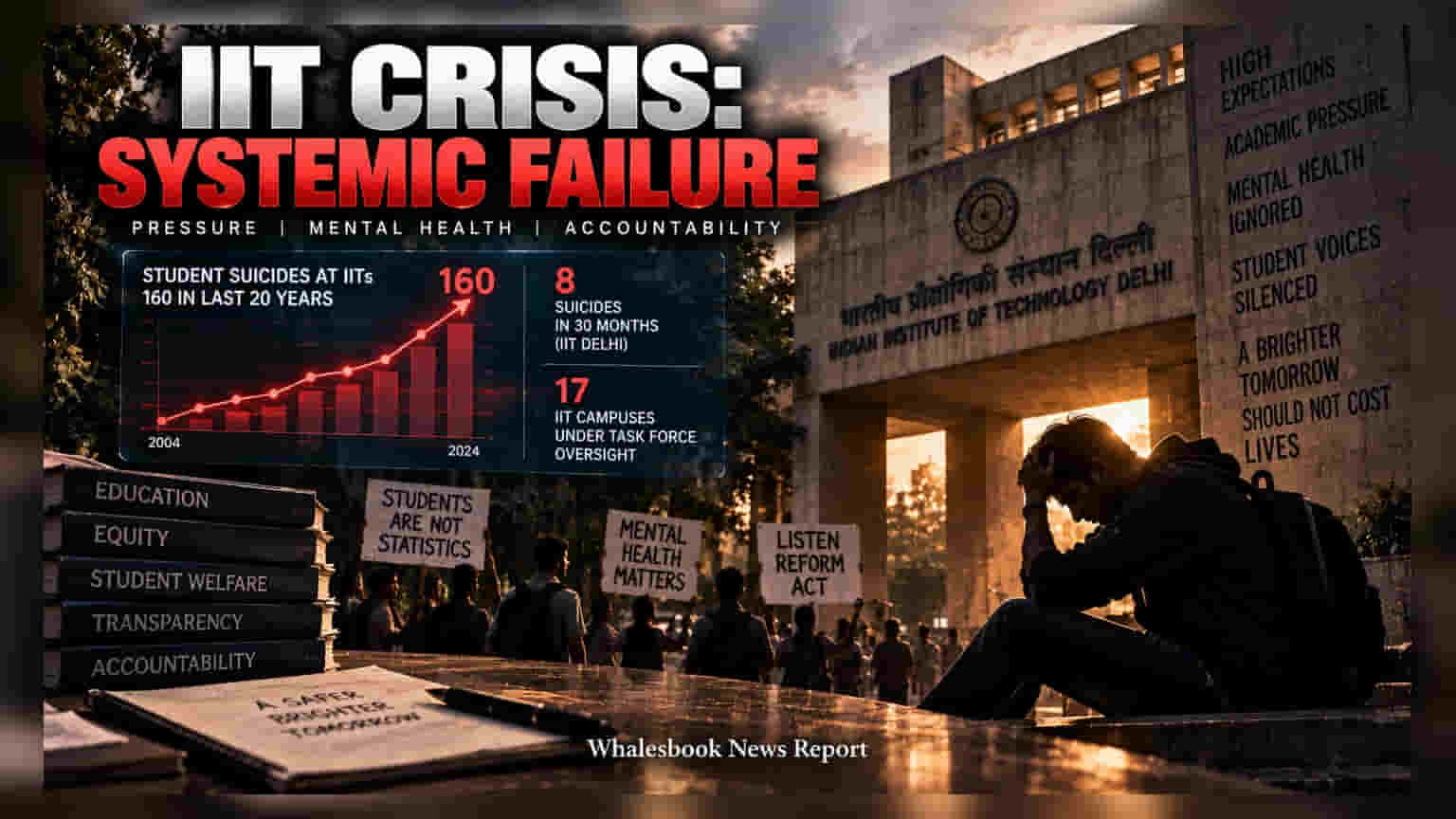
A wave of student protests at IIT Delhi has drawn attention to persistent systemic issues, with eight student suicides reported in just 30 months. In response to 160 deaths across IITs over two decades, the Supreme Court has mandated a National Task Force to enforce transparency. This development signals a critical shift in how premier Indian institutions must manage student welfare and administrative accountability.
The academic environment at IIT Delhi is under intense scrutiny following five days of student protests in August 2026. These demonstrations followed the eighth student suicide at the campus within a 30-month period. The protests serve as a rare and significant act of defiance, as students have historically expressed concerns regarding potential academic or placement repercussions for speaking out against the administration.
Legal and judicial oversight has increased significantly to address these ongoing issues. In 2025, the Supreme Court issued a firm critique regarding the institution's handling of a suicide case involving allegations of caste discrimination. The court rejected the institution's attempt to categorize the incident solely as an issue of academic pressure. It emphasized that an institution's elite status does not exempt it from legal procedural requirements or the need for transparent investigation.
To address the broader crisis, the Supreme Court established a 10-member National Task Force for Student Mental Health and Suicide Prevention. This intervention follows data indicating 160 student suicides across various IIT campuses over the last two decades. The task force holds the authority to enforce transparency across 17 different IIT campuses, a direct response to previous reports of administrative non-compliance and procedural delays.
Critics of the current institutional model argue that the focus on maintaining prestige often takes precedence over student welfare. This culture of silence can prevent grievances from being addressed early, leading to tragic outcomes. The Supreme Court's mandate from January 2026, which requires all campus suicides to be reported to local police, is a key step toward reducing the opacity that has historically characterized these institutions.
The focus for stakeholders is now on whether the administration can transition from defensive posturing to a more compassionate model of student care. The effectiveness of the National Task Force in enforcing accountability will be the primary monitorable in the coming months. Institutional observers will also track how these governance changes impact the long-term culture of support and mental health management across India's premier engineering campuses.