

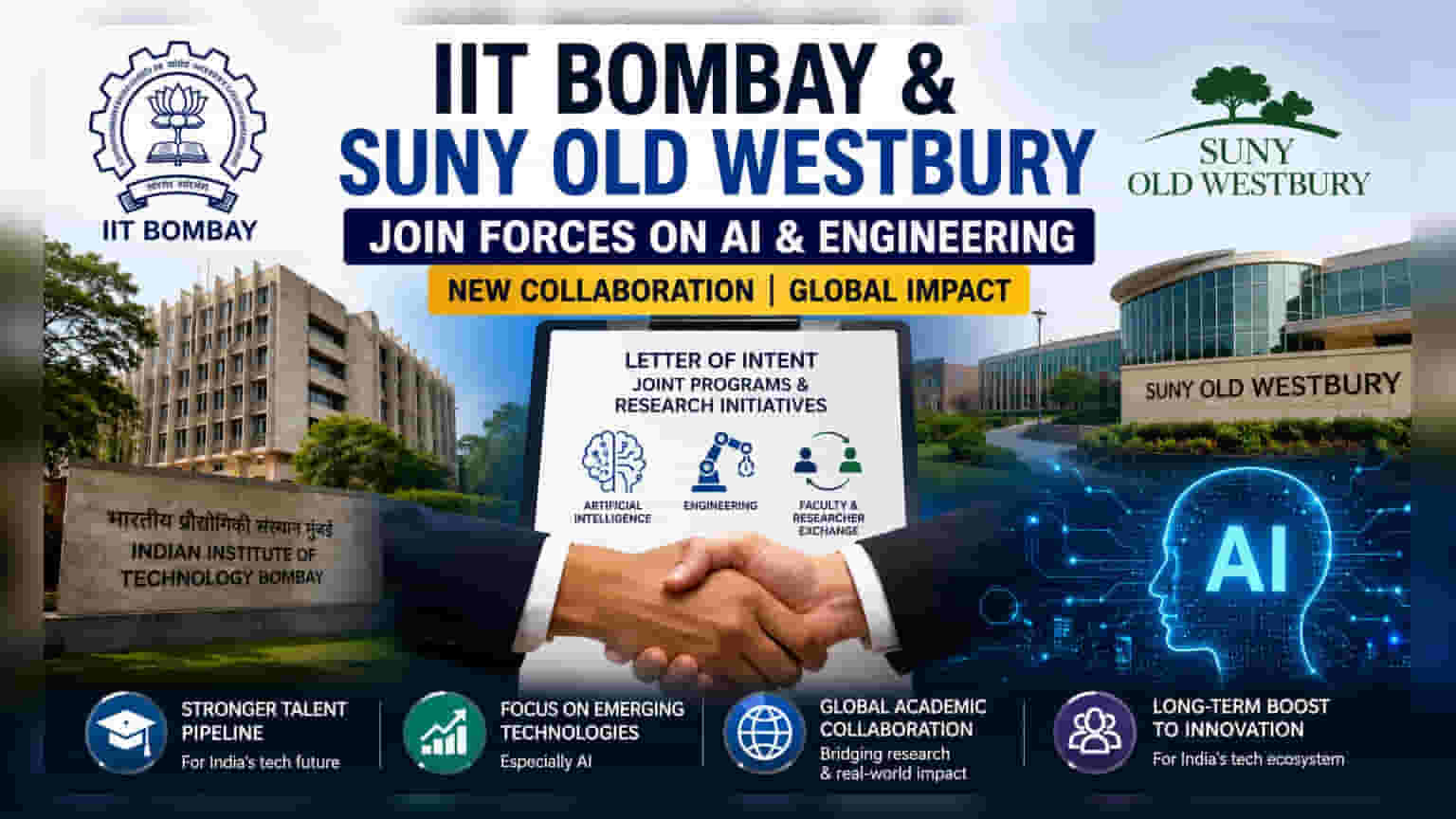
IIT Bombay and the State University of New York (SUNY) Old Westbury have entered a partnership to focus on joint research and education, specifically in artificial intelligence. This move highlights the growing trend of Indo-US educational ties. While this is an institutional development rather than a corporate event, it underscores the ongoing efforts to bolster the research and high-skilled talent pipeline essential for India’s technology sector.
What Happened
The Indian Institute of Technology Bombay (IIT Bombay) and the State University of New York (SUNY) Old Westbury have officially announced a new collaboration. The two institutions signed a letter of intent to develop joint academic programs and research initiatives in science and engineering. The partnership will primarily operate out of SUNY Old Westbury’s Long Island campus. A key focus of this alliance is artificial intelligence (AI), alongside other emerging engineering disciplines, with plans to include faculty and researcher exchanges.
Why This Matters For The Tech Ecosystem
While IIT Bombay is an academic institution and not a listed company, its research and curriculum influence are highly relevant to the Indian technology and IT services sector. India’s IT industry, which includes major global players, relies heavily on the talent pipeline generated by top-tier engineering institutes. As these companies shift their focus toward AI and high-end digital services to improve margins and compete globally, the availability of specialized talent is a critical growth factor. Partnerships like these are early indicators of how the academic ecosystem is evolving to meet the demands of the modern, AI-driven economy.
The Trend Of Global Academic Ties
This agreement follows a broader trend of Indian higher education institutions forming strategic alliances with leading universities in the United States and other developed markets. These collaborations often aim to bridge the gap between theoretical research and global industrial standards. For investors and market observers, these moves reflect a growing emphasis on high-quality research, which is a long-term positive for India’s intellectual capital. The backing from official bodies, including the Indian government, suggests a coordinated effort to integrate Indian research centers deeper into the global academic and innovation network.
What Observers May Track
It is important to note that this is a long-term institutional development. It does not carry the immediate financial impact of a corporate merger or acquisition. However, the success of such partnerships in creating a specialized workforce is a metric worth observing over the long term. Interested observers may monitor the progress of these joint research programs, the eventual placement or industry absorption of the talent trained in these specialized AI curricula, and whether such models of international cooperation lead to tangible improvements in research output within the Indian engineering sector.