 Whalesbook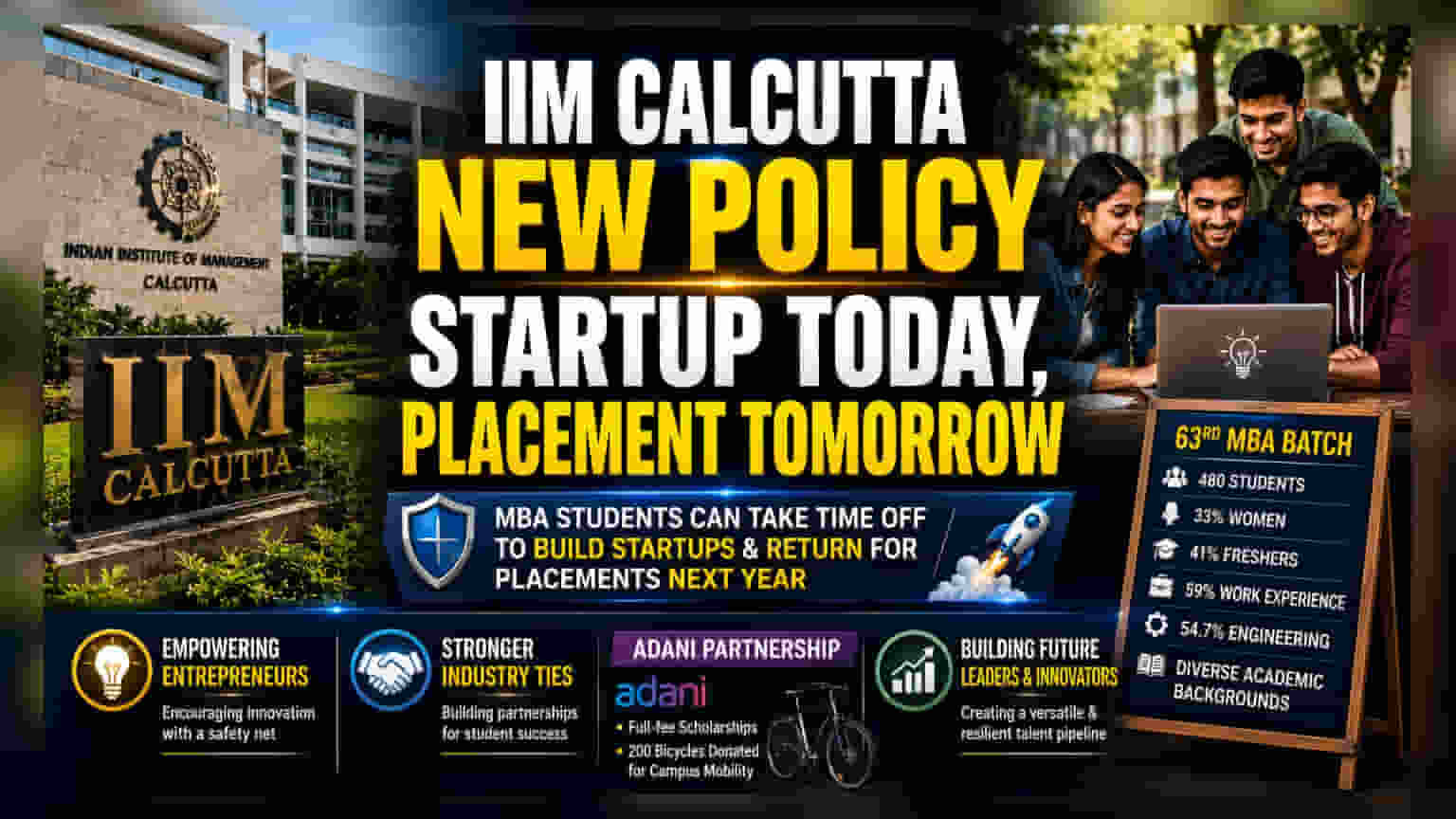


IIM-Calcutta has introduced a new policy allowing MBA students to pursue entrepreneurial ventures for a year without losing their eligibility for campus placements. This initiative encourages students to innovate while keeping a secure career path. Alongside this, the institute continues to strengthen corporate-academic ties, with the Adani Group supporting the 63rd MBA batch through full-fee scholarships and campus infrastructure donations. This shift highlights a growing focus on fostering an entrepreneurial mindset among future leaders.
What Happened
Indian Institute of Management Calcutta (IIM-Calcutta) has launched a significant policy shift aimed at encouraging student entrepreneurship. Under the new guidelines, MBA students are permitted to take a break to build their own startup ventures without forfeiting their opportunity to participate in campus placements. Students who opt for this route can return to campus to join the placement process in the following year. This policy was announced by IIM-Calcutta Director Alok Kumar Rai during the induction ceremony for the 63rd MBA batch, which includes 480 students.
Fostering a Culture of Innovation
This policy change is a notable step in how premier business schools are evolving to support innovation. By allowing students to dedicate time to startups without the immediate pressure of securing a job, the institute is providing a safety net that encourages risk-taking. For the broader business ecosystem, this is a positive development. It helps create a talent pool that possesses not only theoretical management knowledge but also practical experience in building a business from the ground up. Even for those whose startups do not succeed, the experience of navigating the challenges of entrepreneurship can be a valuable asset in their future corporate careers.
Strengthening Corporate-Academic Linkages
The induction ceremony also highlighted the growing trend of deep collaboration between top-tier educational institutions and major corporate houses. The Adani Group, represented by Pranav Adani, continued its support for the institute through the "Adani Accelerated Leadership Programme." This initiative provides full-fee scholarships to meritorious students, reducing the financial burden for high-potential individuals. Furthermore, the collaboration extended to campus infrastructure, with the Adani Group donating 200 bicycles to improve mobility within the institute. Such partnerships are essential as they help align academic environments with industry needs, providing students with both financial support and resources to enhance their campus experience.
A Look at the Incoming Batch
The 63rd MBA batch reflects a diverse profile designed to bring varied perspectives into the classroom. The cohort of 480 students includes 33% women and 67% men. The professional mix is also balanced, with 41% of the students being freshers and 59% bringing prior work experience to the table. While a majority of the batch (54.7%) comes from engineering backgrounds, the class also includes students from science, commerce, and arts disciplines. This academic diversity is critical for fostering comprehensive problem-solving skills, which are highly valued in the corporate sector.
Why This Matters for the Talent Pipeline
For the industry, the quality and mindset of graduates from premier institutes remain a key focus. Policies that bridge the gap between entrepreneurship and stable employment help in building a more versatile and resilient workforce. As corporate entities continue to partner with institutions through scholarships and infrastructure support, it demonstrates a long-term commitment to developing the next generation of business leaders. Investors and industry observers often view these academic-corporate linkages as indicators of a strong educational ecosystem that remains responsive to the evolving needs of the economy.