

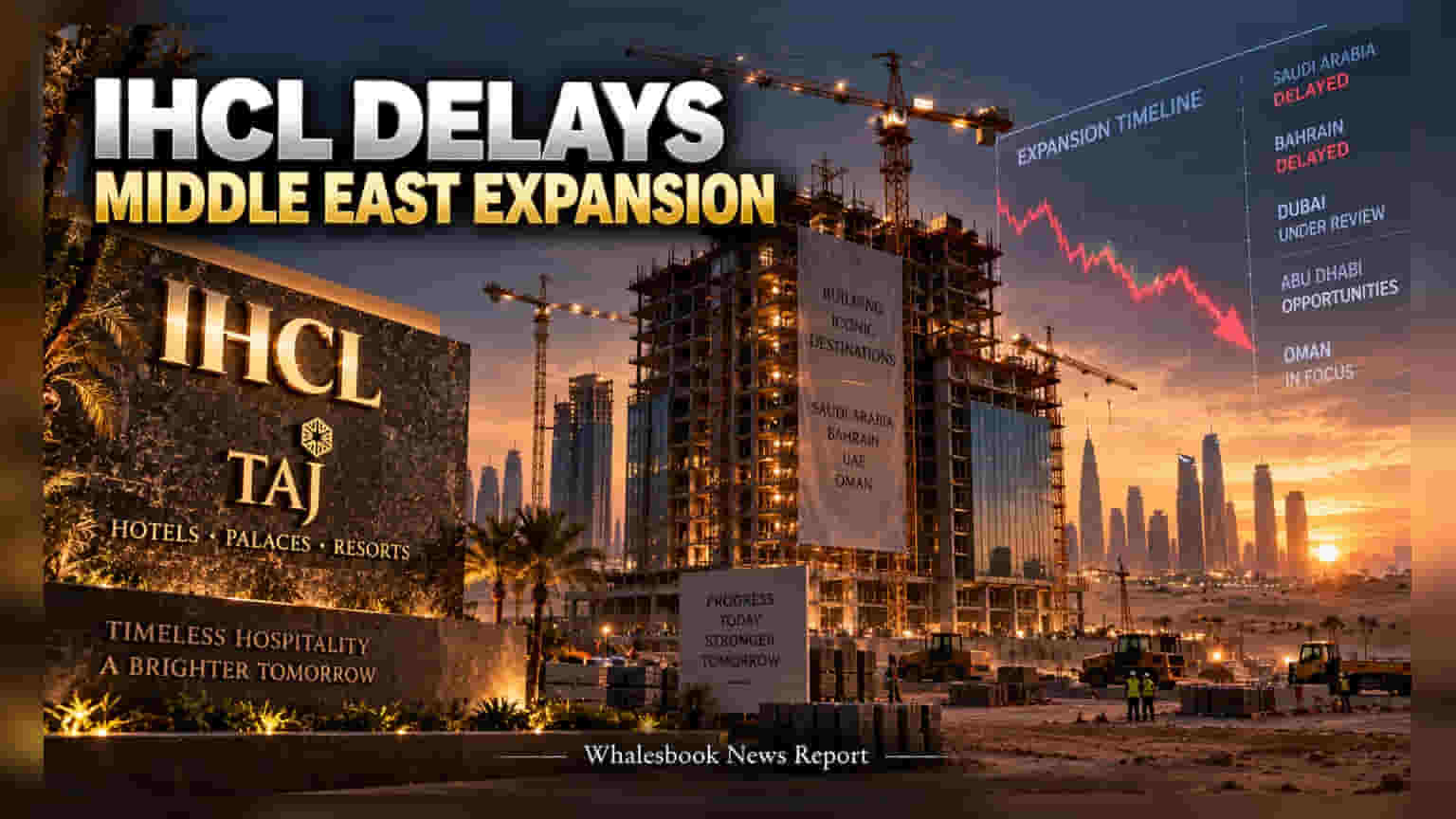
Indian Hotels Company (IHCL) has pushed back timelines for luxury properties in Saudi Arabia and Bahrain by three to six months. The move reflects a broader trend among hospitality firms pausing new developments in the Middle East due to regional instability. Investors may focus on how these delays impact the company’s international expansion plans and project costs.
Indian Hotels Company (IHCL), which manages the Taj luxury hotel brand, is recalibrating its expansion plans in the Middle East. The company has communicated a projected delay of three to six months for several greenfield hotel sites across Saudi Arabia and Bahrain. This shift marks a change from the company’s earlier goal of scaling operations significantly in the region within a three-year window.
This delay comes as broader macroeconomic and geopolitical instability influences development cycles for many hospitality operators in the Gulf. Instead of maintaining aggressive growth, industry leaders are adopting a more defensive operational stance to manage risks effectively. For IHCL, while the immediate project timelines are shifting, the company is continuing to explore potential opportunities in established markets like Dubai, Abu Dhabi, and Oman, banking on the long-term potential of the region's tourism infrastructure.
This trend is not limited to Indian hospitality firms. Large-scale global projects are also facing scrutiny. For instance, the high-profile Wynn Al Marjan casino resort project in Ras Al Khaimah has rescheduled its opening to September 2027. Such delays in mega-projects often lead to an increase in the cost basis due to extended construction times and shifting economic conditions. Across the broader Middle East market, data indicates that no new hotel supply entered the Dubai or Abu Dhabi markets during the second quarter of 2026, suggesting that developers across the industry are prioritizing the stability of existing assets over new footprint growth.
For investors, the primary impact of these delays involves capital allocation. When projects are postponed, the expected timeline for revenue generation from international assets is pushed further into the future. While the core conviction regarding the strength of landmark assets like those of The Leela Palaces Hotels & Resorts and Taj remains intact, the industry is navigating a phase of heightened risk management. The shift reflects a preference for executing projects carefully rather than rushing development in a volatile environment.
Moving forward, the key factor for investors to track will be the progress on these specific project sites. Updates regarding construction milestones, revised completion dates, and any changes in the company's capital spending budget will be important to observe. Investors will also monitor how the company balances its international expansion strategy with the current economic challenges in the Middle East.