

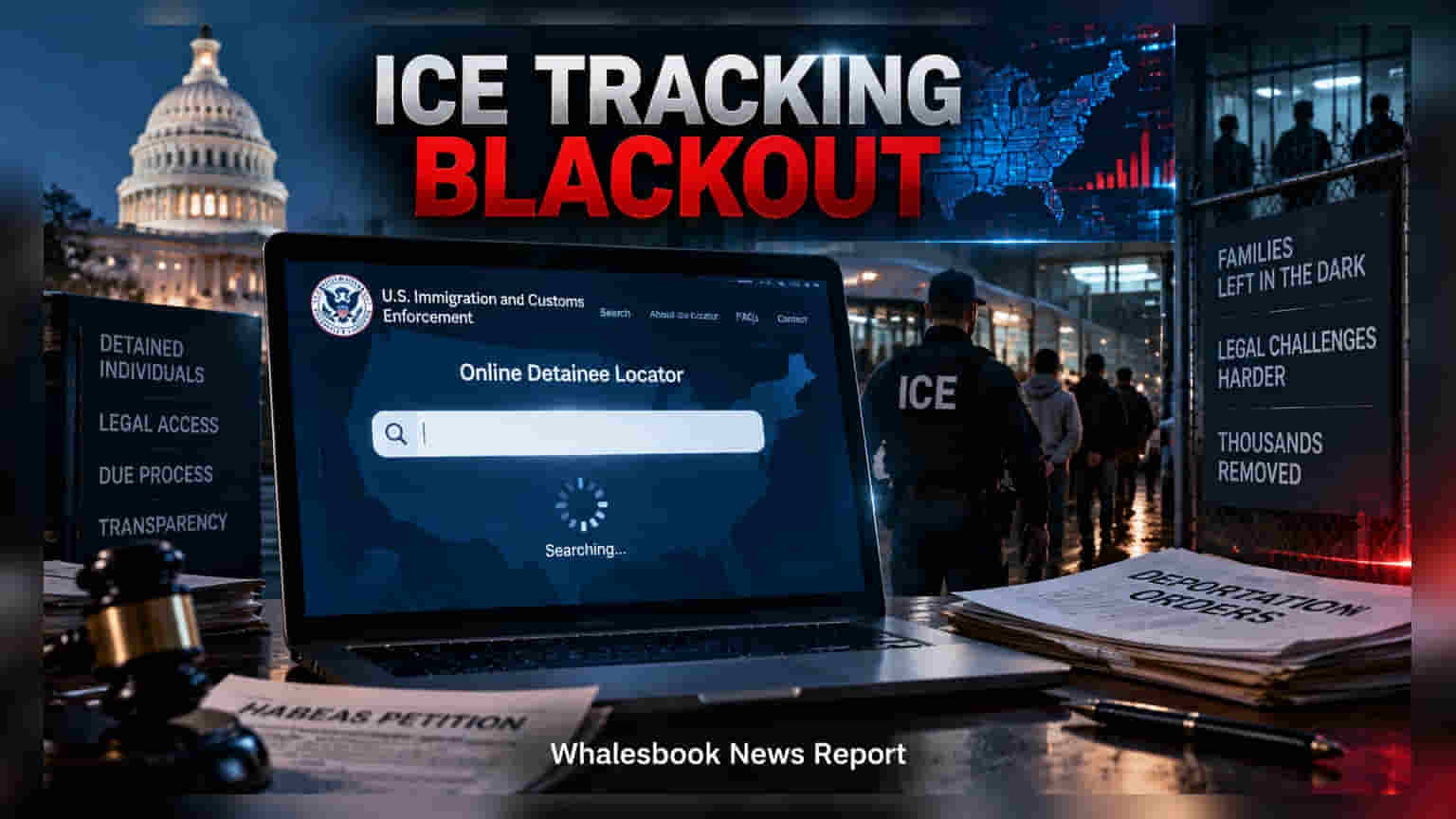
U.S. Immigration and Customs Enforcement (ICE) has removed thousands of detainees under final deportation orders from its online tracking database. This policy shift, effective September 15, prevents attorneys and families from locating individuals in custody. As of July, nearly 16,000 individuals were subject to these removal orders, creating significant hurdles for legal due process.
The U.S. Immigration and Customs Enforcement (ICE) agency has implemented a significant change to its operational procedures by removing thousands of detainees who have final deportation orders from its public-facing online locator system. This update, which took effect on September 15, 2026, was not publicly announced by the agency. The online locator was originally established in 2010 to provide transparency, allowing families and legal professionals to confirm the detention status and specific facility location of individuals held by the agency.
Impact on Legal Proceedings
The removal of this data from public access has created immediate challenges for legal professionals representing detainees. Attorneys report that the lack of accessible location information hinders their ability to file urgent legal challenges, including habeas petitions or motions to reopen cases. According to representatives from the American Immigration Lawyers Association, this policy directly interferes with the attorney-client relationship, complicating efforts to provide necessary legal counsel to individuals who may be facing imminent deportation. By masking these details, the agency creates barriers for those attempting to assert legal protections against removal, particularly for individuals who may face risks of persecution or torture in their home countries.
Scope and Exceptions
Data indicates that as of July 2026, nearly 16,000 individuals held in ICE detention were under final removal orders, representing a substantial portion of the total detained population. While the agency has not provided a formal confirmation of the policy shift, reports indicate that the restriction is not applied uniformly across all locations. Detainees held in facilities in Adelanto, California, as well as temporary sites in Minneapolis, New York City, and suburban Chicago, remain visible in the public system. This continued transparency in these specific instances is a result of active litigation mandates that legally compel the agency to disclose the locations of detainees held in those jurisdictions. The remaining population affected by this change now lacks the same level of accessibility for their legal representatives and families.