

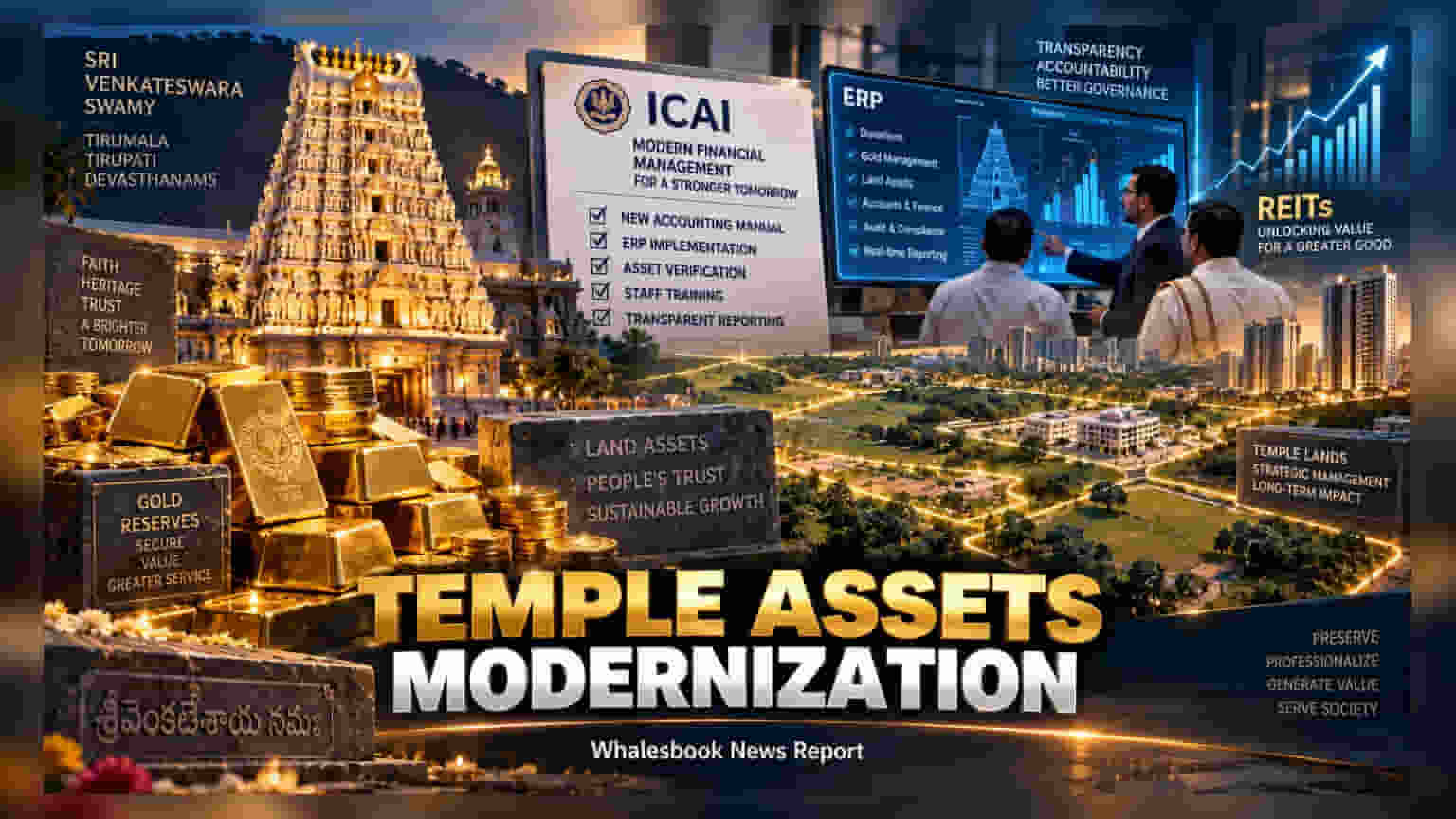
The Institute of Chartered Accountants of India is restructuring the financial framework of the Tirumala Tirupati Devasthanams. The project focuses on modernizing accounting, valuing gold reserves, and exploring REITs to manage land assets. This overhaul aims to establish a new governance model for large religious trusts across India.
The Institute of Chartered Accountants of India (ICAI) has launched a significant financial restructuring project for the Tirumala Tirupati Devasthanams (TTD), the trust managing the Sri Venkateswara temple in Andhra Pradesh. As the custodian of one of the world's wealthiest religious institutions, the TTD holds substantial land parcels and gold reserves. This collaboration is designed to professionalize the management of these assets, moving away from legacy systems to modern fiscal practices.
Modernizing Temple Accounting Standards
A primary goal of this initiative is the total replacement of the TTD accounting manual, which had not been updated for three decades. The ICAI is working to finalize a new financial framework that covers everything from daily cash collection and payment tracking to the integrity of the trust’s balance sheet. This project is not just about changing paperwork; it involves providing comprehensive training for TTD staff. The transition also includes shifting the organization to a modern Enterprise Resource Planning (ERP) system, which will allow for real-time tracking and more transparent financial reporting.
Strategic Asset Management and REITs
Beyond basic accounting, the partnership is looking at advanced ways to manage the trust’s physical wealth. The TTD currently holds significant land assets donated by devotees over the years. The ICAI is exploring the use of Real Estate Investment Trusts (REITs) to unlock the value of these holdings. A REIT acts as a financial structure that pools capital to own or operate real estate, which could provide a professional way to manage and potentially generate income from these sprawling land parcels without losing ownership.
Simultaneously, the ICAI is formalizing new protocols for the verification and valuation of the temple’s gold reserves. By moving away from older recording methods toward standardized, professional valuation techniques, the trust aims to bring greater clarity and security to its precious metal holdings.
This project is viewed by the ICAI as a potential blueprint for other major religious trusts across India. By creating a robust and scalable model for managing donations and assets, the initiative seeks to align the governance of religious institutions with modern financial expectations. While the direct impact of this restructuring is internal to the TTD, the professionalization of such massive asset portfolios is a development that observers of governance standards and institutional management will monitor. The ultimate success of this transition will depend on the effective implementation of the new ERP systems and the careful execution of any future asset monetization strategies, such as the proposed use of REITs.