

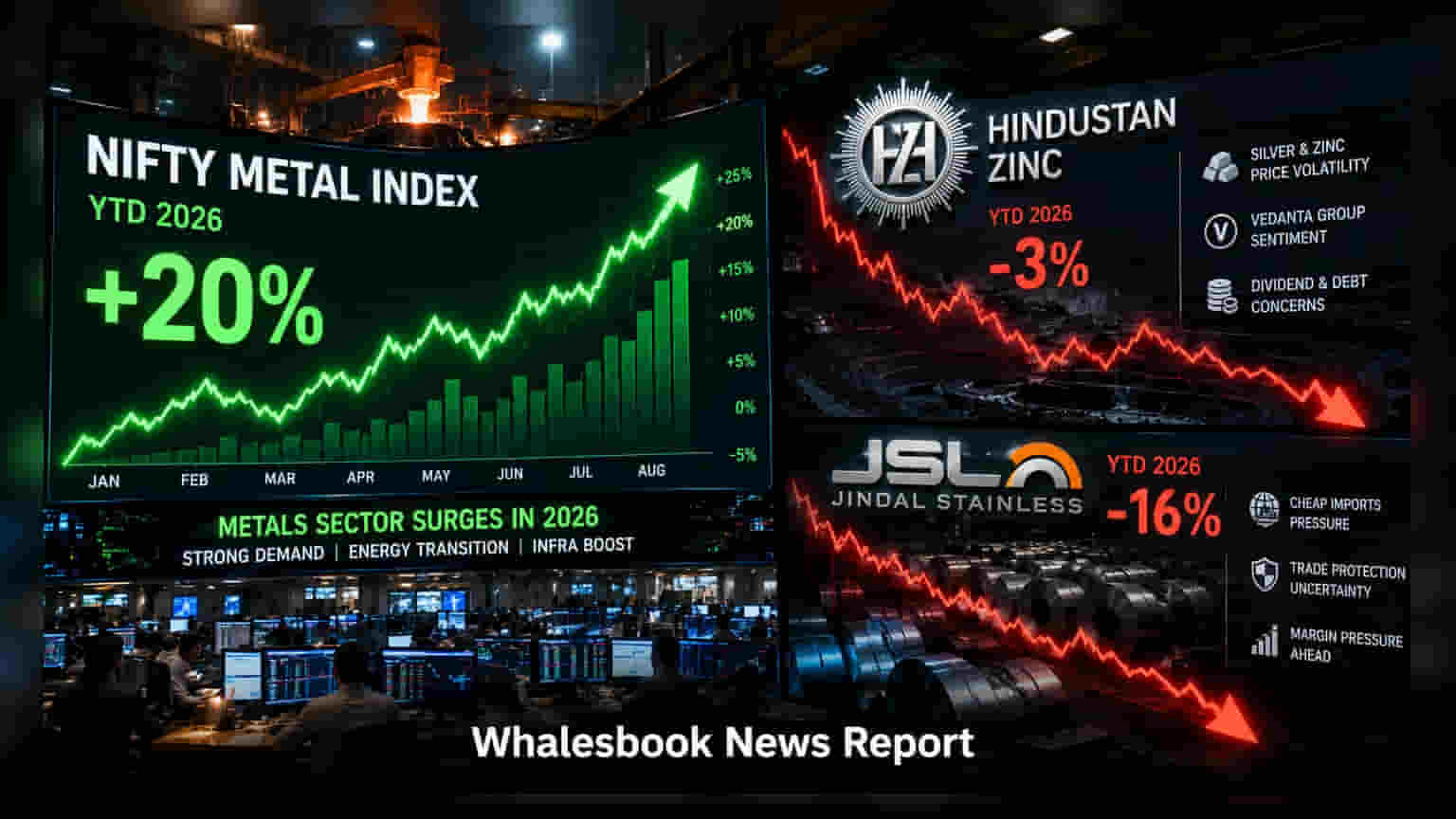
While the Nifty Metal index has climbed nearly 20% year-to-date, Hindustan Zinc and Jindal Stainless have posted negative returns. Investors are navigating specific challenges for each, ranging from commodity price sensitivity at Hindustan Zinc to import-led margin pressure at Jindal Stainless, even as both companies maintain distinct operational profiles.
The metals sector has been one of the standout performers in the Indian stock market in 2026, with the Nifty Metal index recording a rise of approximately 20% year-to-date. This rally has been fueled by robust demand for steel and base metals, supported by the global push for electrification and energy infrastructure. However, the performance has not been uniform. Two significant players—Hindustan Zinc and Jindal Stainless—have bucked the trend, failing to participate in the broader sector surge and delivering negative returns for the year as of late August 2026.
Hindustan Zinc: The Silver and Vedanta Shadow
Hindustan Zinc has faced a challenging year, with its stock declining by about 3% as of late August. The company’s earnings are uniquely tied to the price movements of silver and zinc. Volatility in these global commodity markets has acted as a headwind for the stock's performance throughout the year. However, the story is not entirely negative. In late August 2026, the stock witnessed some recovery, supported by positive reports from brokerages like Jefferies. Analysts pointed to potential upside stemming from forecasts of higher zinc and silver prices, which could improve the company's profitability in the coming quarters.
Beyond commodity prices, investors often look at Hindustan Zinc through the lens of its parent company, the Vedanta group. Market sentiment is frequently influenced by factors such as dividend policies and concerns regarding debt levels at the parent company level, rather than just the standalone operations of the zinc business. For shareholders, the key is balancing these group-level sentiments against the company's inherent operational strengths.
Jindal Stainless: Import Competition and Margins
Jindal Stainless has faced a sharper decline, with its stock down nearly 16% year-to-date. Unlike the sector-wide optimism, the company has grappled with significant margin pressure. The root cause lies in the influx of cheap stainless steel imports, often sourced from ASEAN countries, which has impacted domestic pricing power. While the government has taken note of these trade issues, the market remains cautious until there is a clear resolution to the competitive pressure.
Despite these stock price headwinds, the company's financial performance has shown resilience. Jindal Stainless reported a 27.4% rise in profit after tax for FY26, and a 7.6% growth in the first quarter of FY27, maintaining a healthy balance sheet with a low net debt-to-equity ratio. This presents a divergence: the company is growing its profits, yet the stock remains under pressure due to fears that imports could continue to squeeze margins in the future. Moving forward, investors may track the efficacy of trade protection measures and the company’s ability to maintain volume growth while managing fluctuating input costs for materials like nickel and ferrochrome.