

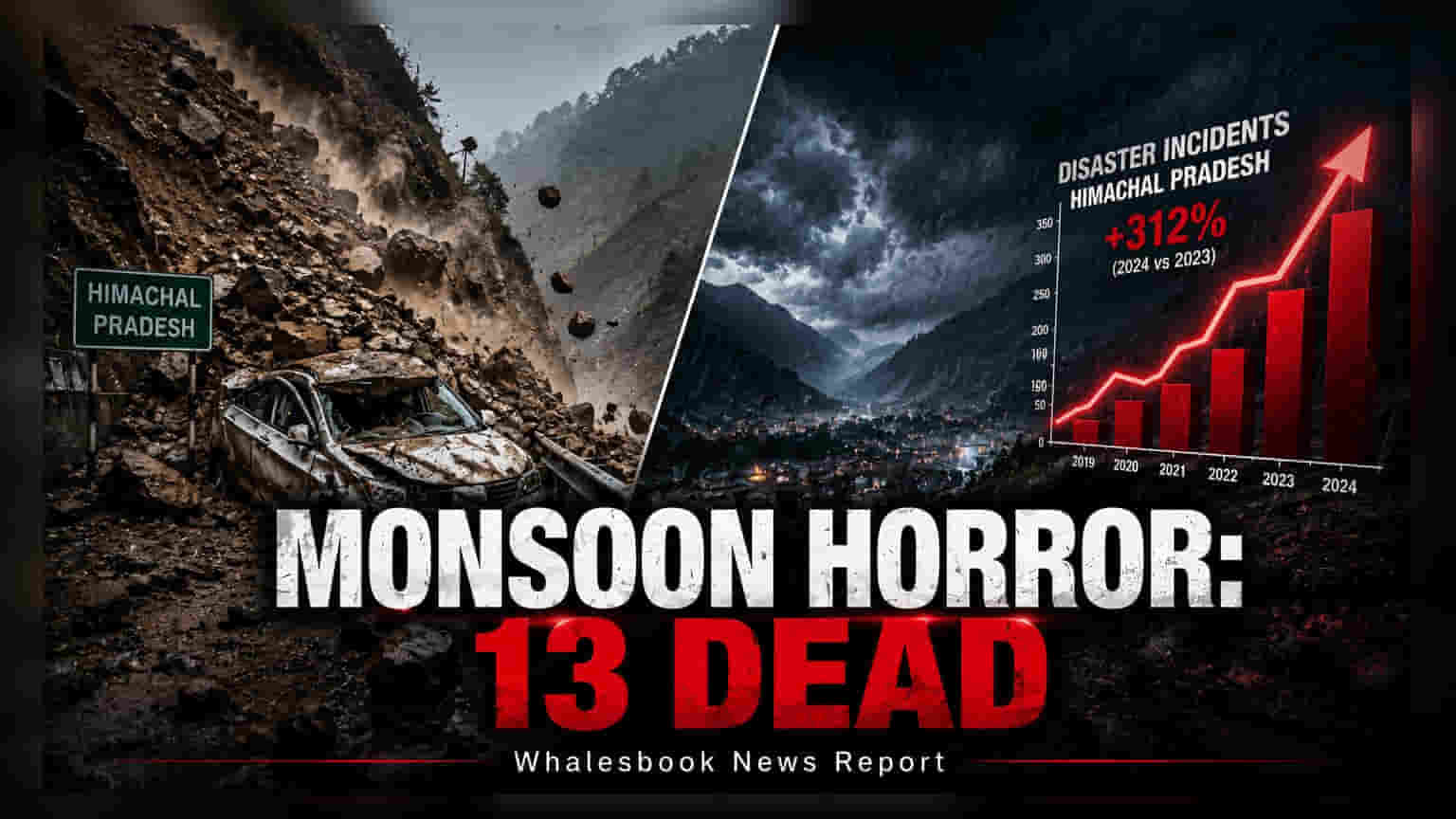
A severe landslide on the Sansari-Kilad-Thirot-Tandi road has claimed 13 lives, highlighting the rising economic and human cost of monsoon disasters in Himachal Pradesh. The state faces widespread infrastructure damage, with 121 roads currently blocked, impacting both local supply chains and regional agricultural stability.
Detailed Coverage
The recent tragic landslide in Himachal Pradesh, which claimed 13 lives near Kadhu Nala, serves as a stark reminder of the mounting physical and economic challenges facing the Himalayan region. As monsoon intensity increases, the state is dealing with the disruption of 121 roads, which severely limits the movement of people, goods, and essential services.
Impact on Regional Agriculture and Logistics
The destruction of transport infrastructure has direct consequences for local industries. In the Lahaul-Spiti district, farmers are unable to transport perishable crops like cabbage and peas to major markets due to a collapsed bridge over the Jahalma drain. This logistical failure forces farmers to discard their harvest, leading to significant income loss. Because this specific bridge has been a recurring point of failure since last year, the situation highlights the struggle to maintain connectivity in mountainous terrain where alternative routes are often non-existent or inaccessible.
Economic Toll and Disaster Trends
State disaster management data reveals a concerning trend of increasing frequency and severity in climate-related events. Authorities have recorded 19 major landslides, 11 flash floods, and 6 cloudbursts during this monsoon season alone. The cumulative economic damage in Himachal Pradesh has surpassed ₹20,000 crore between 2022 and 2025. This rising cost burden pressures state finances, as funds must be consistently diverted toward emergency response and short-term infrastructure repair rather than long-term, resilient capital projects.
Risks to Infrastructure and Future Planning
For investors and policymakers, the core concern lies in the vulnerability of regional infrastructure to extreme weather. The recurring damage to roads and bridges suggests that traditional construction methods in the Himalayas may require more robust, climate-resilient engineering standards. As the state faces higher mortality rates—rising from 276 deaths in 2022 to 468 in 2025—the focus is expected to shift toward disaster risk management and infrastructure planning. Investors monitoring the region should track state government spending on infrastructure and any policy changes regarding development regulations in landslide-prone zones, as these will influence the long-term feasibility of projects in the area.