

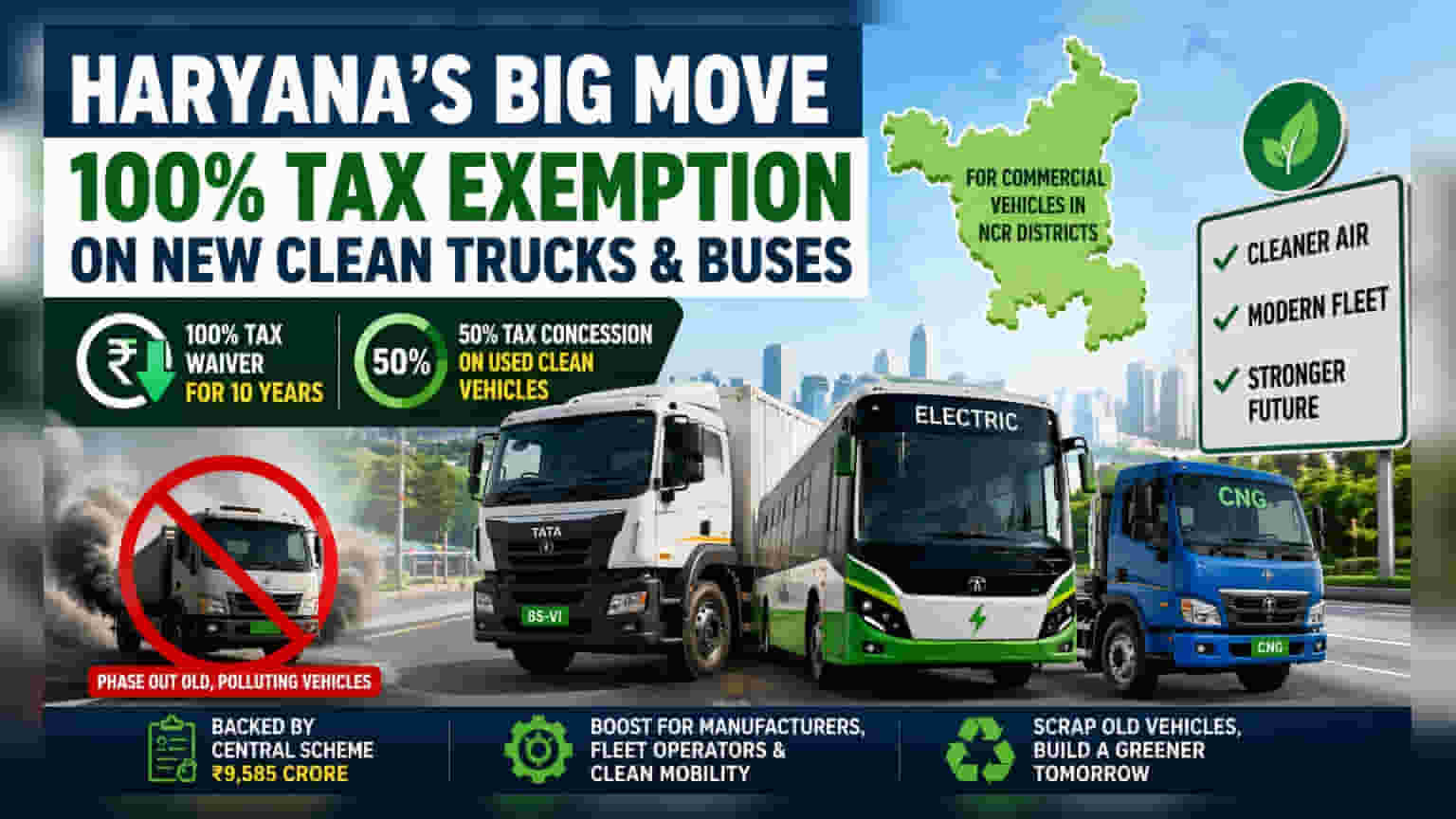
Haryana has approved a 100% motor vehicle tax exemption for new BS-VI, electric, and CNG trucks and buses replacing older BS-IV or earlier models in NCR districts. This initiative aligns with a central government scheme to modernize fleets and curb pollution. The move is expected to incentivize fleet owners to upgrade their vehicles, potentially boosting demand for commercial vehicle manufacturers.
What Happened
The Haryana government has approved a 100% motor vehicle tax exemption for owners who replace older trucks and buses with new BS-VI, electric, or CNG-powered vehicles. This policy specifically targets commercial vehicles registered in the state's National Capital Region (NCR) districts that currently comply with BS-IV or older emission norms. According to the state government's recent notification, this full tax waiver will remain valid for 10 years from the date of the vehicle's registration. Additionally, the policy offers a 50% motor vehicle tax concession for those purchasing used replacement vehicles that meet these newer, cleaner emission standards.
Why It Matters For The Industry
This decision is a strategic move to fast-track fleet modernization in the Delhi-NCR region, which faces severe air quality challenges. By lowering the upfront cost of purchasing cleaner vehicles, the state aims to encourage fleet operators to retire older, more polluting vehicles. This state-level incentive complements the Union Cabinet's Rs 9,585-crore fleet replacement scheme approved in June 2026. The central program includes financial support such as interest subventions on loans, monthly fuel vouchers, and specific benefits for EV buyers, creating a multi-layered incentive structure for fleet owners.
The Business And Demand Picture
For commercial vehicle manufacturers, this incentivized replacement cycle creates a potential demand tailwind. The policy targets a significant base of approximately 93,458 trucks and 16,329 buses in Haryana’s NCR districts alone. Major commercial vehicle manufacturers like Tata Motors, Ashok Leyland, and VE Commercial Vehicles (Eicher) could see increased inquiries and sales as fleet operators leverage these tax waivers and the central government's interest subsidies. Furthermore, companies specializing in electric bus manufacturing and supply, such as JBM Auto and Olectra Greentech, may find expanding opportunities as state transport undertakings and private fleet owners look to comply with the push toward greener mobility.
Risks And Implementation Challenges
While the tax exemptions and central subsidies reduce the financial barrier, fleet modernization is not without risks. The price gap between traditional diesel-powered vehicles and newer, cleaner alternatives like electric or high-end CNG models remains a challenge for many small and medium-sized fleet operators. The actual adoption rate will depend on the net cost difference after all incentives are applied. Additionally, the success of this scheme relies on the smooth operation of Registered Vehicle Scrapping Facilities (RVSF), where owners must officially scrap their old BS-III and earlier vehicles to remain eligible for these benefits.
What Investors Should Track
Investors may monitor the pace of fleet replacement and whether the announced incentives effectively narrow the cost gap for small fleet operators. Key monitorables include the utilization rates of these tax waivers, the availability of scrappage facilities in Haryana’s NCR districts, and commentary from commercial vehicle manufacturers on order books and demand trends specifically within the Delhi-NCR corridor. The willingness of fleet owners to switch to EVs versus CNG or advanced diesel will also be a major determinant of the benefit distribution among different vehicle manufacturers.