

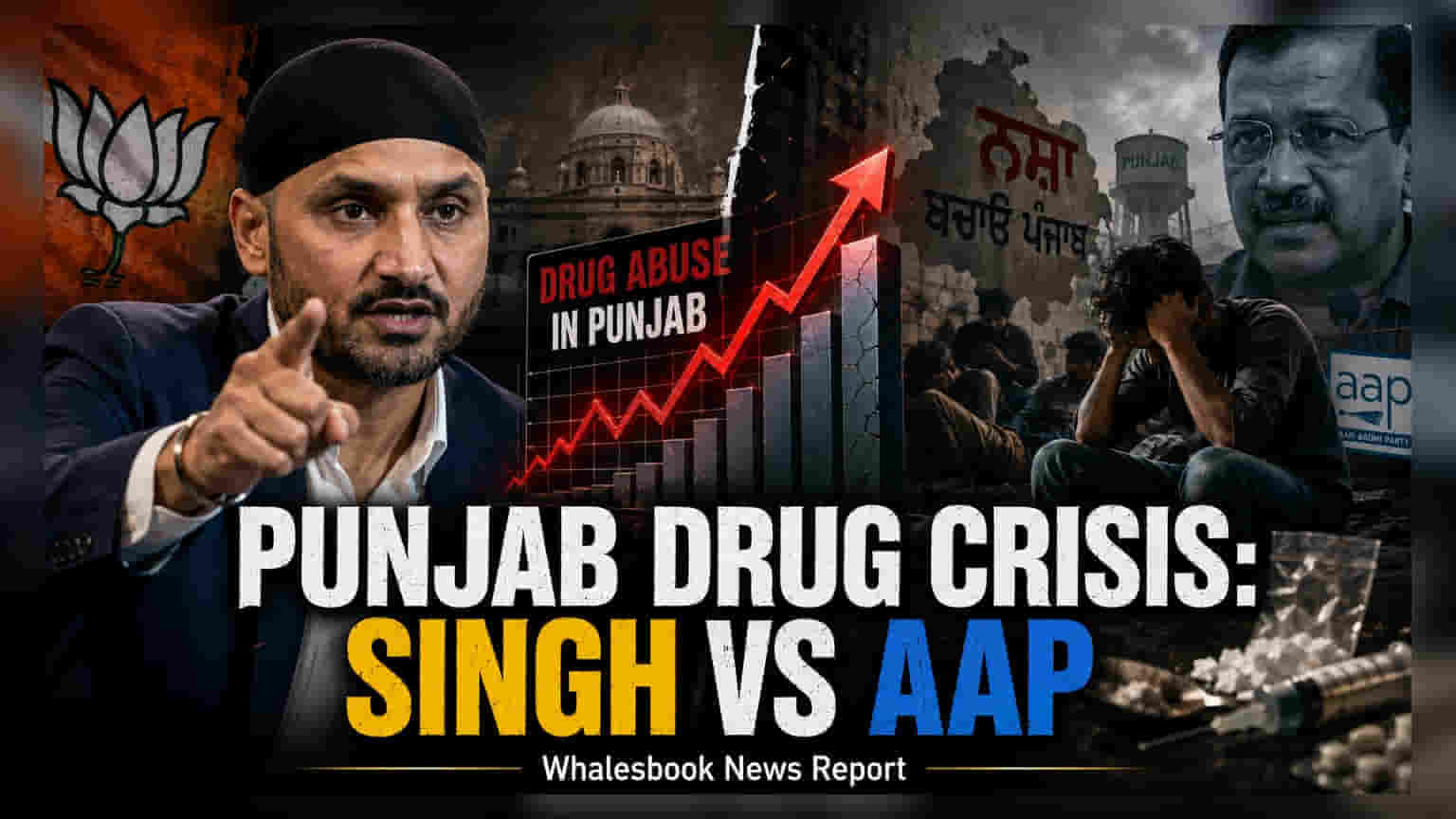
BJP Rajya Sabha MP Harbhajan Singh has released fresh video clips alleging a severe drug crisis in Punjab, sparking a sharp rebuttal from the AAP government. Officials have dismissed the claims, stating the viral content originated in Rajasthan, not Punjab. The ongoing confrontation reflects deepening political tensions and concerns regarding the verification of digital content in public discourse.
The public disagreement between BJP Rajya Sabha MP Harbhajan Singh and the Aam Aadmi Party (AAP) government in Punjab has intensified following the release of new videos by the former cricketer. On August 11, 2026, Singh shared additional footage appearing to show individuals under the influence of drugs, claiming these clips highlight a critical issue facing Punjab's youth. The politician, who transitioned from the AAP to the BJP in April 2026, has maintained that his focus is on public welfare and addressing the state’s drug situation rather than political targeting.
The AAP government has responded firmly to these allegations, with senior party leaders and the Punjab Police rejecting the accuracy of the content. Officials pointed out that the videos in question, which have circulated on social media, originated from Sri Ganganagar in Rajasthan and have no connection to Punjab. This discrepancy has led to accusations from state authorities that the narrative is being intentionally distorted to damage the state's reputation.
This confrontation is part of a broader political debate regarding law and order in the region. AAP leaders, including Delhi Chief Minister Arvind Kejriwal and Punjab Finance Minister Harpal Singh Cheema, have criticized the dissemination of unverified material, labeling it a smear campaign. They have questioned the timing of Singh’s focus on the issue, noting that his concerns were not raised in a similar manner during his tenure with the AAP. The party has further suggested that legal avenues may be explored to address the distribution of misleading information.
For observers of the regional political landscape, the primary risk involves the potential for social and political instability driven by the circulation of unchecked content. The incident underscores the challenges of digital governance, where the rapid spread of viral media can quickly complicate public policy discussions and create friction between political entities. The primary monitorable for the public is the outcome of these fact-checking efforts and whether the debate shifts toward substantiated policy solutions or remains confined to political accusations.