 Whalesbook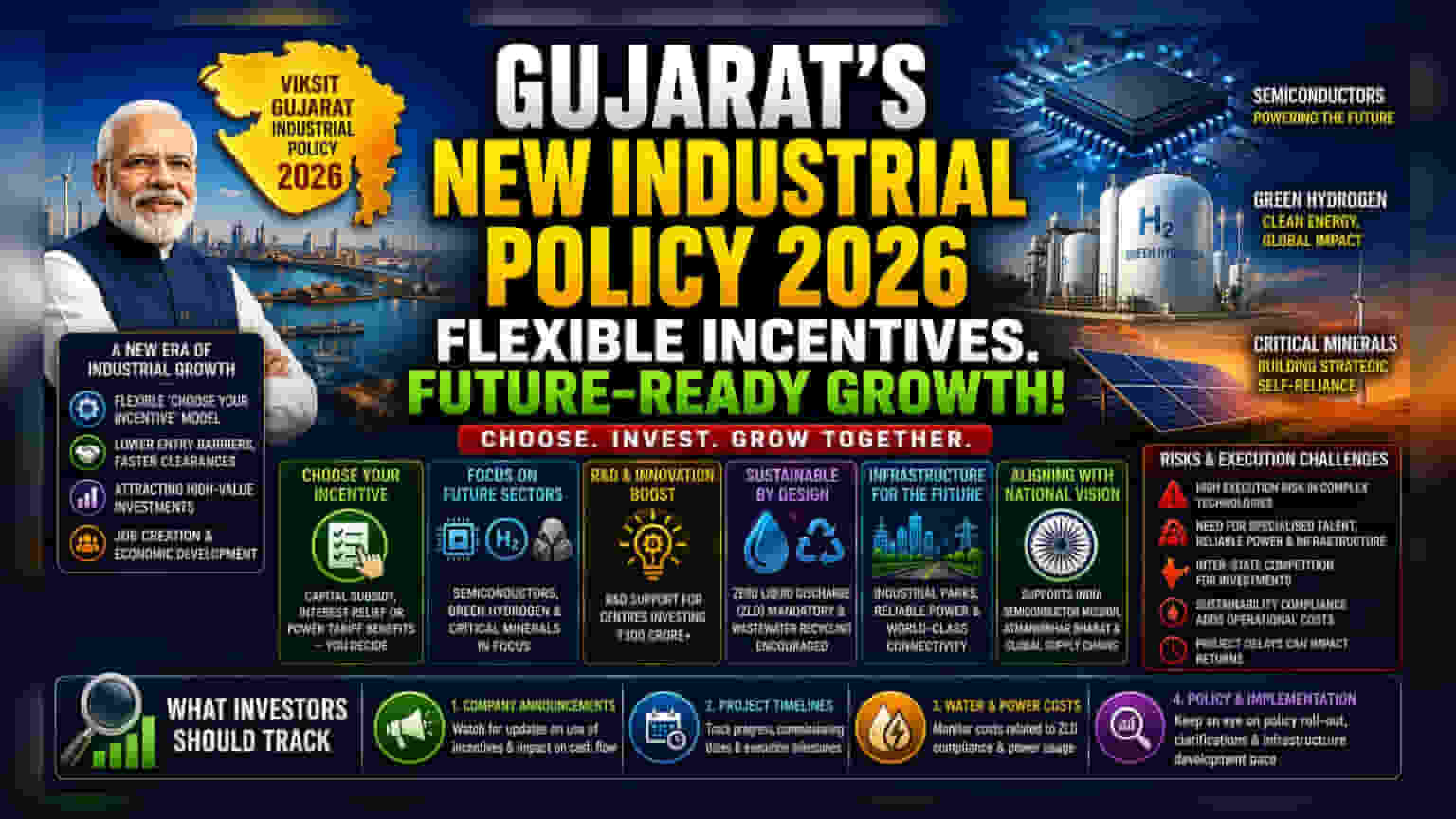


Gujarat has launched its Viksit Gujarat Industrial Policy 2026, introducing a flexible 'choose your incentive' model for investors. Targeting high-growth sectors like semiconductors, green hydrogen, and advanced manufacturing, the policy also emphasizes R&D and sustainable water management. This shift aims to make the state a hub for technology-intensive industries. Investors should monitor how this flexible incentive structure impacts project economics and the operational costs for companies expanding in the region.
What Happened
On June 15, 2026, the Government of Gujarat unveiled the Viksit Gujarat Industrial Policy 2026. This new policy marks a significant shift in how the state plans to attract industrial investment. Rather than offering one-size-fits-all benefits, the policy introduces a 'choose your incentive' model. This allows businesses to tailor the government support they receive—such as choosing between direct capital subsidies, interest relief, or power tariff reimbursements—based on their specific business model and needs.
Why This Matters For Investors
The most important change for investors is the shift toward flexibility. In the past, industrial policies often offered standard benefits that might not have fit every company's financial structure. By allowing firms to select their own incentives, the state is trying to lower the initial barrier to entry and reduce the time companies spend negotiating benefits.
This policy is clearly designed to attract capital to high-value, technology-heavy sectors. The focus on semiconductors, green hydrogen, and critical minerals suggests that the state is positioning itself to benefit from global supply chain shifts and India's broader push for self-reliance in high-tech manufacturing. For investors, this means the state is likely to see an increase in large-scale capital spending announcements in the coming years.
The Strategic Shift to Tech and Energy
The policy explicitly moves away from supporting low-margin, resource-heavy manufacturing, aiming instead for higher-value activities. Semiconductors and green hydrogen require massive capital investment and long-term commitment. By offering R&D support—specifically for centers investing over ₹300 crore—the government is attempting to build an ecosystem that goes beyond simple assembly and manufacturing.
This strategy aligns with broader national programs like the India Semiconductor Mission, which provides significant fiscal support. Companies already establishing a presence in Gujarat, such as those involved in chip assembly or green energy equipment, may find this new policy helpful for future expansion phases.
Sustainability and Operational Costs
Any large-scale industrial growth in Gujarat must address the state's resource limitations, particularly water. The new policy mandates strict practices like Zero Liquid Discharge (ZLD) systems and encourages high levels of wastewater recycling. While these requirements promote sustainability, they also represent a cost for companies. Investors should note that the policy provides assistance for setting up these systems, but the long-term operational costs of maintaining advanced water treatment facilities will be an ongoing factor in a company's profit margins.
Risks and Execution Challenges
While the policy aims to boost growth, several risks remain for investors to consider. Moving into complex fields like semiconductor manufacturing and green hydrogen involves a high 'execution risk.' These projects require specialized talent, massive power reliability, and stable infrastructure, which are expensive to build and maintain.
Furthermore, Indian states are increasingly competing against each other to attract these same large-scale investments. The success of this policy will depend heavily on whether the state can build the necessary infrastructure—such as reliable power grids and specialized industrial parks—faster than its neighbors. If infrastructure development lags behind investment, companies could face delays or cost increases.
What Investors Should Track
Investors looking at companies with significant operations in Gujarat should monitor a few key factors. First, watch for company-specific announcements regarding the use of these new incentives, as they could impact cash flow and return on investment. Second, keep an eye on project timelines; the transition to high-tech manufacturing is complex, and delays in commissioning are common. Finally, monitor management commentary on water and power costs, as compliance with stricter sustainability standards like ZLD will be a consistent factor in industrial operations in the state.