

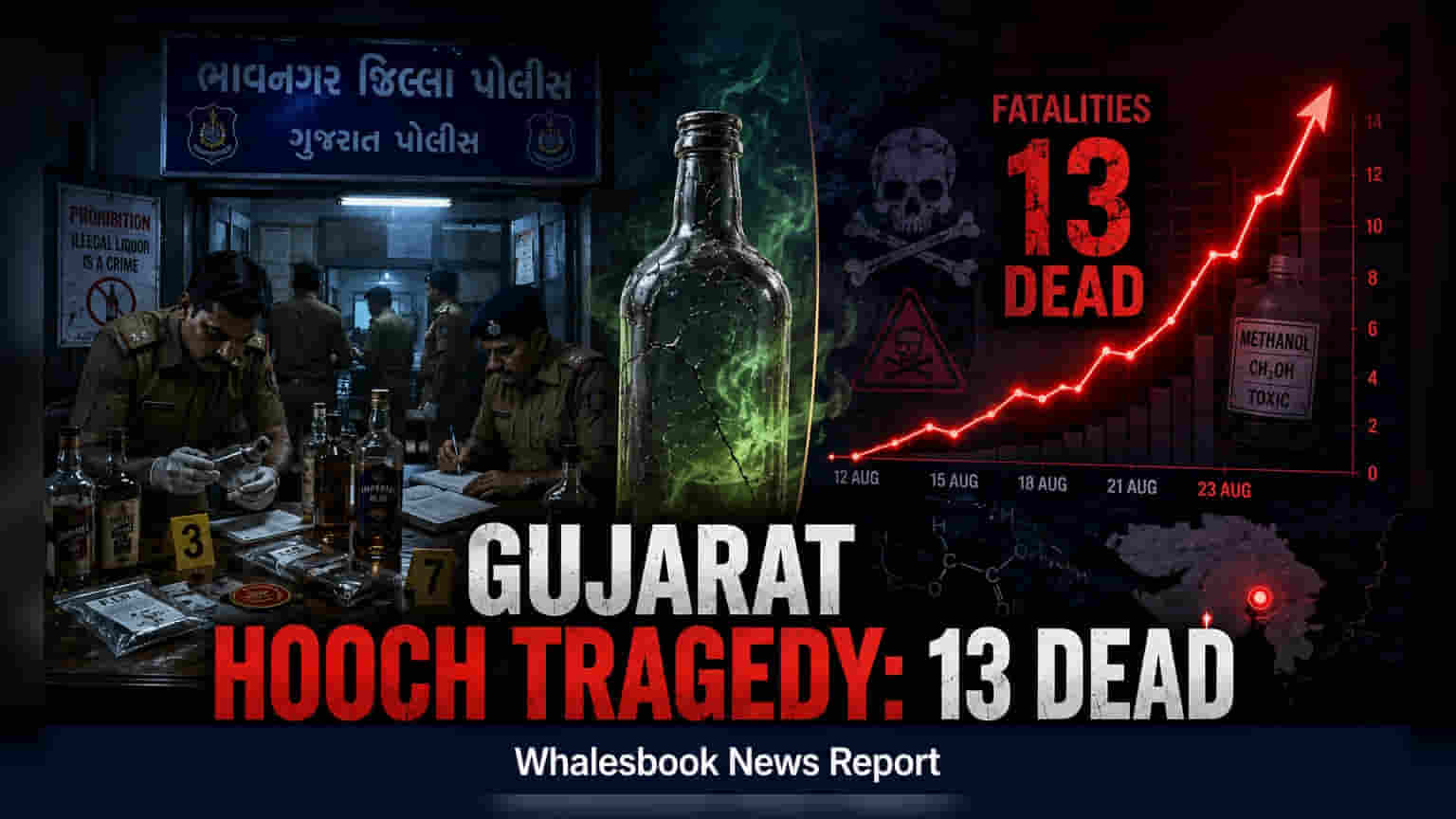
The death toll from the spurious liquor incident in Gujarat's Bhavnagar district has risen to 13, with 14 suspects now in custody. The ongoing investigation has expanded to Delhi and Madhya Pradesh to track the supply of raw materials and counterfeit branding, highlighting the persistent regulatory and reputational risks associated with illicit alcohol networks.
The death toll in Gujarat's recent spurious liquor incident in the Bhavnagar district has reached 13, after two more individuals succumbed to the effects of the toxic alcohol during treatment. Officials confirmed that at least 67 people were affected after consuming the methanol-laced concoction. While the majority of those affected are recovering, the incident has triggered a broader investigation involving the State Monitoring Cell to trace the source of the lethal supply chain.
Police authorities have now arrested 14 individuals out of the 21 named in the initial investigation. The probe is focusing on identifying the source of raw materials, specifically methanol, which was found in high concentrations in the confiscated liquid. Investigators have expanded their search beyond Gujarat, dispatching teams to Madhya Pradesh and Delhi, where some of the key accused and suppliers are suspected to be operating from.
From a regulatory and business perspective, this tragedy underscores the systemic risks posed by the illicit liquor trade in states with strict prohibition policies. The investigation revealed that the toxic liquor was packaged in counterfeit bottles bearing the labels of well-known Indian-Made Foreign Liquor (IMFL) brands. For the legitimate alcohol industry, such incidents present a two-fold challenge: potential brand reputational damage when fake products are mislabeled as popular brands, and a broader market distortion caused by unregulated, tax-evading competitors.
The use of counterfeit packaging and labels is a recurring issue that increases the compliance burden for legitimate manufacturers, who often invest heavily in anti-counterfeiting measures and supply chain security. Furthermore, for states, the growth of an illicit market represents a direct loss in excise revenue and necessitates increased enforcement spending. The discovery of interstate supply links also suggests that this is not merely a local issue but part of a wider, organized network that bypasses state borders.
As the investigation continues, the key monitorable for the industry and regulators will be the intensity of future crackdowns on cross-border supply chains and the effectiveness of measures to curb the sale of illicit alcohol under the guise of established brands. Authorities are also investigating the source of the bottle-sealing equipment, which will be critical in understanding how these illegal operations manage to mimic authentic commercial products.