

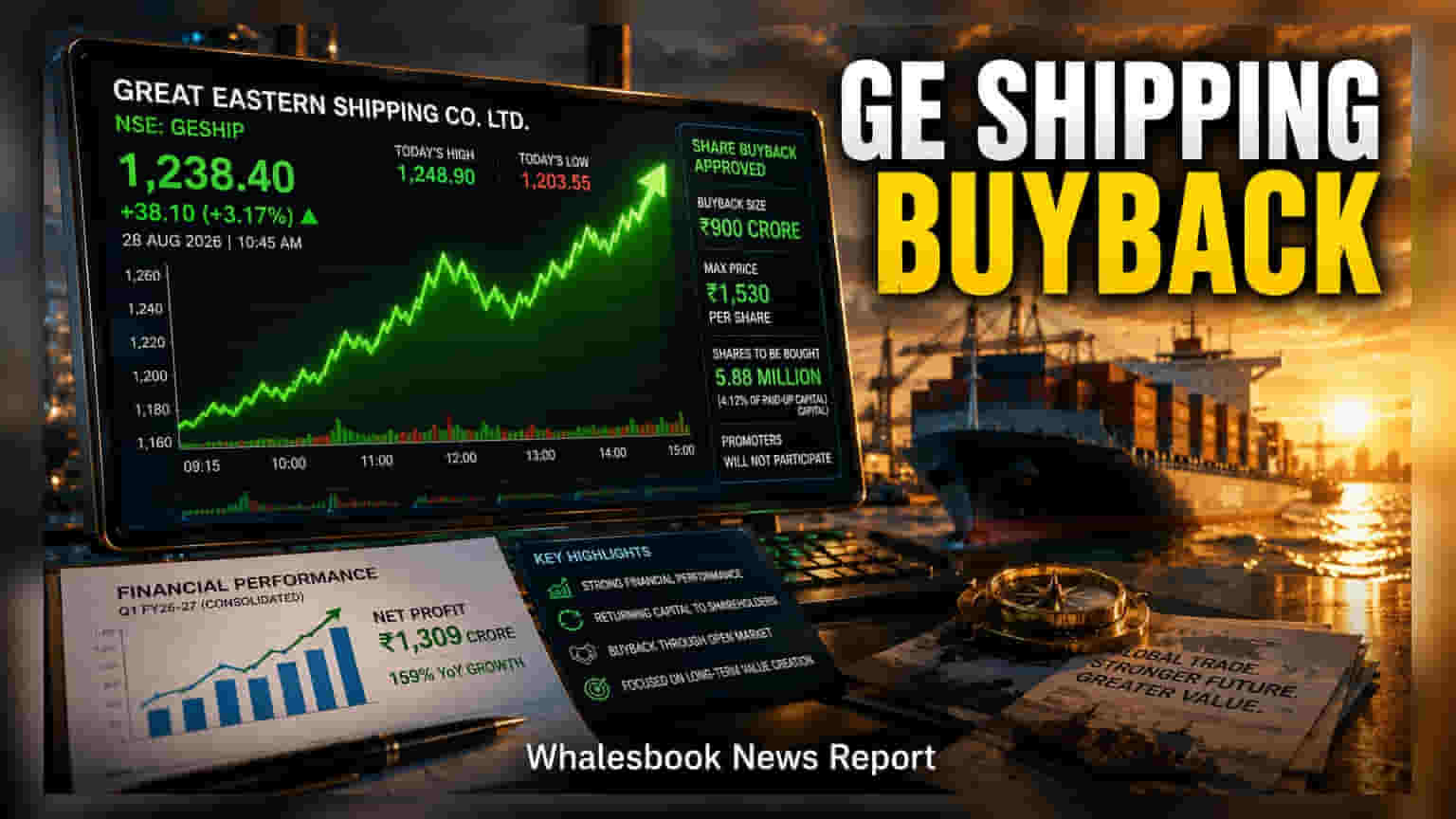
The Great Eastern Shipping Company has approved a share buyback program of up to ₹900 crore via the open market. This decision follows a strong first-quarter performance where the company’s net profit jumped 159% year-on-year. Investors are now weighing the impact of this capital return on the company's equity base.
The Great Eastern Shipping Company has officially approved a share buyback program worth up to ₹900 crore, signaling a move to return capital to shareholders. The board of directors finalized this decision on August 27, 2026, authorizing the company to repurchase its own equity shares from the open market. Following the announcement, the stock price reacted positively, moving up by over 3% on August 28, 2026.
Buyback Specifics and Financial Context
The company has set a maximum price of ₹1,530 per share for the buyback. The program aims to acquire approximately 5.88 million equity shares, which accounts for roughly 4.12% of the company's total paid-up equity capital. The promoter group will not participate in this program, meaning the offer is open to public shareholders only.
This capital allocation decision is supported by a robust financial performance in the recent quarter. For the first quarter of the 2026-27 financial year, the company reported a consolidated net profit of ₹1,309 crore. This marks a significant 159% increase compared to the same period in the previous year, providing the company with the financial flexibility to initiate this buyback.
Understanding the Risks and Market Dynamics
While a buyback can often be a signal of management's confidence in the company's value, investors should also consider the broader industry risks. The shipping and offshore services sector is highly cyclical, meaning it is sensitive to global trade volumes, oil prices, and exploration demand. If these global demand drivers soften, it could impact future earnings, regardless of current financial strength.
Furthermore, because the buyback is being executed through the open market, there is an element of execution risk. The company’s ability to complete the buyback at or below the ceiling price depends on sufficient market liquidity and trading volume. If market prices rise significantly or liquidity is low, the company may find it challenging to purchase the intended number of shares within the specified timeframe.
The company has also noted that the trading window for designated persons, such as employees and insiders, is closed from August 25, 2026, through August 29, 2026, to prevent trading during this sensitive period.
What Investors Should Track Next
Moving forward, shareholders may watch for updates on the pace of the buyback execution. Key monitorables include the number of shares actually repurchased in the coming weeks and any future management commentary regarding capital allocation priorities. Investors will also keep a close eye on the shipping sector's performance, as fluctuations in global trade and oil exploration demand remain the primary drivers of the company's long-term profitability.