

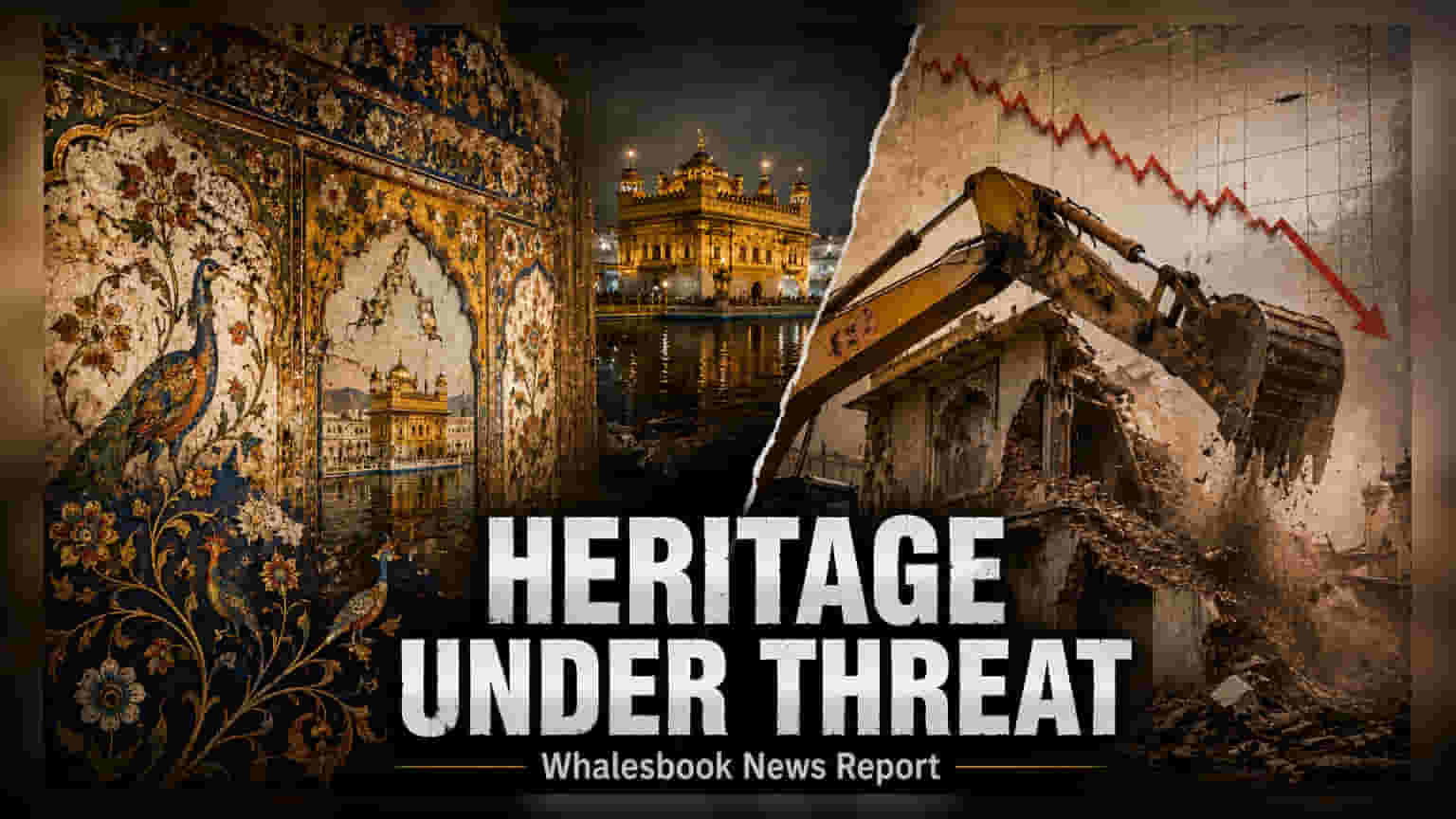
Centuries-old frescoes at Amritsar’s Golden Temple serve as a critical, yet fragile, link to pre-Partition Sikh artistic heritage. Known as mohrakashi, these murals face ongoing threats from environmental decay and extensive modernization efforts. The struggle between heritage preservation and structural renovation remains a core concern for historians and the community.
The frescoes within Sri Harmandir Sahib, or the Golden Temple in Amritsar, represent one of the most significant yet vulnerable connections to a centuries-old Sikh visual tradition. These artworks, characterized by delicate floral motifs, birds, and historical narratives, are executed using the mohrakashi technique—a demanding process involving the application of natural mineral pigments onto wet lime plaster. Because these pigments become integral to the wall structure itself, the technique allows for remarkable longevity, yet the art remains susceptible to physical damage and environmental degradation.
For many, these paintings are not merely decorative but serve as a tangible link to a vibrant artistic identity that was significantly fractured during the Partition of 1947. Historical accounts and oral histories from the period describe similar vibrant fresco work in gurdwaras across West Punjab, much of which was lost when communities were displaced. Consequently, the surviving murals in Amritsar are viewed by historians and conservationists as invaluable cultural assets that document the visual language of a bygone era, capturing the work of master painters who synthesized diverse influences, including Mughal and Pahari styles, into a uniquely Sikh aesthetic.
However, the preservation of these murals faces a complex challenge. Over the decades, many historic gurdwaras, including significant sites in Amritsar, have undergone extensive renovations. These projects, often driven by 'kar sewa' (voluntary service), frequently prioritize the structural modernization of religious sites, sometimes leading to the covering or replacement of original historical layers with modern materials like marble or tiles. The reconstruction of the Akal Takht following the events of the mid-1980s is often cited as a period when significant historical murals were permanently lost.
Professional conservationists, such as those who have led scientific restoration projects at the site, advocate for a more technical approach to protect the remaining paintings. The debate centers on balancing the needs of an active, highly frequented religious site with the requirements of heritage conservation. Unlike industrial assets, the value of these frescoes cannot be quantified in financial terms; they are irreplaceable cultural markers. The central challenge for stakeholders remains finding a standardized, long-term policy that ensures the physical integrity of these artworks is maintained while respecting the religious traditions of the temple. Investors and the broader public interested in heritage preservation may track whether future renovation plans will incorporate advanced conservation standards to protect what remains of this unique artistic legacy.