

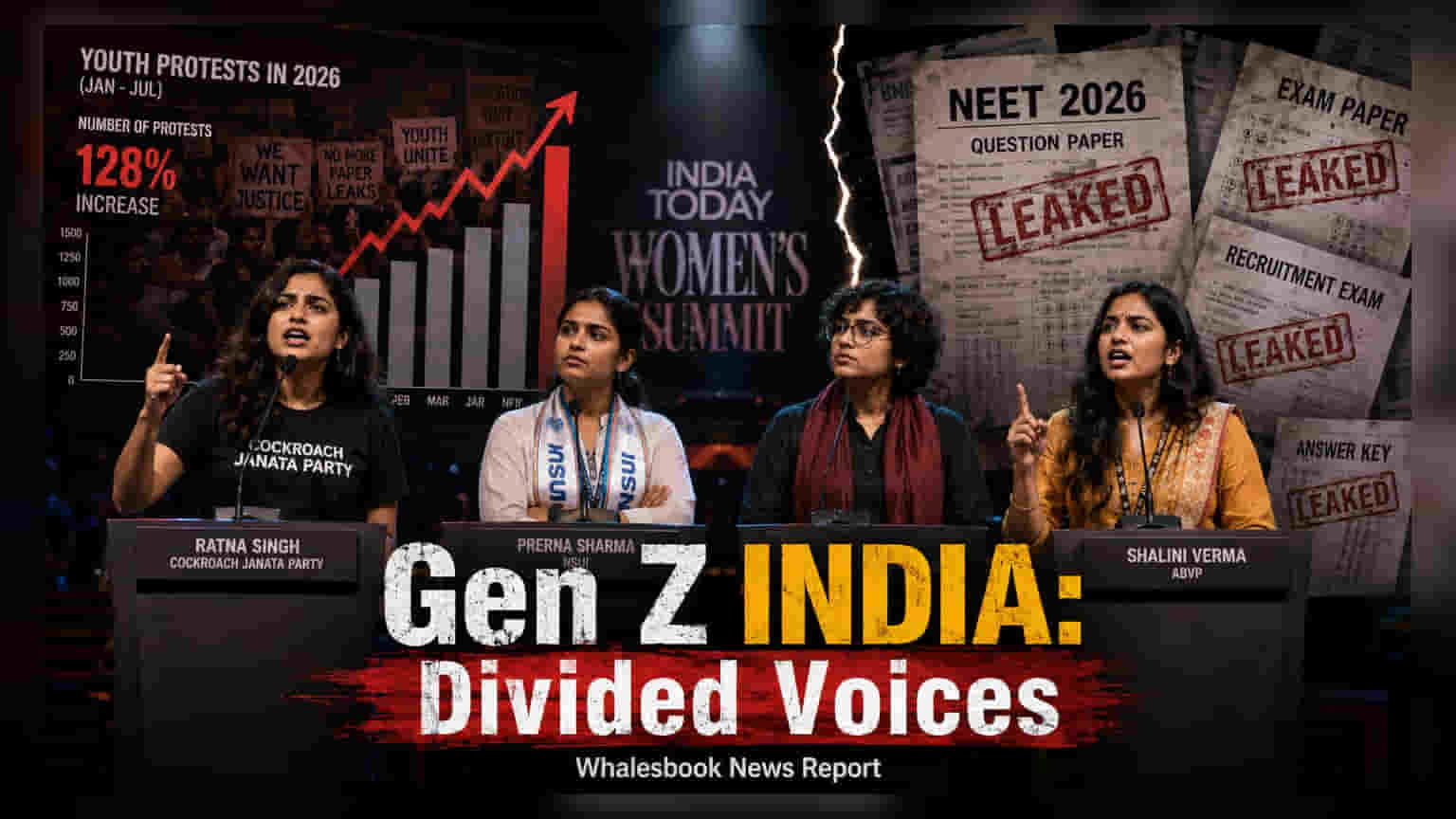
Following the July 2026 resignation of Education Minister Dharmendra Pradhan due to exam irregularities, student leaders debated the rise of the digital-first 'Cockroach Janata Party' at the India Today Women's Summit on August 22, 2026. The discussion highlighted the evolving nature of youth activism and its potential impact on future educational policy.
Student leaders from diverse political and grassroots organizations gathered at the India Today Women's Summit on August 22, 2026, to discuss the representation of Gen Z in the current socio-political landscape. The panel discussion, titled 'Who speaks for India's angry youth?', served as a platform to dissect the methods and motives behind the youth-led protests that shook the national education sector earlier this year.
The Rise of the 'Cockroach Janata Party'
The central topic of the debate was the emergence of the 'Cockroach Janata Party' (CJP), a satirical, decentralized digital movement that gained significant traction following reports of medical entrance exam (NEET) paper leaks and recruitment irregularities in early 2026. Founded in May 2026 by activist Abhijeet Dipke, the CJP operated as an issue-based protest platform rather than a traditional political party. The group's digital-first campaign successfully organized widespread student unrest, which eventually pressured the government and culminated in the resignation of Union Education Minister Dharmendra Pradhan on July 25, 2026.
During the summit, panelists presented conflicting views on how these movements should be perceived. Ratna Singh, representing the CJP, argued that the movement was a leaderless, authentic expression of public frustration, prioritizing accountability over political recognition. In contrast, representatives from established organizations, including the National Students' Union of India (NSUI) and the All India Students' Association (AISA), highlighted the role of their own long-standing campaigns against the National Testing Agency and privatization trends in the education sector.
Impact on the Education Sector
While the discussion was political in nature, the events of 2026 have significant implications for the broader education and test-preparation sector in India. The resignation of the Union Education Minister and the subsequent focus on examination integrity suggest a period of transition in how national-level competitive tests are administered and regulated. For companies operating in the ed-tech and test-prep space, this represents a period of regulatory uncertainty. Investors and stakeholders in these businesses may monitor whether the government introduces stricter compliance standards for testing agencies or changes the structure of national entrance examinations.
Shalini Verma, representing the Akhil Bharatiya Vidyarthi Parishad (ABVP), maintained that the CJP's narrative was politically aligned with opposition interests, emphasizing that the majority of Indian youth remain nationalist in their outlook. Meanwhile, other panelists stressed that the success of the recent protests proved that youth mobilization is no longer dependent solely on traditional political structures, but rather on direct digital action and unified student fronts.
As the government looks to stabilize the administration of national examinations, the core monitorable for the coming months will be the implementation of new testing protocols and any structural changes to the National Testing Agency. The continued activism of decentralized groups suggests that student organizations will likely remain a strong force in holding educational authorities accountable for any future lapses in exam processes.