

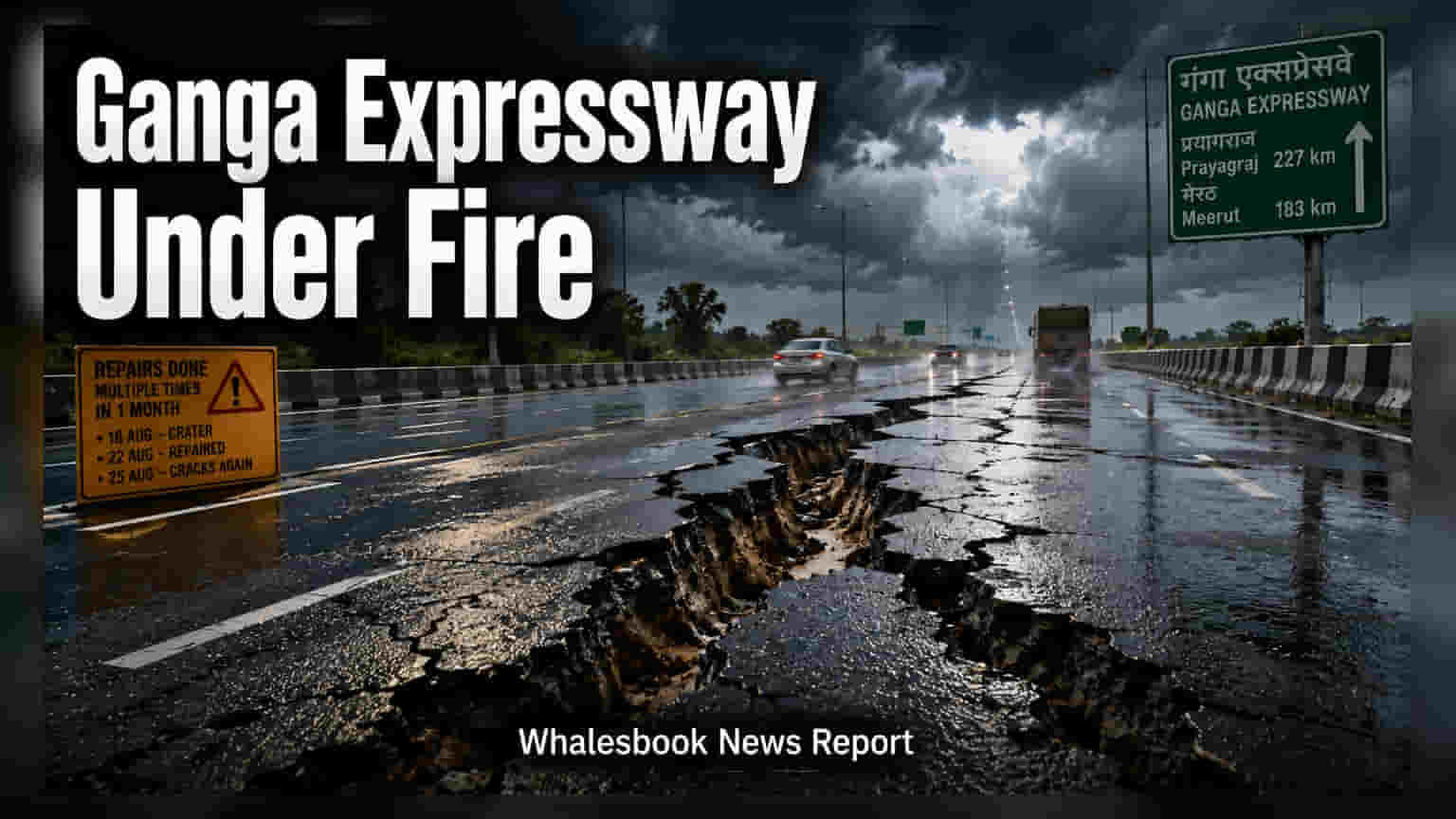
The 594-kilometer Ganga Expressway is reporting new cracks near Unnao, marking the fifth repair incident in a single month. For stakeholders, these recurring structural issues raise concerns regarding construction quality, rising maintenance costs, and potential reputational risks for this high-profile infrastructure project.
The 594-kilometer Ganga Expressway is facing renewed scrutiny after fresh cracks surfaced on a segment near Unnao, just one week after emergency repair work was completed. This development follows a series of structural challenges, including a notable 10-meter-deep crater that occurred on the Meerut-Prayagraj carriageway on August 18. Official data indicates this is the fifth instance of repair work required on the expressway within a single month, pointing to persistent issues with the road's surface integrity.
The Rs 36,230-crore infrastructure project, designed to significantly improve connectivity across 12 districts in Uttar Pradesh, is struggling to maintain its base against monsoon-related soil settlement and drainage challenges. While the expressway was inaugurated earlier in 2026, the frequency of these surface failures is drawing attention from engineering experts and policymakers alike.
From an infrastructure and investment perspective, these recurring maintenance issues carry broader implications. Large-scale road projects are built with the expectation of durability and low upkeep in the initial years. When segments require constant patching, it leads to increased operational and maintenance costs, which can impact the long-term economics of the asset. Furthermore, such incidents often trigger a cycle of intense public and political scrutiny, which can complicate project management and create reputational risks for the authorities and the contractors involved.
The durability of the project's drainage design and its resilience to heavy rainfall remain central points of debate. While the state government continues to invest in regional infrastructure and expressway expansions, the focus is shifting toward whether current engineering standards are sufficient to handle local environmental conditions. Investors and industry analysts are looking for clarity on the root cause of the soil settlement, as it is unclear whether this is a localized issue or a systemic flaw requiring widespread intervention.
The next important steps for stakeholders to monitor will be any independent technical audits ordered by the government or infrastructure authorities. Such reports will be critical in determining whether the current repair patches are sufficient or if more extensive, costly reconstruction is needed. Additionally, market observers may track whether this situation leads to stricter quality assurance requirements for future infrastructure tenders, potentially increasing compliance and execution risks for companies operating in the construction and engineering sector.