

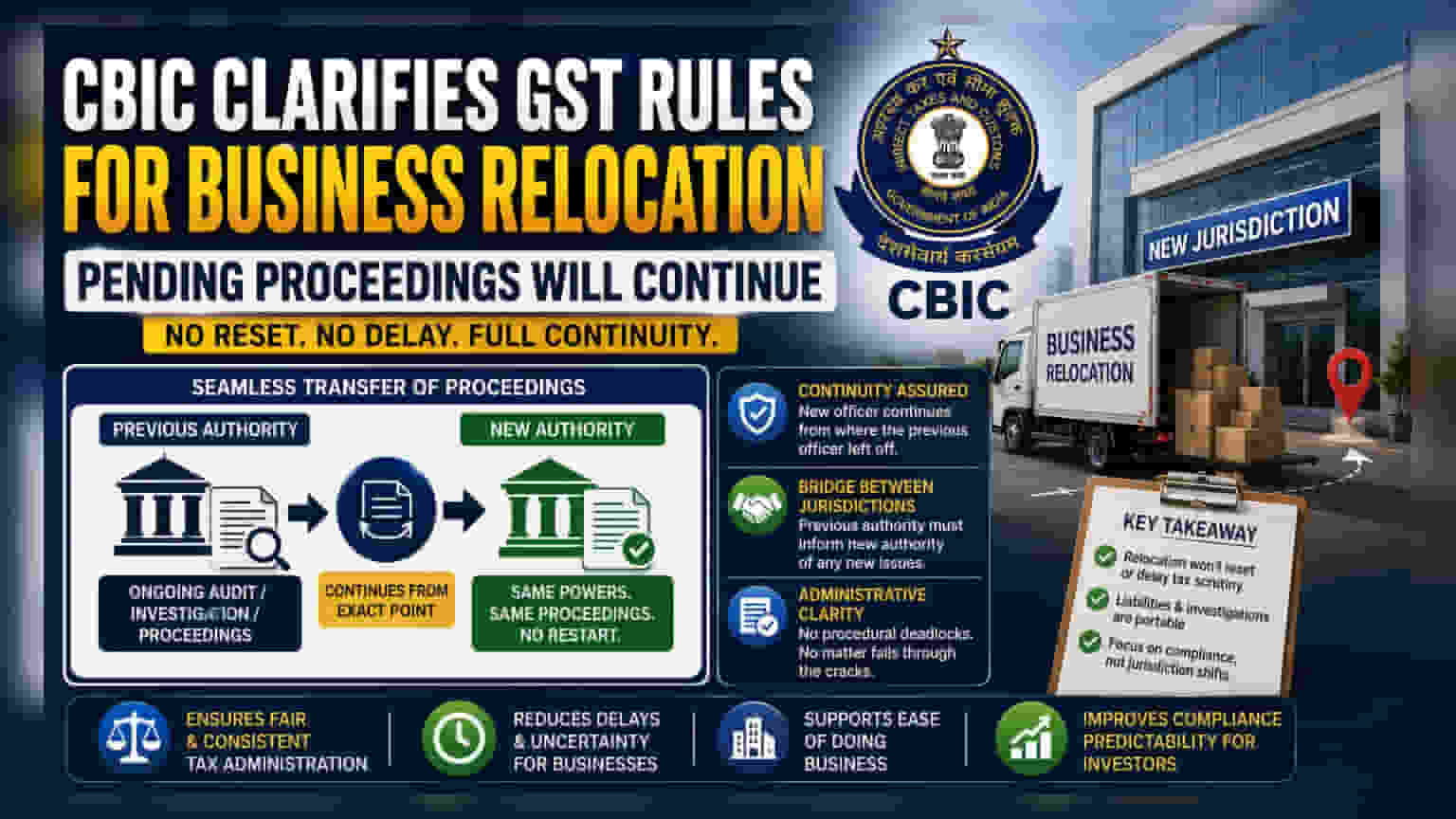
The Central Board of Indirect Taxes and Customs (CBIC) has clarified that tax proceedings will not restart when a business changes its principal place of operation. The new tax authority will now take over and continue any ongoing audits or cases from where they were left off. This brings clarity to corporate restructurings and interstate relocations.
What Happened
The Central Board of Indirect Taxes and Customs (CBIC) has issued clear guidelines for businesses that shift their principal place of business under the Goods and Services Tax (GST) framework. The core of the clarification is that if a company is facing an ongoing tax proceeding, audit, or investigation, it cannot reset the process by moving to a new jurisdiction. The new tax officer will now take over the case from the exact point where the previous officer left it, ensuring continuity.
Why It Matters for Businesses
This rule removes significant administrative uncertainty. Previously, businesses often faced ambiguity regarding how a move would affect pending audits or whether cases would have to be restarted, leading to delays and confusion. By mandating that the incoming tax authority (the transferee) continues the investigation, the CBIC has made the compliance process more predictable. For companies planning restructuring, factory relocations, or moving their corporate headquarters, this ensures that the shift does not lead to procedural deadlocks.
How the Transfer Works
The new guidelines establish that the incoming tax authority holds the same powers as the outgoing one. This means the new tax officer inherits all previous actions, including pending show-cause notices or ongoing audits. They have the mandate to carry these forward to their logical conclusion without needing to reopen cases or repeat previous steps. This ensures that tax administration remains continuous, regardless of where the business entity chooses to reside.
Compliance and Administrative Clarity
The directive also addresses scenarios where the original tax authority might identify new issues even after a business has relocated. In such cases, the previous authority is instructed to formally notify the new officer. This creates a bridge between jurisdictions, ensuring no tax matter falls through the cracks during a transition. For businesses and their stakeholders, this level of procedural clarity reduces the risk of cases stalling due to confusion over which officer is responsible for handling the matter.
What Investors Should Track
While this rule improves process efficiency, it confirms that tax liabilities and investigations are effectively portable. If a company is undergoing significant structural changes or geographic shifts, investors should note that relocation is no longer a method to reset or delay ongoing tax scrutiny. The primary monitorable for shareholders remains the company’s overall tax compliance health and how effectively the management navigates these regulatory transitions without incurring additional penalties.