

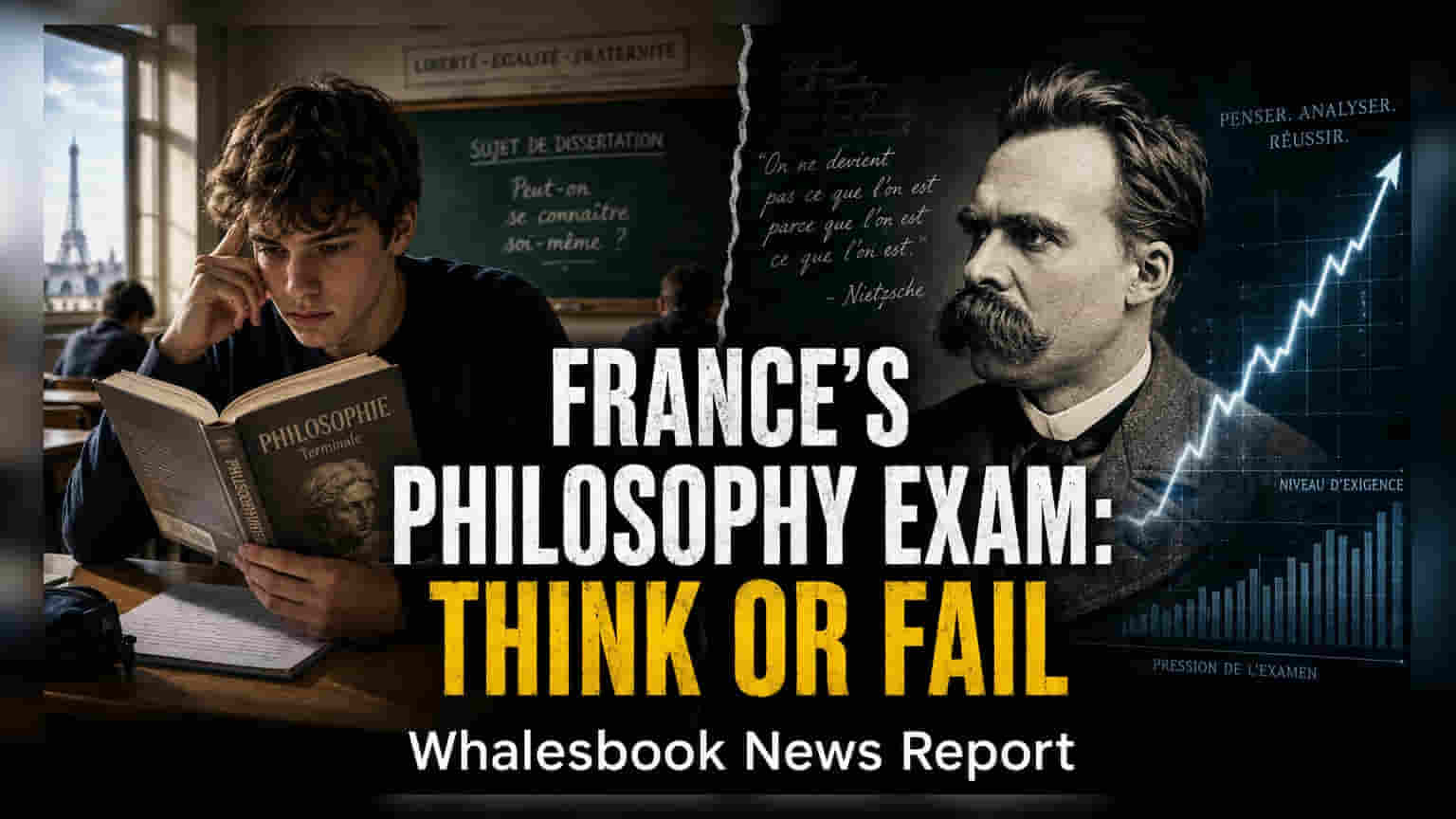
The compulsory philosophy examination in France’s education system continues to trigger discussion on the value of critical inquiry. While this is an academic policy and not a financial market event, the debate regarding how future leaders are trained to assess complex information holds relevance for observers and investors monitoring long-term societal and leadership trends.
France’s long-standing requirement for a four-hour philosophy examination in the national 'baccalauréat' high school graduation system remains a distinct feature of its educational landscape. While this is an academic and public policy matter rather than a corporate or financial event, the ongoing debate surrounding its role in developing critical thinking provides a relevant case study for those tracking global societal and leadership trends.
The examination, which requires students to dissect complex texts and engage in profound questions regarding knowledge, morality, and social norms, encourages a habit of independent deliberation. Education officials have consistently highlighted that the focus of this assessment is to move beyond the mere acceptance of established ideas, fostering instead a framework where students learn to weigh opposing viewpoints and formulate their own conclusions.
For investors and market participants, the focus on critical inquiry—as opposed to rote acceptance—parallels the discipline required in complex environments. The ability to question established narratives, analyze diverse perspectives, and avoid herd mentality is often cited as a cornerstone of sound decision-making. While the French philosophy exam is designed for high schoolers, the underlying principle of rigorous, question-based exploration is a trait frequently associated with long-term strategic planning and effective leadership.
The curriculum's evolution is also a study in historical legacy. Initially introduced in the Napoleonic era for administrative training, the philosophy requirement transitioned over time into a tool intended to encourage systemic questioning and intellectual independence. Experts often contrast this approach with educational models that prioritize standardized acceptance, noting that the former may better prepare individuals for roles where complex judgment and reflective thinking are required.
From a global perspective, this approach is often discussed in the context of nurturing wise and reflective leaders. The emphasis on exploration through questioning—championed by historical thinkers like Socrates and Bertrand Russell—suggests that the process of inquiry is as valuable as finding immediate answers. For observers in India and elsewhere, this serves as a reminder of the soft-power influence that educational systems hold in shaping the quality of future human capital.
As French students continue to sit for this annual requirement, the discussion regarding the balance between structured learning and open-ended philosophical inquiry remains a standard part of the national discourse. For those observing global trends, it underscores the importance of education policy in creating a foundation for thoughtful, critical analysis in society.