

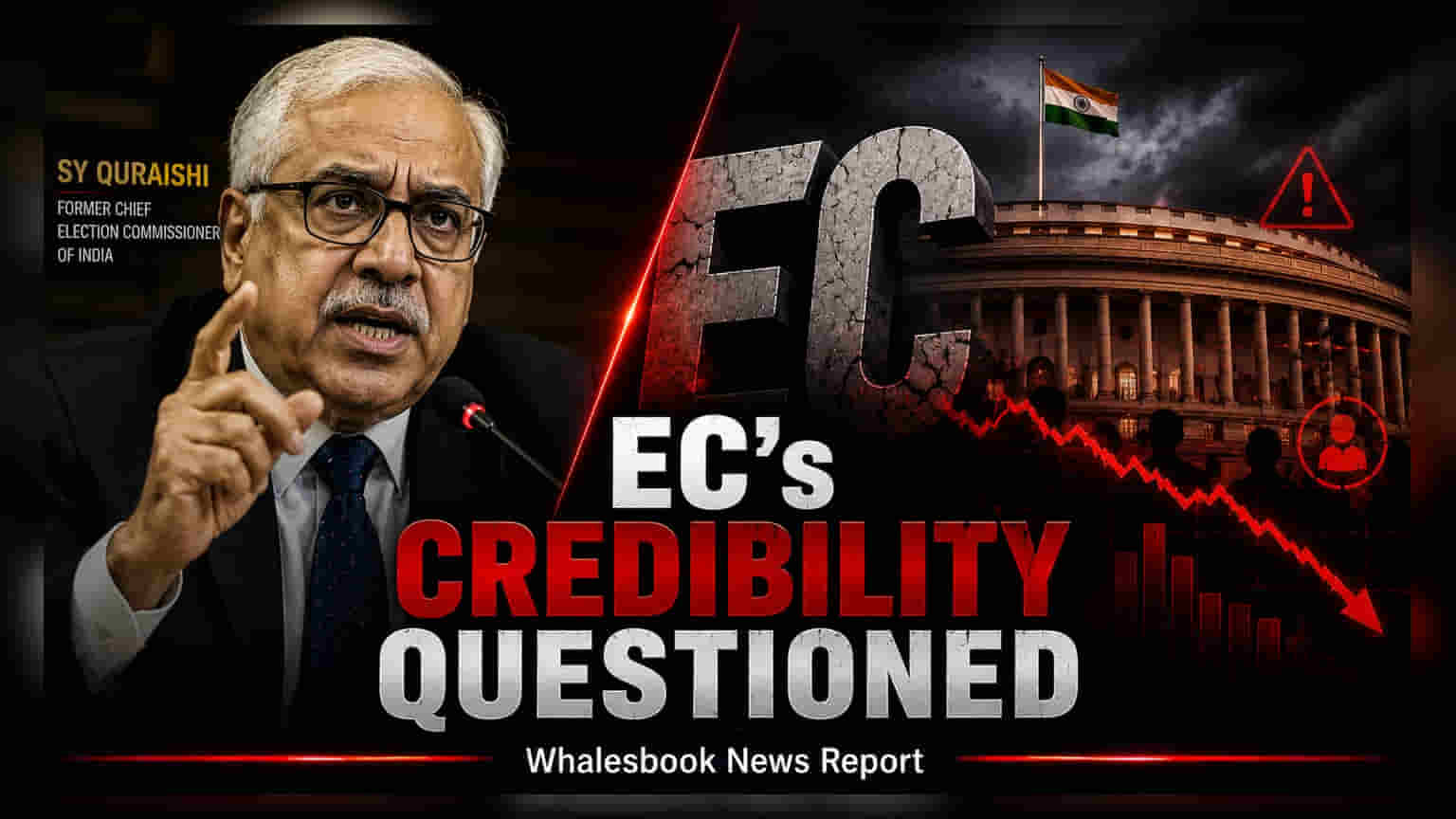
Former Chief Election Commissioner SY Quraishi has alleged that the current Election Commission has treated opposition parties unfairly, impacting the institution's credibility. He noted that opposition parties have repeatedly approached the Supreme Court due to unaddressed grievances. This statement comes amid ongoing debates regarding the independence and administrative approach of India's constitutional bodies.
Former Chief Election Commissioner SY Quraishi has expressed significant concern regarding the current state and reputation of the Election Commission of India. In remarks shared ahead of a book launch, Quraishi described the institution’s recent conduct toward opposition political parties as being very unfair. He argued that this approach has negatively affected the poll body's long-standing image as a highly credible and independent constitutional authority.
Quraishi, who served as the 17th Chief Election Commissioner, detailed the internal policies he implemented during his tenure to ensure institutional impartiality. He stated that he had instructed election officers to prioritize appointment requests from opposition parties over those from the government. His rationale was that because the government holds inherent power, the commission must actively work to gain and maintain the trust of the opposition, whom he characterized as the underdogs in the political process.
The former official highlighted that his own administration’s policies often benefited the Bharatiya Janata Party when it served as the principal opposition party. He defended this approach by emphasizing the necessity of creating a level playing field to sustain democratic trust. Quraishi pointed to recent events, including instances where 24 opposition parties reportedly sought judicial intervention from the Supreme Court, as evidence of a breakdown in communication between the commission and these political entities.
Beyond the specific actions of the election body, Quraishi also touched upon broader democratic processes. He observed a shifting trend in media reporting, where he believes the focus has moved away from questioning government accountability toward scrutinizing opposition parties. He reiterated that in a functioning democracy, the primary role of independent institutions and the media should be to ensure transparency and accountability from the ruling government.
While Quraishi highlighted the creation of the Voter Education Division and the Expenditure Monitoring Division as key legacy achievements from his time in office, he expressed sadness over the perceived decline in the commission’s institutional stature. He noted that the inability or unwillingness to address opposition concerns has led to a reliance on the judiciary to resolve election-related disputes. For observers and citizens, the monitorable aspect remains whether the commission will implement procedural changes to improve engagement with all political stakeholders and restore public confidence in the electoral process.