

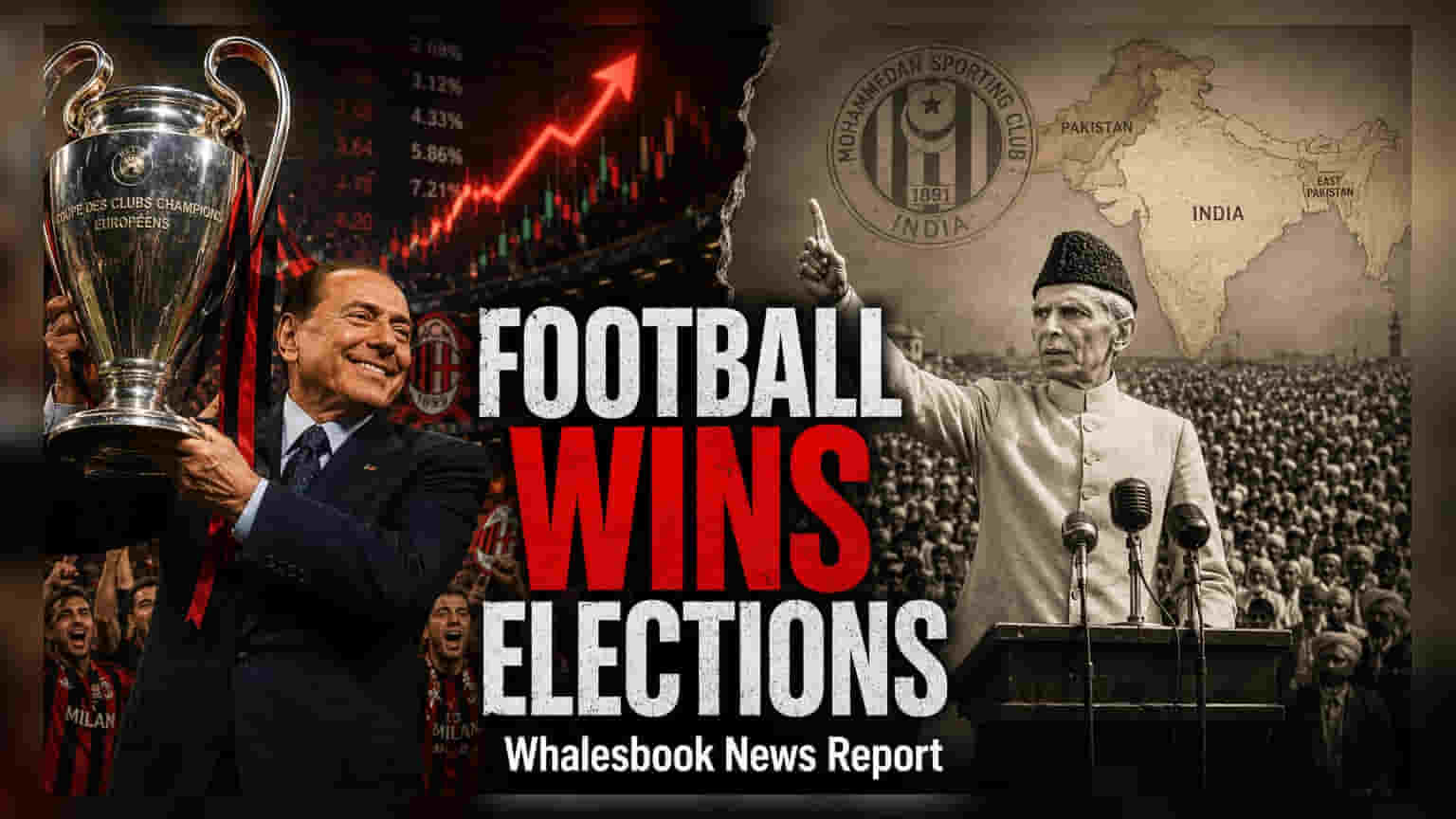
Historical analysis shows how AC Milan and Mohammedan Sporting Club once helped shape political narratives. While these clubs defined identities in Italy and colonial India, today both entities face significant business challenges, ranging from management shifts in Milan to severe financial and operational instability for the Kolkata-based club.
The intersection of sports and politics has historically provided a unique platform for leaders to build influence and mobilize support. From Silvio Berlusconi’s tactical use of AC Milan to the symbolic power of the Mohammedan Sporting Club in colonial India, football has often transcended the pitch to serve as a vehicle for political branding and societal change. However, beneath the legacy of these iconic institutions lies a complex modern reality of financial, operational, and governance risks.
In the 1980s, media tycoon Silvio Berlusconi transformed AC Milan from a debt-ridden club into a European football giant. By integrating professional management with star-studded rosters, he cultivated an image of success that directly bolstered his political brand in Italy. His famous declaration of "taking to the field" ahead of the 1994 general elections drew a direct line between his footballing triumphs and his political ambition, eventually leading him to the office of Prime Minister. Today, however, the club operates in a vastly different landscape. No longer under Berlusconi's direct control, AC Milan is a private entity managed by RedBird Capital. The modern business challenge for the club involves navigating complex internal power struggles and managing the high-cost demands of contemporary European football, moving away from the political branding of the past toward operational sustainability.
A similar story of political and cultural weight exists in India with the Mohammedan Sporting Club. During the 1930s and 1940s, the club served as a powerful symbol of identity, often aligning with the aspirations of the Muslim League and leaders like Muhammad Ali Jinnah. Its victories in tournaments like the Calcutta League and the Durand Cup were not just sporting achievements; they were milestones for a community seeking political recognition.
In the current era, the club's business reality is far removed from these historical highs. Incorporated as Mohammedan Sporting Club Private Limited, the organization is navigating a difficult period characterized by significant financial and operational instability. The club has faced recurring issues with unpaid player wages, disputes with investors, and significant regulatory hurdles, including FIFA-related bans. These challenges have impacted its ability to register new players and maintain consistent performance in leagues like the Indian Super League. Unlike the era where the club's success mobilized political support, today’s priority is resolving systemic debt and governance issues to ensure survival.
For observers of these institutions, the contrast between their historical political significance and their current business hurdles is stark. Whether in Italy or India, the transition from being powerful cultural symbols to sustainable business entities remains a difficult path. The future for both clubs depends less on political association and more on sound financial management, stable ownership structures, and the ability to resolve long-standing operational risks.