

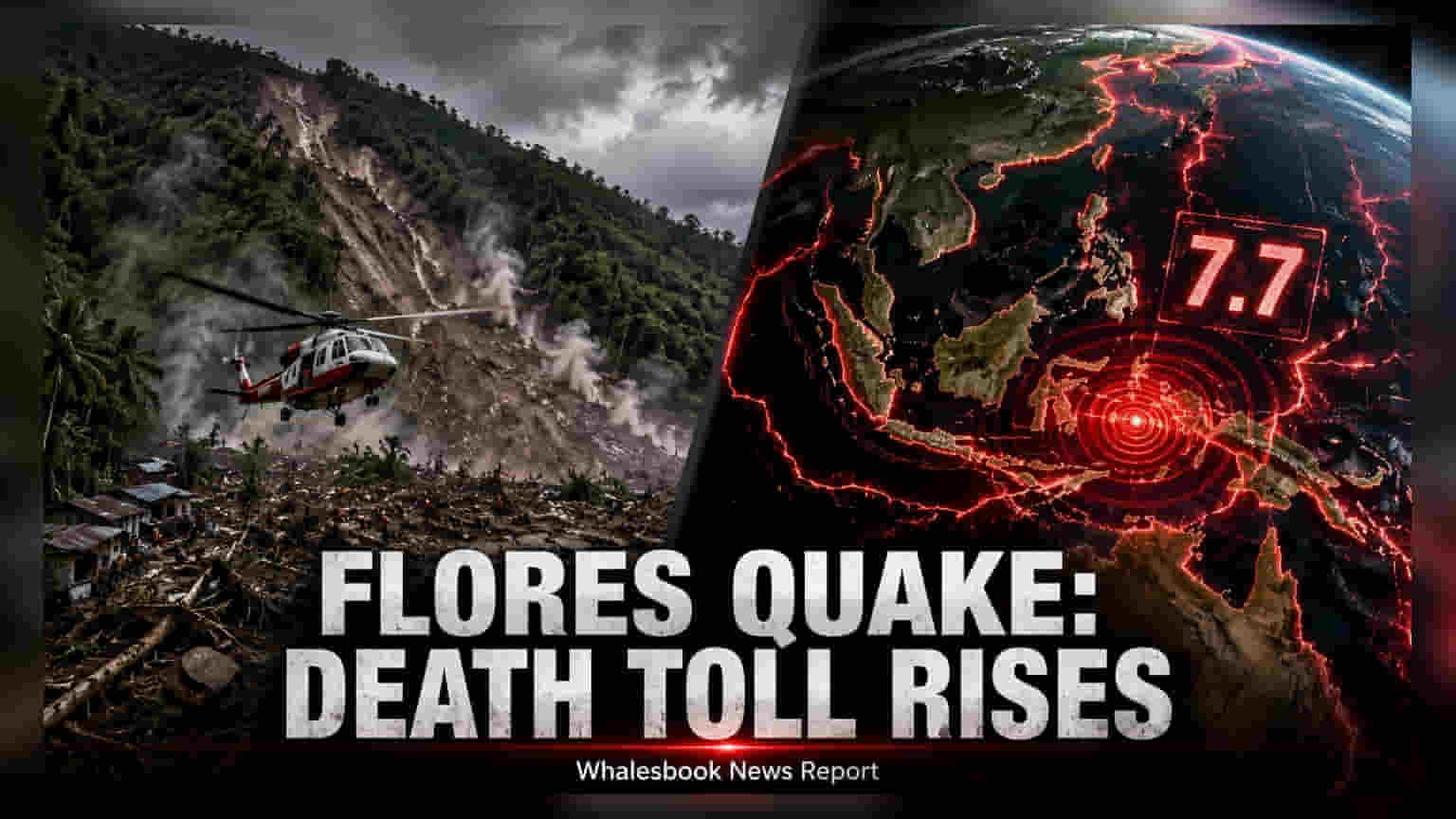
A 7.7 magnitude earthquake off Indonesia's Flores island has caused 47 confirmed fatalities and over 100 injuries. With more than 340 homes destroyed and critical transport links like the Trans-Flores Highway severed, rescue teams are battling landslides to reach affected villages, impacting the region's tourism and local infrastructure.
A powerful 7.7 magnitude earthquake struck off the coast of Flores island in Indonesia on August 15, 2026, leading to a humanitarian crisis as rescue operations continue into the weekend. As of August 16, authorities have confirmed 47 deaths, with more than 100 individuals injured. The impact has been widespread across the East Nusa Tenggara province, where thousands of residents have been displaced from their homes, seeking refuge in temporary shelters.
Local authorities report significant damage to public and private infrastructure. Preliminary assessments indicate that at least 346 homes have been destroyed or severely damaged. Additionally, 87 educational facilities and 18 health centers have sustained structural damage, which is currently hindering local emergency response efforts. The destruction of these critical buildings creates immediate challenges for providing medical care and basic services to the displaced population, who are also grappling with the loss of electricity and telecommunications connectivity.
Economic and logistical challenges are mounting as landslides have blocked major arterial roads, including the Trans-Flores Highway. This 700-kilometer route is essential for connectivity across the mountainous island. The disruption is particularly concerning for Labuan Bajo, a primary tourist hub and the gateway to the renowned Komodo National Park. The inability to move freely across the island is complicating the delivery of aid, food, and water to remote, cut-off villages that were closest to the quake's epicenter.
The region has experienced persistent instability following the initial tremor, with authorities recording over 340 aftershocks as of Sunday. These secondary tremors continue to pose a risk to damaged structures and are complicating the work of search and rescue teams, who must navigate unstable terrain to locate survivors and assess the safety of residential areas. While a brief tsunami warning was issued shortly after the earthquake, it was subsequently lifted by authorities, allowing focus to shift entirely toward disaster recovery.
Indonesia's location on the Pacific "Ring of Fire" makes the nation highly susceptible to seismic and volcanic activity. This geographical reality necessitates robust disaster management, yet the current scale of destruction in the Flores region highlights the ongoing vulnerability of local infrastructure to high-intensity seismic events. Moving forward, the priority remains clearing blocked transport routes to facilitate aid delivery and restoring essential utilities to stabilize the region for the thousands currently displaced.