

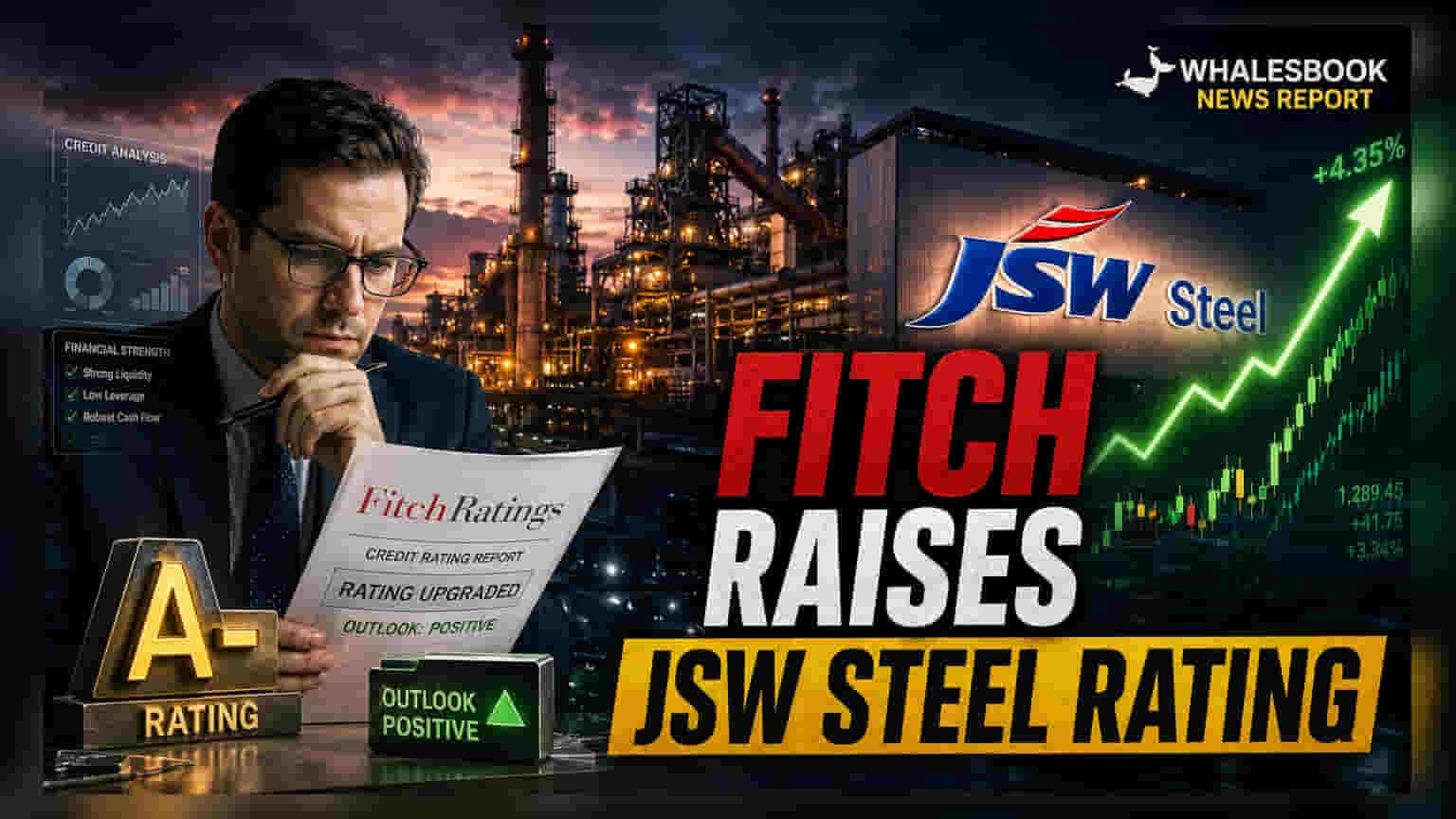
Fitch Ratings has raised JSW Steel's credit rating to BB+ from BB, signaling improved confidence in the company's financial and operational performance. This upgrade reflects the steelmaker's strong market position and stability. Investors may track how this potentially lower cost of borrowing influences future capital spending plans.
Fitch Ratings has upgraded the Long-Term Issuer Default Rating (IDR) and the credit rating for the outstanding bonds of JSW Steel to 'BB+' from 'BB'. This credit rating action, announced on July 6, 2026, serves as a formal assessment of the company’s ability to meet its financial obligations and manage its debt profile effectively.
Impact of Credit Rating Changes
A credit rating upgrade from a global agency like Fitch typically signals to the market that the company has shown consistent improvement in its financial health. For a capital-intensive business like steel manufacturing, a better rating can be beneficial. It often allows the company to access debt financing at more competitive interest rates compared to its previous rating. As JSW Steel manages a substantial domestic installed capacity of 36.4 million tonnes per annum, efficient management of debt costs is a key factor for maintaining profit margins.
Understanding the Steel Sector Context
JSW Steel operates in a sector that is sensitive to global commodity price cycles, raw material costs such as iron ore and coking coal, and infrastructure demand within India. Unlike smaller players, JSW Steel’s large scale provides a degree of operational buffer against market volatility. However, the steel industry is currently navigating various challenges, including fluctuating international prices and the ongoing need for continuous capital spending to modernize plants and expand capacity.
Financial and Operational Considerations
While this upgrade points to a positive view from the rating agency, investors often look beyond these assessments by monitoring the company's actual quarterly financial results, specifically focusing on operating margins and cash flow generation. The company’s ability to sustain its credit profile depends heavily on its capacity utilization levels and its success in managing its debt-to-equity ratio during periods of high expansion.
Monitoring Future Updates
Moving forward, the primary areas for shareholders to track include management’s commentary regarding future debt levels and any updates on planned expansion projects. Because the steel sector is capital-heavy, any shifts in global interest rates or domestic demand for steel could influence the company’s financial trajectory. Investors may also observe how this new rating affects the company's upcoming interest costs when it seeks to refinance or issue new debt instruments in the future.