 Whalesbook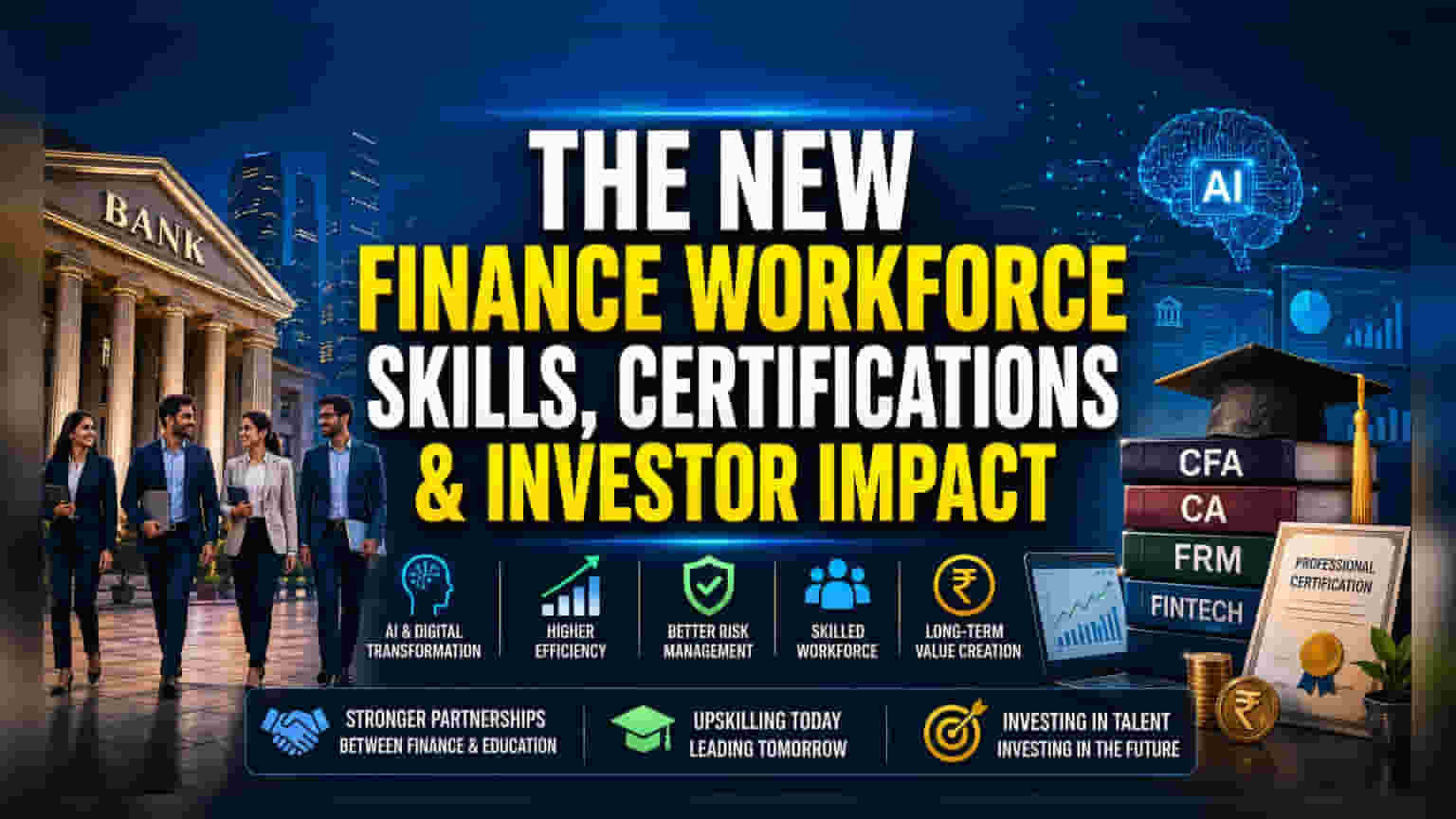


Indian financial firms are pivoting hiring focus from traditional degrees to tech-ready skills and professional certifications. This structural shift, driven by AI and digital banking, is changing the productivity landscape for major banks, fintech players, and listed education service providers.
What Happened
The Indian financial services sector is witnessing a fundamental change in hiring strategies. A university degree alone is no longer considered a sufficient indicator of job readiness. Industry leaders and academic experts have noted that advancements in artificial intelligence, fintech, and digital banking have forced employers to prioritize candidates with specific technical skills, such as data analytics and proficiency in industry-standard software. To remain competitive, educational institutions are increasingly embedding professional certifications and technology-focused modules into their core finance curricula.
Why Investors Should Care About Workforce Quality
For investors, the quality of human capital in the Banking, Financial Services, and Insurance (BFSI) sector directly impacts operational efficiency and long-term profitability. Financial institutions that successfully integrate technology with a highly skilled workforce often see improvements in their digital transformation efforts. A workforce capable of leveraging AI and data tools can lead to faster loan processing, better risk assessment, and more personalized customer service. Conversely, institutions struggling to attract or train talent for these new roles may face higher operational costs or delays in executing their digital strategies.
The Rise of Professional Certifications
Professional credentials such as the Chartered Financial Analyst (CFA), Chartered Accountancy (CA), Financial Risk Management (FRM), and other specialized certifications are becoming essential benchmarks for employers. These qualifications serve as a signal of a candidate's practical readiness, reducing the initial training burden on the employer. This trend is particularly relevant for financial companies that operate in complex regulatory environments, where deep technical knowledge is a necessity rather than an advantage. Companies that rely on a highly certified workforce may find themselves with a more robust internal control and compliance structure.
Education and SkillTech Sector Dynamics
This shift creates a clear demand-side pressure on the education sector. Universities and training institutes that can bridge the gap between academic theory and industry requirements are seeing increased relevance. For investors, this creates a potential long-term opportunity within the SkillTech and vocational training space. Education companies that partner with financial institutions to create industry-aligned courses or offer specialized fintech training programs may find new avenues for revenue growth as the market demands constant upskilling.
What Investors Should Track Next
Investors should monitor how financial institutions manage their employee cost ratios in light of these changing requirements. Key monitorables include the intensity of digital adoption, the speed at which firms are integrating AI into their operations, and the cost associated with upskilling existing staff. In the education sector, look for providers that have established partnerships with large financial entities to provide training, as these relationships can be indicators of sustainable revenue models. As India continues to grow as a global financial hub, the ability of both financial firms and educational providers to adapt to these technological changes will remain a critical factor for long-term growth and operational success.