 Whalesbook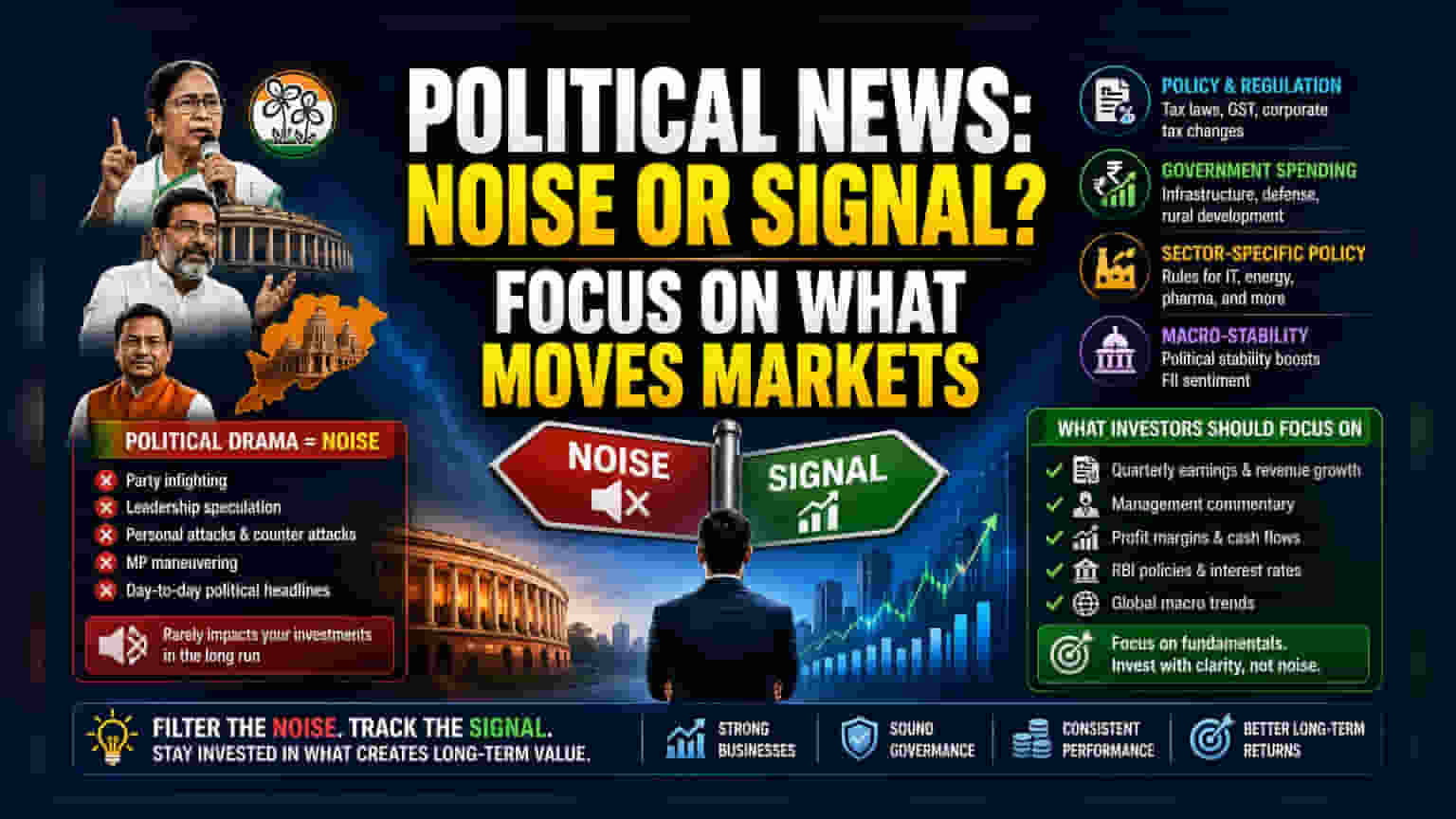


Political headlines, such as internal party shifts or local leadership debates, are common in Indian news. For stock market investors, the key is distinguishing between short-term political noise and actual economic fundamentals that impact portfolio value.
What Happened
Recent news reports have highlighted political developments in India, including internal shifts within the Trinamool Congress (TMC) and political maneuvering involving various Members of Parliament, such as Nishikant Dubey. Additionally, there has been coverage regarding leadership dynamics in Odisha involving Chief Minister Mohan Charan Majhi. These events represent the typical flow of political news, characterized by party alliances, internal dissent, and leadership speculation. While such topics dominate media cycles, they often exist independently of the core operations of publicly listed companies on the stock exchange.
Why Investors Should Filter the Noise
For the average investor, it is important to categorize news into two buckets: 'noise' and 'signal.' Political developments that do not result in immediate or direct policy changes, regulatory shifts, or fiscal policy adjustments are often classified as market noise. In the context of the recent political news, there is no direct evidence suggesting that these party-level developments will alter the earnings potential, cash flow, or long-term business trajectory of major listed companies. Markets are driven by fundamentals like quarterly earnings, revenue growth, profit margins, interest rate decisions by the Reserve Bank of India, and global macroeconomic trends. Political events that do not shift the macro-economic landscape or industry-specific regulations generally have a negligible impact on stock prices.
When Politics Actually Matters
While day-to-day political drama may be noise, there are specific instances where political news transforms into a market-moving signal. Investors should monitor political updates primarily when they relate to:
- Policy and Regulation: Major changes in tax laws, such as the Goods and Services Tax (GST) or corporate tax revisions, directly impact company balance sheets.
- Government Spending: Budgetary allocations toward infrastructure, defense, or rural development can create tailwinds for specific sectors like cement, steel, capital goods, and FMCG.
- Sector-Specific Policy: New guidelines in sectors like IT, energy, or pharmaceuticals can significantly change the competitive landscape or margin profiles for companies operating in those spaces.
- Macro-Stability: Broad political stability is generally viewed as a positive for Foreign Institutional Investor (FII) sentiment, as it ensures policy continuity. Sudden, unexpected changes that threaten policy stability can lead to short-term volatility.
How Investors May Read This
Investors are often better served by focusing on corporate disclosures rather than political speculation. When headlines focus on internal party dynamics or debates, the best approach is to assess whether these events have any logical connection to the companies in your portfolio. For instance, if an event does not affect government infrastructure spending, tax rates, or the ease of doing business, it is unlikely to impact your long-term investment thesis. Using political gossip as a basis for trading decisions often leads to emotional investing, which is frequently detrimental to portfolio returns. Instead, the focus should remain on consistent monitoring of company-specific performance, management commentary, and broader economic indicators like inflation and GDP growth, which provide a clearer picture of potential investment outcomes.