

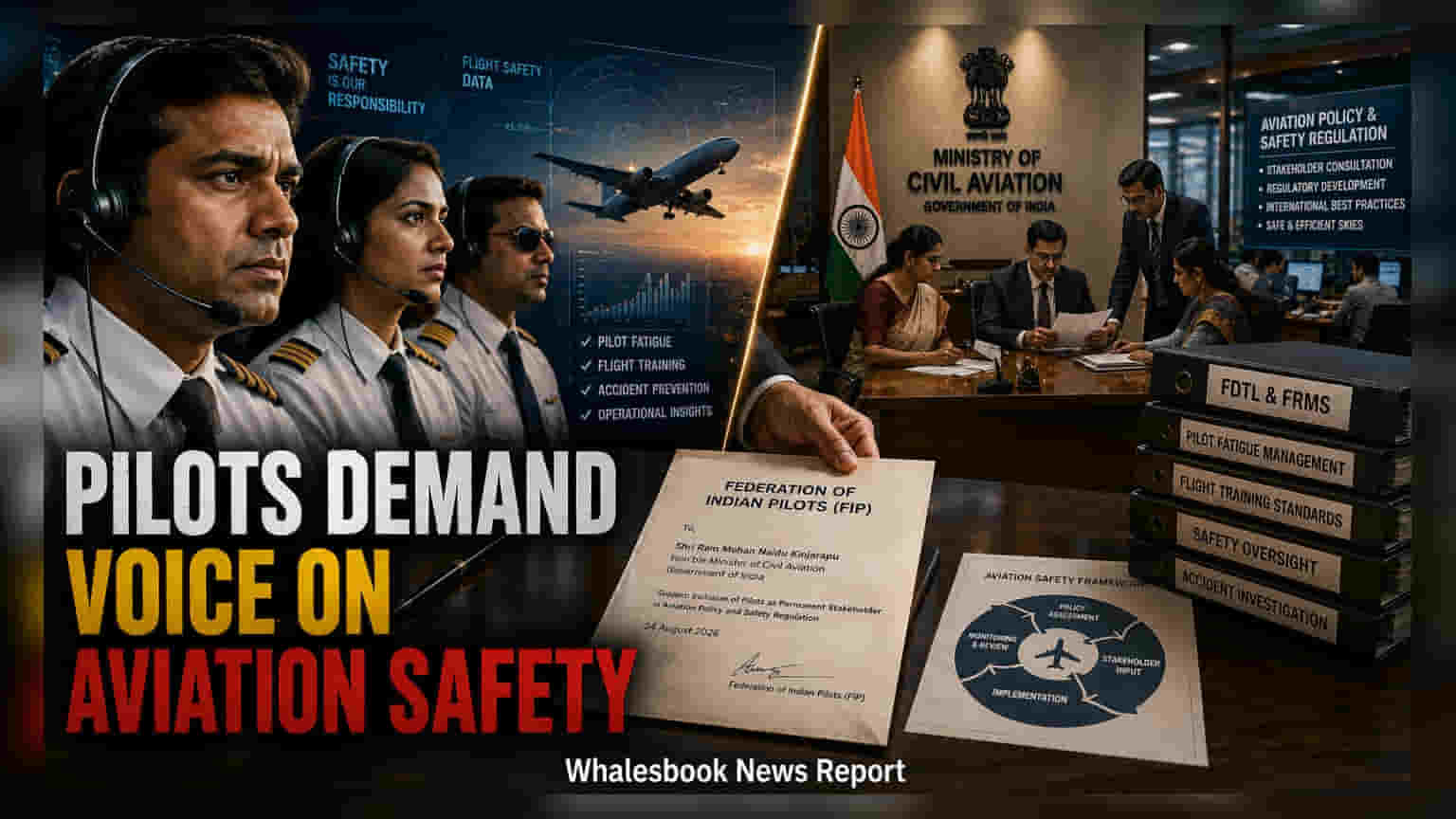
The Federation of Indian Pilots has formally requested that the Ministry of Civil Aviation grant it official status as a key stakeholder in policy and safety discussions. The move aims to integrate pilot experience into future aviation regulations, potentially impacting how safety rules and operational guidelines are drafted in India's expanding aviation sector.
The Federation of Indian Pilots (FIP) has formally approached the Ministry of Civil Aviation, requesting that it be recognized as a permanent stakeholder in the creation of aviation policy and safety regulations. In a letter to Civil Aviation Minister Ram Mohan Naidu dated August 24, 2026, the group argued that pilots possess essential, on-the-ground operational expertise that is vital for crafting effective governance and safety standards.
Integrating Pilot Experience into Regulation
The federation, which represents airline, corporate, helicopter, and military pilots, asserts that its members are the frontline operators in the aviation system. By participating in committees managed by the Ministry of Civil Aviation, the Directorate General of Civil Aviation, and the Aircraft Accident Investigation Bureau, the FIP believes it can contribute practical insights to rules governing pilot fatigue, flight training, and accident prevention. The group noted that this approach aligns with global best practices, citing that aviation authorities in the United States, United Kingdom, and the European Union routinely consult pilot associations during the regulatory development process.
Potential Impact on Airline Operations
For the Indian aviation industry, the institutionalization of pilot feedback could have significant implications for daily operations. Airlines currently navigate various regulatory frameworks, such as Flight and Duty Time Limitations (FDTL) and Fatigue Risk Management Systems (FRMS). A formal mechanism for pilot consultation could lead to changes in these areas, influencing how carriers manage crew schedules, pilot training requirements, and operational costs.
Beyond policy participation, the FIP has also been actively advocating for broader structural changes to Indian aviation governance. This includes a proposal to replace the current Directorate General of Civil Aviation with an autonomous statutory Civil Aviation Authority to improve institutional oversight. Furthermore, the government is presently evaluating proposals for mandatory annual drug testing for pilots following recent flight incidents, a process in which the FIP has already provided input on testing methodologies.
Industry observers will likely monitor whether the Ministry creates a formal consultation mechanism as requested. The outcome of these discussions could set a new precedent for how safety rules are developed, balancing regulatory goals with the practical requirements of the pilot workforce. The key monitorable will be any official government directive establishing a permanent consultative process with pilot representative bodies.