

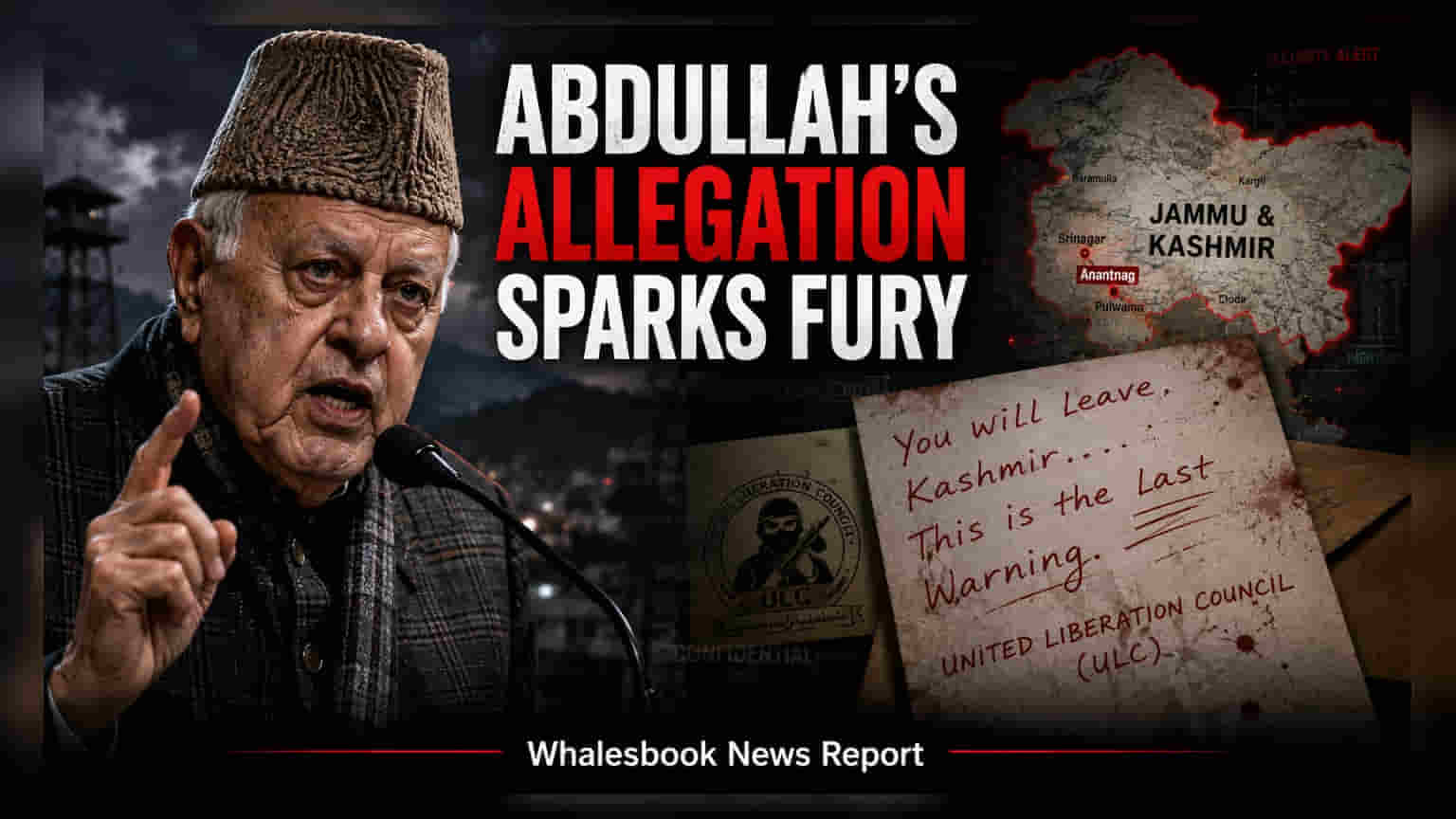
National Conference chief Farooq Abdullah has claimed that recent threats against Kashmiri Pandit employees are part of an administrative conspiracy to delay statehood restoration in Jammu and Kashmir. These allegations follow a series of threat letters containing sensitive personal data, sparking a sharp political debate regarding security and regional stability.
National Conference leader Farooq Abdullah has publicly questioned the authenticity of recent threats directed at Kashmiri Pandit government employees. Speaking in Anantnag, the former Chief Minister alleged that these intimidation attempts are a manufactured conspiracy designed to create an environment of fear. He argued that such narratives are being used by the administration to justify withholding the full restoration of statehood to the region.
Claims of Administrative Conspiracy
Abdullah suggested that the specificity of these threats raises questions, pointing out that senior Hindu officials in central or all-India services are not currently facing similar intimidation. By characterizing the incidents as a political tool for instability, his remarks have added a layer of complexity to the ongoing discourse on governance and security in the Union Territory. The Bharatiya Janata Party (BJP) has responded sharply to these comments, accusing the National Conference leader of downplaying extremist tactics and failing to acknowledge the severity of the threat posed by militant groups.
Security Concerns and Employee Safety
The controversy emerged after two letters, purportedly issued by a group calling itself the United Liberation Council (ULC), began circulating. Security agencies currently suspect the ULC acts as a proxy for the Lashkar-e-Taiba terror group. The documents reportedly contained sensitive personal information, including the home addresses and vehicle registration numbers of minority employees hired under the Prime Minister's special package. This leak of personal data has caused significant anxiety among the community, reviving memories of past displacement and leading to demands for better protection.
Meanwhile, the National Conference itself has shown divergent internal perspectives. Chief Minister Omar Abdullah has publicly distanced his administrative response from his father’s political rhetoric. The younger Abdullah has consistently prioritized a thorough police investigation and reinforced security measures for the targeted employees, treating the situation as a critical law-and-order challenge rather than an internal administrative maneuver.
For readers monitoring the region, the primary investor angle is the impact on regional stability and administrative continuity. Jammu and Kashmir’s economic environment is sensitive to security fluctuations, and public confidence in law enforcement is essential for operational stability in both the public and private sectors. Persistent security concerns can affect worker morale and the smooth functioning of government machinery, which acts as the foundation for regional economic activity. The next important update to follow will be the findings of the police investigation into the source of the threat letters and any adjustments to the security protocols provided to the employees.