

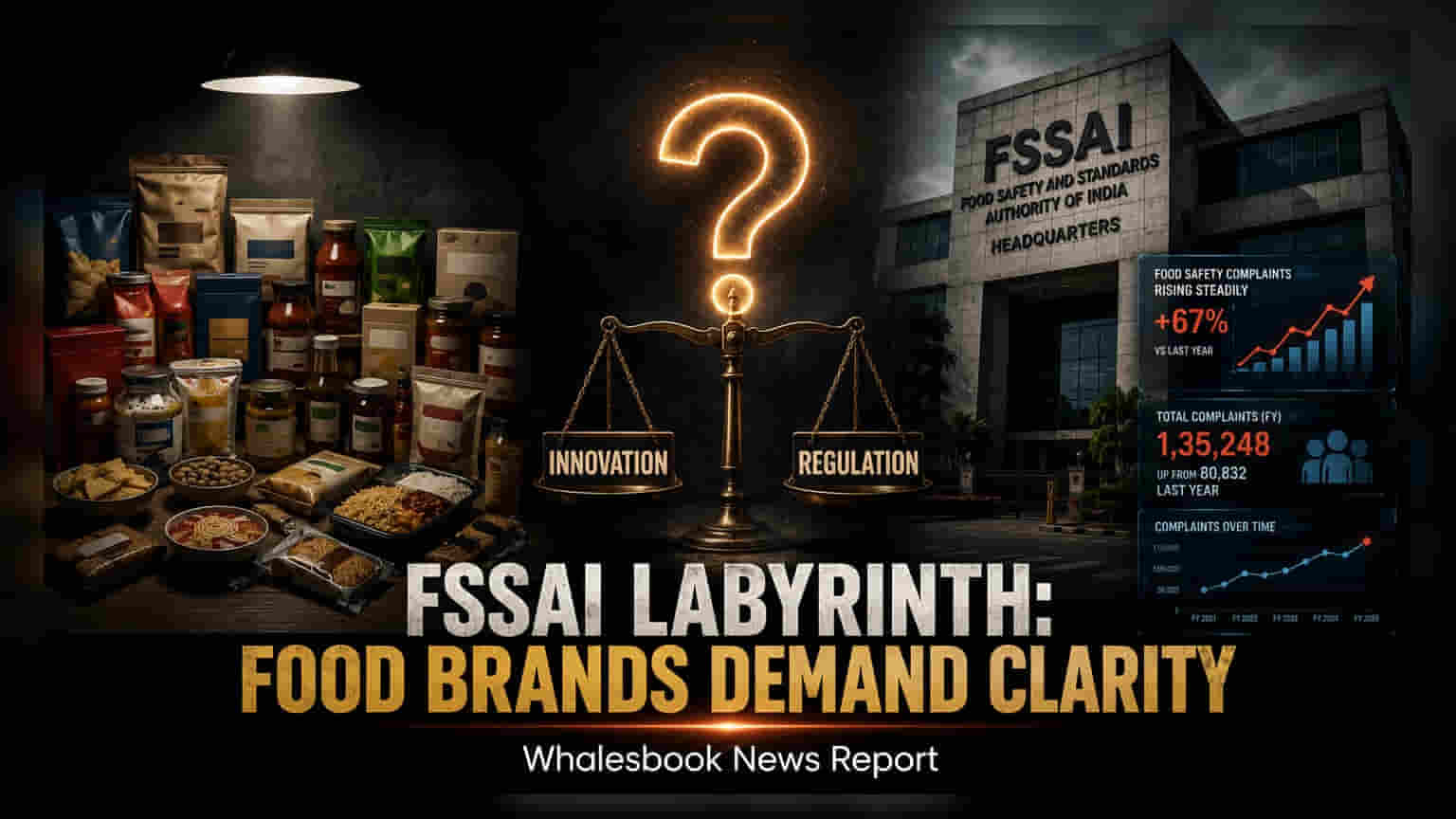
The Food Safety and Standards Authority of India (FSSAI) is increasing enforcement on labeling and ingredient claims for packaged food firms. This crackdown aims to curb misleading health claims but has created confusion for companies introducing modern or global product categories. Firms are now calling for clearer guidelines to align regulations with evolving consumer food trends.
The Food Safety and Standards Authority of India (FSSAI) has ramped up its scrutiny of the packaged food sector, focusing primarily on product labels and the validity of ingredient claims. This regulatory push is designed to protect consumers from potentially misleading marketing such as 'organic,' 'sugar-free,' or '100% natural' labels, which have become common in the competitive Indian retail space.
Industry Challenges with Current Definitions
While major food brands generally support food safety, industry leaders have highlighted significant operational hurdles regarding existing product definitions. As consumer preferences shift toward global cuisines—such as Japanese or other international food items—many companies are finding that their ingredients do not fit into the legacy categories defined by the FSSAI. For instance, manufacturers of ready-to-eat noodles or condiments have reported confusion, as their products often straddle multiple categories, such as pickles and sauces. This lack of clear classification creates uncertainty, leaving companies concerned about potential regulatory penalties for products that do not align perfectly with outdated definitions.
Impact on Innovation and Expansion
This regulatory ambiguity is having a tangible impact on product development and market strategy. Companies are hesitant to launch products containing new-age ingredients or those that use specific additives not yet explicitly covered by current standards. For many businesses, this results in delayed product launches and slowed capital spending on new manufacturing lines, as firms wait for regulatory certainty. The inability to categorize new-category products—such as plant-based alternatives or specific health-focused supplements—forces companies to balance their growth ambitions against the risk of non-compliance.
FSSAI Efforts to Modernize Standards
In response to these industry concerns, the FSSAI has taken steps to update its framework. The regulator has reconstituted 21 scientific panels to focus on risk assessment and the development of science-based standards. These panels are tasked with examining additives, nutraceuticals, alcoholic beverages, and even genetically modified foods to ensure that regulations keep pace with the modern food market.
Next Steps for Investors and Companies
For investors, the key monitorable remains the pace at which these scientific panels finalize new definitions. As categories stabilize and the FSSAI provides clearer guidelines, companies with high compliance standards are likely to see reduced operational risk. Investors may track how individual firms manage their product portfolios during this transition and whether the new regulatory clarity leads to a smoother approval process for new, innovative product launches. The long-term impact on profit margins will depend on whether companies can adapt their labeling and product compositions without significantly increasing their compliance costs or slowing their growth in premium food segments.